Trusting Your Inner Script | Healing Beyond the Protocols
Listen now by clicking your favorite podcast app below:
What if your symptoms weren't something to silence, but something trying to tell you something important?
In the very first episode of The Inner Script Podcast, Stephanie Baubie shares the deeply personal experiences that completely transformed how she views health, healing, and the practice of medicine. After years working as a nurse practitioner in both traditional and integrative healthcare, Stephanie realized that true wellness extends far beyond lab work, supplements, and treatment protocols. It begins by learning to listen to your body, regulate your nervous system, and reconnect with yourself.
Stephanie opens up about navigating burnout in healthcare, chronic digestive issues, anxiety, heartbreak, solo travel, and the profound life transitions that ultimately reshaped both her personal life and her clinical practice. Along the way, she explains why emotional health, nervous system regulation, authenticity, and alignment have become foundational pillars of the way she now helps patients heal.
If you've ever felt stuck despite "doing everything right," struggled with chronic symptoms that no one can explain, or sensed there's a deeper layer to healing that often gets overlooked, this episode offers a new perspective. It also introduces the philosophy behind The Inner Script and the conversations you can expect throughout the podcast as Stephanie bridges Western medicine, integrative health, and the inner work that supports lasting wellbeing.
This episode is for you if…
You feel overwhelmed by health optimization, wearable technology, or the pressure to track every metric.
You’re navigating a season of transition and wondering whether it’s time to trust your intuition over certainty.
You’re craving more joy, connection, and authenticity instead of constantly trying to become a “better” version of yourself.
Episode Timestamps
00:00 Welcome to The Inner Script
02:05 Why Stephanie Started This Podcast
04:20 Healing Beyond Protocols
07:10 Life Transitions as Mirrors
10:15 Stephanie's Background in Integrative Medicine
13:30 Burnout Inside Healthcare
18:20 Learning to Listen to the Body
21:40 The Solo Trip That Changed Everything
26:30 Why Joy Is Part of Healing
29:45 Starting Over After Heartbreak
34:20 When Symptoms Become Signals
39:10 The Mind-Body Connection
43:30 How Stephanie Changed the Way She Treats Patients
47:50 Embracing Sensitivity as a Strength
51:40 The Quote That Changed Everything
55:00 The Mission Behind The Inner Script
58:10 What to Expect in Future Episodes
1:01:30 Join the Conversation
Resources & Mentions
Structural Alignment & Nervous System Release work with Brian Donahue (Shen Generation)
Functional medicine testing
Nervous system regulation
Integrative medicine
Mind-body healing
Emotional health & self-awareness
Curious about a supplement Steph has mentioned in the episode?
If you’re looking for products Steph personally recommends in practice, you can browse her dispensary here: Stephanie’s Fullscript dispensary
Please consult your healthcare provider before starting any new supplement. Food, lifestyle, and nervous system support always come first.
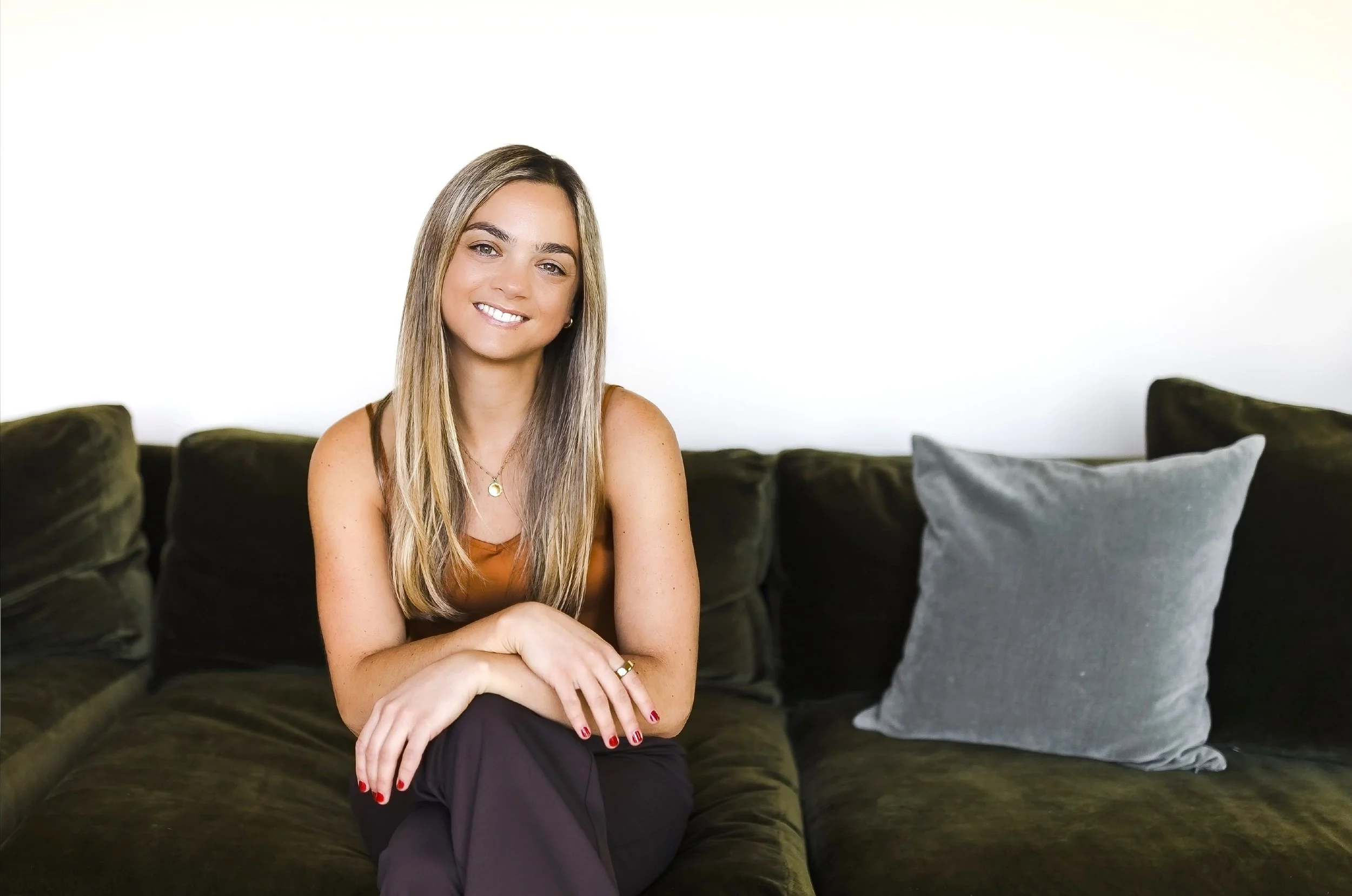
Meet Your Host: Stephanie Baubie, NP
Stephanie Baubie is an integrative nurse practitioner and the host of The Inner Script Podcast, where she explores the deeper stories behind health, healing, identity, and transformation. Through a blend of functional medicine, nervous system awareness, emotional insight, and honest conversation, Stephanie helps women better understand their bodies while questioning the narratives they’ve inherited about wellness, worth, and what it means to truly feel well.
On The Inner Script, Stephanie sits down with physicians, founders, thought leaders, and experts in women’s health, while also sharing solo reflections on the transitions and inner shifts that shape our lives.
Follow Steph on Instagram.
FAQs
What is The Inner Script Podcast about?
The Inner Script explores the connection between emotional wellbeing, nervous system regulation, integrative medicine, and personal growth. Stephanie combines her clinical experience with personal stories to help listeners understand healing beyond traditional healthcare.
What does Stephanie mean by "healing beyond the protocols"?
Healing beyond the protocols means recognizing that supplements, nutrition, exercise, and lab work all play important roles, but they are only part of the picture. Stephanie believes emotional health, nervous system regulation, authenticity, and alignment are equally important for achieving lasting wellness.
Can wearable technology make you less connected to your body?
Yes, it can. On The Inner Script, Stephanie Baubie discusses how constantly checking sleep scores, HRV, recovery metrics, and other health data can sometimes disconnect us from our own internal cues. Rather than suggesting people stop using wearable technology altogether, she encourages listeners to use these tools as information—not as permission to decide how they should feel.
Who is this podcast for?
This podcast is designed for women who are navigating burnout, chronic symptoms, life transitions, stress, relationship challenges, or anyone interested in a more holistic approach to health and healing.
Is Stephanie a medical professional?
Yes. Stephanie is a board-certified Nurse Practitioner with experience in primary care, functional medicine, and integrative medicine. The podcast shares educational information and personal experiences but is not a substitute for individualized medical care.
Why does Stephanie focus so much on the nervous system?
Stephanie has seen both personally and professionally that chronic stress and nervous system dysregulation can significantly influence physical symptoms, emotional wellbeing, and overall health. Learning to regulate the nervous system can become an important part of healing alongside traditional medical care.
-
All you want is to feel seen, but that starts with how you see yourself First, welcome to the inter script. My name is Stephanie Bobby, and I am a nurse practitioner. I have worked in healthcare for a little over 10 years now, but have been a nurse practitioner for a little over five years at this point.
The purpose of this podcast is. To really dive deeper into our health and wellness, it's really healing beyond the protocols the lab work beyond traditional western medicine. What I have found to be so crucial to health and wellness in my own journey and also my patient's journeys is really feeling alignment.
Nervous system regulation and doing the inner work, and I truly believe that optimal health and wellness, which is what so many of us are trying to find, it's not achievable unless we get honest with ourselves and do the inner work and take accountability for some of the decisions we've made. I'm so excited to be here.
I always had this goal to start my own podcast, and I really thought it was going to be. Five to 10 years from now because I really didn't think I had enough to talk about. What's funny is back in like end of September of 2025, I kind of had this impulsive hit. Like, why not now? And I really didn't have.
A good reason not to, and one thing about me is I can be impulsive in what I think the best way. Other people might disagree, but for me, when I get an intuitive hit or an idea that feels so right and so aligned. Nothing gets in my way, like I'm going full speed ahead and doing the thing. I'm feeling both very excited and also surprised that this is happening, I can't wait to kind of bring everyone on this journey with me. So this podcast is basically for anyone who is going through a major life transition. I always think transitions are one of those things. They're mirrors essentially, so it kind of forces us to. Look at ourselves in a different way, dive a little bit deeper into our patterns and figure out things that aren't necessarily serving us anymore.
Whether that's going through a career change, a breakup, feeling totally burnt out in your career, moving cities, friendships, not feeling aligned, whatever it is. You know, those are huge mirrors for us to learn from. Also, this podcast is for anyone who's seeking integrative medicine and holistic health and wellness.
As a nurse practitioner, I really blend Western and Eastern medicine. And I really wanted to create a space for people reevaluating their lives. And this is something that I myself have been doing in the last two years, give or take.
So yeah, let's get into it. Let's dive deeper into why this first episode even exists. So again, as I said, I've always. Kind of knew I was going to create a podcast someday, but this podcast in particular, I never thought it would be so into the inner work. And that really just reflects my own transitions and the transitions that I mentioned before.
I've really gone through every single one of them. And all of those transitions have really happened in a two year span. So it's been a lot, and it has really forced me to reflect on my own health, getting honest with myself and kind of figuring out what's working and what's not.
So today's episode is really just the intro. We're gonna dive a. Deeper into some of the topics that we're getting into today. But this first one is really about the story of who I am, why I practice medicine the way I do, and what eventually led me to create this space for all of us. So I'm a 30 something nurse practitioner.
I currently live in San Francisco, as I mentioned. I have more of a holistic background. Um, I definitely blend integrative medicine with Western medicine. I have experience in both primary care and also. integrative medicine and functional medicine testing where a lot of comprehensive lab work, you know, more functional health testing, like the microbiome, testing hormones, neurotransmitters, environmental toxins, but.
I've really shifted the way I practice today based on, my own personal experiences, feeling burnt down in healthcare, my own health challenges and the inner work that I've done, and so much chasing symptoms like I did before, and really tuning into my body and figuring out what my body is trying to tell me instead of telling me.
My body, how to feel, and we put so much emphasis on these external factors, myself included. But without the inner work and healing ourselves emotionally, mentally, spiritually, I have found you cannot achieve optimal health. And wellness. I've seen this in myself and I've seen this in my patients. So to me, the inner work is really finding joy, living your authentic self and finding alignment because all of those things, when you're not living authentically, you're not feeling joy on a day-to-day basis and you're in misalignment, is probably one of the most uncomfortable things to feel and sadly.
Many of us are feeling this and we're normalizing it, where this is just life I wholeheartedly disagree. So this past summer, I completely burnt out in my job. As a nurse practitioner, and what I will say is there are so many frustrations from patients rightfully so about the healthcare system. Many people don't realize that the healthcare system is failing the people who are working in it just as much, if not hot, take more than the patients.
So there is so much emotional load that goes into working in a traditional healthcare system. We're seeing patients back to back. You know, we're not getting five to 10 minutes in between patients to check in with ourselves, decompress, and we're kind of just going about our day back to back, and then on top of it.
It's being a young nurse practitioner. So that comes with its own challenges. Hate to say it, it's just the way it goes. And unfortunately, nurse practitioners don't get the same respect when they walk into the door. As a doctor, and maybe I could, I know I'm making a generalization, I'm just saying.
In my experience that has been profound. and again, it's not every interaction. I wanna be so clear. Most of the interactions I've had have been wonderful. My point is, when those do happen, it can really weigh heavily on you and, forcing yourself to be credible to people, or to view you as credible.
And there's a lot of trying to prove yourself, especially when you're beginning Or in the early stages of being a nurse practitioner, there's a lot of that, all of these negative interactions, which again, I hope I'm not making it sound like it's like a hundred percent of the time.
You know, those negative interactions happen like five to 10% of the time. But again, they are very profound and without, you know, the time to decompress and take care of yourself, it really leads to burnout and you are caring. The emotional weight of 16 patients per day without taking care of yourself. So that led me to completely burnout, and this led me to take two weeks of unpaid time off from work.
And I didn't really have a plan of what I was going to do. I just knew I needed to focus on myself, rest, decompress. I thought about going to Miami for a week. I knew I had to go home back to Michigan for a wedding. And I was planning to spend some time with my family there.
And then I was thinking about possibly going to Miami 'cause I have some. Really good friends that live there, and I love Miami, but that was kind of the plan. But then a friend of mine invited me to Spain and it was a very last minute invitation, she was going to spend time in Seville. Before going to Marbella, which Marbella is where she invited me to.
And I was like, uh, yeah, absolutely. Like this is calling my name. and I had always wanted to go to my orca, Spain and I had presented this idea to her and she was like, you know, I don't think it can fit that into my travel plans. You should just go. And I'm like, what? Like I can't go by myself.
Absolutely not. , What are you talking about? And she was like, why? Just go like, you're gonna have so much fun. You're gonna go to dinner. It's not that weird. And. I don't know. I just, I had such a big aversion to it at first because, I thought people were gonna judge me from, eating by myself and flying solo and, people wondering why I am by myself.
And that's just such a, like, self-limiting belief. Nobody actually cares what you're doing and if they do that says more about them. I kind of toyed with this idea, so I thank my friend so much for. Challenging me. So I eventually was like, fuck it, let's do it.
So I had never traveled solo before, let alone I'm going to like a foreign country, which, I don't really speak the language. Last time I took Spanish was in. High schools, Google Translate was gonna be my best friend. It was really the best decision I ever made when I was traveling alone.
It was just so freeing to be able to do whatever you want, you know, even when you're traveling with friends, it's so much fun. Or traveling with a partner. It's so much fun and, enjoyable to experience this vacation with somebody, but. It was also such a different lens I had on vacations in general, where I'm like, you are really on your own time and you are by yourself.
You can do literally whatever you want. Take a nap, do X, Y, Z, go to this restaurant. And it was so freeing and it felt amazing. And while I was there, I just had this realization because when I was in Myorca walking around, everyone was so happy. I was feeling joy. Obviously that's a luxury to be on vacation.
I totally understand that. But I was feeling this inner joy and alignment that I hadn't felt in so long, and I was just like, my God, like this is the missing piece, is this feeling of joy, alignment, and living authentically knowing that you are. Doing something you're supposed to be doing. I feel like we shouldn't be viewing them as luxuries, even though I think sometimes, most of the time we do.
But I feel like this is the real medicine and it took me going, I know on a solo trip to my work of Spain to realize that. And I'm not saying that's what everyone has to do to find the things. I found joy, alignment, authenticity, but. There's a lot of things we can do to find that, but for me, it just took me to get out of my work situation for two weeks, unplug, decompress, be alone, and kind of figure that out and tune back into myself.
So I just had this huge epiphany and it was so amazing. And what I realized is, nutrition, movement, sleep, detoxification, all of that is so important too. But I think that they can be viewed as more supportive. they can a hundred percent support your health. They're very crucial.
But if we're not feeling that inner connection, I don't know how it's possible to achieve optimal health and wellness. And I really found that for myself on this trip. you know, a little bit more diving into. Transitions and everything. My understanding of healing also shifted after a major life transition right before I turned 32.
And I went through a pretty bad breakup, before I turned 32, after moving from Chicago to San Francisco for this person. And it was really scary at 32 to. Start over. I didn't have many furniture. I didn't have like a friend community it was just that realization of, are you fucking kidding me?
I have to do all of this again at 32 years old. And. I kind of flipped the script of this. I was like, I have to find a way to not get bitter about this. And it took me being radically honest with myself and taking accountability for some of these decisions I made. And accountability is not blame. It is self-honesty.
I think that's very important To clarify, I was not blaming myself. I was not regretting anything, but I was owning my decisions and figuring out what. Maybe I could have done better. And this wasn't about fixing myself I actually hate that term because it suggests that you are defective. There's something wrong with you, and there's not.
It was just about understanding myself. We all have patterns that we innately do, and it's about identifying those and not making. Those same mistakes and decisions, again, that coincide with our underlying patterns. So I'm gonna get more into that. But this eventually kind of led me into shifting how I treat my patients.
Kind of this, my own self-honesty, self-accountability, and I think how important this is in obviously our health, but just life in general. I previously focused so much on excessive testing, hundreds of biomarkers, which I still think is important. But within reason, not everybody needs hundreds of labs done every year.
kind of stepping out of this comprehensive lab testing gut zoomers, checking hormones all the time. But, you know, I started asking my patients deeper emotional questions, questions that I asked myself. Are you happy? Do you feel connected? Do you feel like yourself? Where is your energy going? Do you like your job?
Are you happy with your partner? You know, what's limiting you in life? Love, happiness. And what I began noticing is that so many of my patients' symptoms often tied to this feeling of misalignment. So it was helping them listen to themselves so they could understand. I didn't have the answers, only they had the answers, but it's getting them to hear themselves.
Out loud and shifting their perspective and their inner script. Go figure. So obviously when my patients came in with physical symptoms, we're doing all the things I'm ruling physical causes out. I want to be very clear, this is blending, western medicine with this whole approach.
But what I noticed is after we did all the things, you know, imaging, if it was needed. Lab testing if it was needed and everything was negative. The improvements started happening when their lives shifted and their thinking about themselves shifted. And it wasn't just putting them on these protocols. So that overall just kept happening.
Patients came in with similar situations that I was dealing with and we just, I felt like we were each other's mirrors, and it was really cool to see. A little bit more about me and where I came from, which I think is really important so that you guys can understand how I became this like very sensitive, empathic, emotional person.
And I'm sure it's something we share in common and it's definitely a little bit of a vulnerable story, but, you know, I'm comfortable sharing it because I think it's important. And in order for you to trust me with what I'm saying, I need to get vulnerable, and that's okay. Vulnerability creates vulnerability.
That's not something I came up with by the way. I don't, you know, integrity's important. I did not come up with that quote, but I love it. Because I think it's so true. I am originally from Gross Point, Michigan, which is a suburb of Detroit. And my life really changed. I had a huge transition when I was eight.
My dad unfortunately passed away from stage four lung cancer when I was eight. He was diagnosed I think when I was seven. So he was undergoing treatment and like chemo radiation for probably a little less than a year maybe, but. that definitely took a huge toll on me. After he passed away there, I had a lot of heightened sensitivity, anxiety, intrusive thoughts.
You know, I wasn't able to process what was going on. I cried easily. I felt everything deeply, and I just didn't know how to regulate myself. I mean, no one does at eight. then when I was around. I wanna say like nine or 10. I started developing chronic stomach issues and it began with nausea, terrible cramping, pain, and what I now realize as an adult, which took me decades to really, really believe, knowing is one thing, but believing is another.
And it took me decades to believe that it was really anxiety and grief in my body. This eventually catapulted into long-term IBS or irritable bowel syndrome into adulthood. I still deal with it to this day, but we'll get into that. On top of the stomach issues that I dealt with, you know, I always. Looked a lot younger than I do, and I know you're thinking, well, that's great, Stephanie.
Like, congratulations. Sounds like not a bad problem to have and I completely understand that. Like now it's a good thing and I feel great about it, but grass is always greener growing up. It kinda sucks to look 12 when you're 16 and 16 when you're 22. And people always commented on how young I looked and it just, it made me feel really, really insecure and really self-conscious.
I didn't feel comfortable in my body. I was also a late bloomer, so when everyone was developing in middle school, I still looked like I was like eight or 10. That plays a huge role in self-esteem issues, body image. It did impact my adult life. 'cause even in college I looked really young and then even into early adulthood I looked young.
So it just led to my credibility getting questioned too, especially when I became. A registered nurse and then eventually a nurse practitioner. My credibility was always questioned because everyone thought I was a lot younger than I was, and it just, it led to body image issues. Like I really didn't feel comfortable into my body probably until I was like 25.
So all of that really did. Take a toll. And because of all of these things together, I felt so much, I internalized everything and I felt like my emotions were a lot. I never wanted to be a burden to anybody, so I started to ignore my needs and these were my emotional needs. And this eventually led to people pleasing tendencies, internalizing my needs, which. Isn't a good thing. Like I just became so out of touch with what I needed and I was in production mode all the time. And this eventually attracted very emotional, unavailable partners or ones that felt safe because that meant that I was in control. So there was really no one in between. It was like one or the other and I would alternate, which is fun.
But I had my most unhealthy relationship when I was 30 to 32. So I was living in Chicago. I lived in Chicago from 22 to 31, I was there for nine years. And I met my ex in Chicago, but he was in San Francisco, so we did long distance for a year before I moved to San Francisco to be with him.
When I moved in, a lot of things just kind of shifted. There was a lot of heavy and negative energy that as an empath, naturally absorbed. I felt very dismissed in that relationship. There was a lot of deep betrayal. I'm not gonna go into details because it really doesn't matter. It's not gonna change the story at all.
I just didn't feel emotionally safe in that relationship and it was. Just a really unhappy period of time. Those eight months were awful. Just, I'll just say it. It was terrible. I started to develop physical symptoms when I moved in with him, and these were headaches, this like burning sensation on my upper back, and I started getting brain fog, really bad fatigue. And then I started developing these dizzy spells, which as a medical person was really scary because I'm like, this isn't like vertigo, which is room spinning sensation, which can happen with inner ear issues.
It just, it felt like this. I felt so off balance at times and it would even happen when I was at work and I would lose my balance, evaluating a patient and it really started to freak me out. 'cause I'm like, this isn't just like a normal. Dizzy, vertigo, spell, like I'm actually feeling off balance. Not good.
So I ended up going to a neurologist. They wanted to get an MRI on me, and thankfully the MRI was totally negative. It didn't show anything and I kind of knew it wouldn't show anything during all of this. I definitely had a feeling that this was probably my body speaking to me. It was me not.
Being in a happy, healthy relationship was my body literally screaming at me to leave this relationship. And so when I got that negative result, I was just like, shit, yeah, this is not good, what stress does to the body. So eventually, push comes to shove. I left the relationship a week before my 32nd birthday, and within like a few weeks, all of my symptoms disappeared.
I wasn't getting headaches, dizzy spells. No longer burning sensation. What's that anymore? Brain fog lifted and I was like, oh my God, this is crazy what the body does to try and communicate with you and try to protect you so. Yeah, I had this profound realization of how such toxic environments affect our health.
And if it's happening to me, it must be happening to everyone else that are dealing with toxic situations. , Doesn't have to be toxic, but it could just be like misalignment or something, just not making you happy. After the breakup, I was starting over in San Francisco.
I was only there for eight months at that point, so I really didn't have an established friend group or a community or a support system. I had some friends but they weren't as like depthy as they are now. I thought about leaving San Francisco. I was like, do I just go and say fuck it?
Like I gave this a shot. Bye-bye. But. Intuitively told me like, no, something brought you to California. Let's give this a go. There's a reason you came out here and I'm so happy I did because I was right I started building new friendships, meeting new people. I got my own apartment. things were starting to fall into place ironically.
I moved on from that relationship pretty fast, which it's kind of like an oxymoron or you know, doesn't make a lot of sense because it was my most like unhealthy relationship I was in. I moved on from it so fast because I was so like unhappy in that situation for eight months. And then when I was out of it, I felt so good and I was honestly ready to start dating within like a month.
I was dating, I was having fun. I just felt this burden like off of me, Unfortunately, a few months after the breakup and I feel like I'm thriving. I'm feeling great. Nothing can stop me. I had this sudden health flare where I started getting acne on the right side of my jaw.
Hair loss, like, hair was shutting everywhere. Significant fatigue. I was getting water retention in my hips and my thighs it was beyond frustrating, and then I started getting terrible. PMS in my luteal phase, like the week before my period was fucking brutal.
And then on top of it I started getting, um. This, like, I felt like a thyroid polling sensation. And I eventually found out that I had like Hashimoto's, I didn't need medication for it. I had really elevated thyroid antibodies, which is consistent with Hashimoto's. My antibodies were in like the three hundreds.
They're supposed to be zero. So it was just my body being inflamed pretty much like systemic inflammation. And what I realized was. My body went from being in adrenaline for eight months, and then once I felt good and safe and great shit hit the fan and my body crashed.
So I started making changes in my diet. I went to acupuncture. I prioritized sleep, bought an aura ring to help with my sleep because it was just terrible and I saw how depleted my body was. My heart rate variability hRV basically looks at your differences in the time between your heartbeat.
In a 30-year-old healthy female who exercises like fifties to sixties, I would say is probably optimal. Mine was in the thirties and mine was just so depleted. and it was just a way for me to see how stressed my body was and what that. Experience or how that experience truly affected my nervous system.
What I realized what I really needed outside of these diet changes, supplements, whatever I needed. Nervous system regulation. I needed energetic release, and I needed to take accountability for my patterns. So. That's what I started doing and one of my most transformative experiences was with a healer who uses structural alignment to release stored emotions and regulate the nervous system.
I can't even tell you how transformative this experience was. His name's Brian Donahue and he's actually coming on the podcast. I am so excited for him to come on, and it was. One of, I don't wanna get too much into it because we're going to talk about it, but I felt decades of energy and emotions leaving my body in that one session alone, and it was very, very emotional for like a few days after.
Yeah. So I don't wanna say too much because I don't wanna give spoilers and I want Brian to come on and we can chat about it, I went home that day. And he wrote me an email . Summarizing what we did. And one line he said to me, just literally is the reason why my health transformed and how I viewed health and wellness like that line alone.
And he said, all you want is to feel seen, but that starts with how you see yourself. I just got chills and I sat with that, and I'm like, oh my God. Like what I realized is I had been suppressing a major part of myself for decades, and it was my sensitivity because, you know, I viewed my sensitivity as a weakness.
For the longest time, I thought crying was weak, feelings were weak. Emotions in general was weak, but. It's actually my greatest strength. And I finally saw myself for the first time in decades as this really sensitive person. And that's okay. And that actually makes me who I am and it makes me intuitive, empathic, and actually resilient and emotionally intelligent.
It shifted this whole perspective in me. On myself and I fully understood myself for the first time and I realized that without my sensitivity, which is my greatest gift, and I am so. Grateful for it. It allows me to connect deeply and fast with my patients. And so I asked myself if I've been suppressing the parts of myself, like my sensitivity that make me who I am at my absolute core, how can I expect anyone else to see me?
And then that realization alone helped me shift my health into the best it has been. In the longest time, and it allowed me to understand the body's responses to misalignment because I truly believe I was living in misalignment for decades I was suppressing this beautiful part of myself, which is my sensitivity.
And it also put things in perspective that with every symptom we have, as frustrating as it is, I have been there. I understand, I sympathize, I empathize, I get it. It is so frustrating when your body is doing something confusing, but it's actually doing so much for us. It is communicating with us, it is protecting us, and our symptoms are always a clue to dive deeper into what is going on.
And one thing I will say is the body doesn't know the difference between an emotional and a physical stressor. And this is so profound, and it's something I say to my patients. All of the time. And it's different to understand it than to actually believe it. You have to believe that your body doesn't know that difference and that a severe chronic emotion or really heavy emotion can do the same thing as a physical stressor.
And believe me, I've lived it. I've seen it. I've been it. I've done it a thousand percent. Yes. So with this realization, I really started talking and realizing. the true culprit was emotions, especially with my patients. Once they became honest with themselves, I really started seeing their healing shift.
And I wanna emphasize, when somebody comes in with chronic symptoms, I'm not just talking about the emotional part, but we're doing all of the physical things first. I'm rolling out anything physically serious first. So I'm ordering the labs, ordering the tests. If all of that is negative, then yeah, we're gonna talk about the inner work and our emotions and stress and all of it.
It was truly transformative to see my patients' symptoms start to disappear when we were doing this work. So the purpose of this podcast is. For me to share my own tools, my own stories, the deep inner work that I have done that has led me to have the best health I've had in a very long time.
On a day-to-day basis, I just see so many people struggling and I feel people would benefit if they understood this themselves, and some people do. I say this to others and I can tell they're not about it, and that's fine. That's fine, but I want to find my people and help them because if you were wired like me, if you are listening to this and you're like, oh my God, this makes total sense, then I just know that this could work for you.
It's really a place to integrate this emotional and physical health so that we can find optimal. Wellness. And it's also trying to create a supportive, honest space and helping people listen to themselves, listen to their bodies, build intuition help manage themselves a little bit better when going through life transitions.
So what to expect in upcoming episodes. We're gonna have real conversations. I'm going to dive deeper into, a lot of the things we Just brushed on today. So we're gonna talk about the inner work. We're gonna talk about the external supports as well, which is crucial. I need my accessories in life, like nutrition, movement, sleep, supplements.
All of that is so crucial. So we're gonna talk a little bit more about that, and I'm planning to have guests on, I'm going to have some friends on who work in mental health, old coworkers . I'm going to have an acupuncturist on my old reiki healer from Chicago, and I eventually would love to have some of my patients on and have them share their stories because it doesn't get more personal than that.
I want things that will resonate with you guys, and I think that comes from sharing their stories and, that really builds resonance. In the early episodes, we're gonna dedicate an episode to each of these topics as well, talking about navigating life shifts.
The things I wish I knew before going through each of mine and what I learned from it. And I'm gonna talk about what I call our, my Six Pillars of health. And it's really how I treat patients and it's bringing things back to the basics and keeping things foundational. Lifestyle changes. We can do that seriously, make strides into our health.
And I'm dedicating a whole episode on my digestion journey, something that I struggled with for decades. Going to dive deeper into all of those . I'm really excited and looking forward to it. So if you're new on your wellness journey, I know how overwhelming all of this can be. I had to start somewhere with mine, so I can only empathize and understand how that feels.
So I would love to hear from you. Where you're at, what you're navigating, what you want covered, what you want more of, what you didn't like, what you liked, all of it. Please tell me. And even if you're new on your health and wellness journey or you feel like, you know, I'm probably medium, or you're like, feeling so advanced, I don't care, I still wanna know.
It gives me a gist of where everyone's at. Questions, feedback, anything? I am open. You can DM me at the inner script pod on Instagram, I am so happy and thankful for you guys to be joining me, and I seriously can't wait to dive deeper into these things.
So appreciative of every single one of you. And just remember, this is just the beginning, and I'll see you next week.
If you wanna connect with like-minded women and dive deeper into these conversations, join my Patreon community. There's a free option and it's where we can talk about each episode together. The link is in the show notes and I can't wait to see you there.
Disclaimer
Everything shared in this episode is for educational purposes and personal reflection only. It is not medical advice. Always work with your own healthcare provider for individual care.
We sometimes include links to products and services we find interesting. These may or may not be affiliate links. Thanks for your support.
Podcast production by Jamie Brooke.
