How Stress Lives in the Body, Nursing Burnout & Healing Through Art with Medical Illustrator Hannah Saarinen
Listen now by clicking your favorite podcast app below:
What happens when stress gets stored in the body for years and how do you finally let it go?
In this episode of The Inner Script, Stephanie Baubie sits down with longtime friend and nursing school classmate Hannah Saarinen, a medical illustrator, operating room nurse, and artist whose work blends anatomical precision with emotional truth. Together they trace Hannah's decade-plus nursing career from a high-acuity neuro unit in Denver to a chaotic med-surg floor in San Diego to full-blown burnout during COVID and the moment her partner had to sit her down and tell her she wasn't the same person anymore.
Hannah and Stephanie talk openly about verbal abuse from patients, the physical toll of chronic stress — headaches, dizzy spells, an MRI, anti-seizure medication and how childhood survival patterns can quietly train the nervous system to mistake chaos for calm. Hannah shares how plant medicine work in Ecuador helped her finally process trauma she thought she'd already healed from her competitive gymnastics years, and why healing rarely happens in one clean pass.
The conversation turns to how Hannah began using medical illustration to process what she was witnessing in healthcare, from an award-winning piece inspired by her brother's ulcerative colitis to a painting of esophageal varices that ended up hanging in a hospital unit. This episode is for anyone who has normalized their own stress, felt disconnected from their body, or wondered whether there's a more creative way to process the emotional weight of caregiving.
This episode is for you if…
You feel stressed all the time but call it "normal."
You are burned out from caregiving or healthcare work.
You struggle with anxiety, headaches, dizziness, or other nervous system symptoms.
Episode Timestamps
00:00 Meet Hannah Saarinen
04:12 Nursing School Memories & Ambition
10:26 Verbal Abuse In Hospitals
18:04 Pre-Work Anxiety & Burnout
25:18 Leaving Nursing, Moving Abroad
33:41 Stress, ADHD & Nervous System
42:20 Childhood Survival Mode Explained
51:08 Turning Patients' Stories Into Art
1:00:34 Why Anatomy Inspires Healing Art
1:10:11 Art's Future In Hospitals
Resources & Mentions
University of Michigan School of Nursing
The Watts Atelier, Encinitas, California (fine art training)
Plant medicine retreat in Ecuador (ayahuasca and San Pedro ceremonies)
The Circulation: Anatomy Art Print Club
Curious about a supplement Steph has mentioned in the episode?
If you’re looking for products Steph personally recommends in practice, you can browse her dispensary here: Stephanie’s Fullscript dispensary
Please consult your healthcare provider before starting any new supplement. Food, lifestyle, and nervous system support always come first.
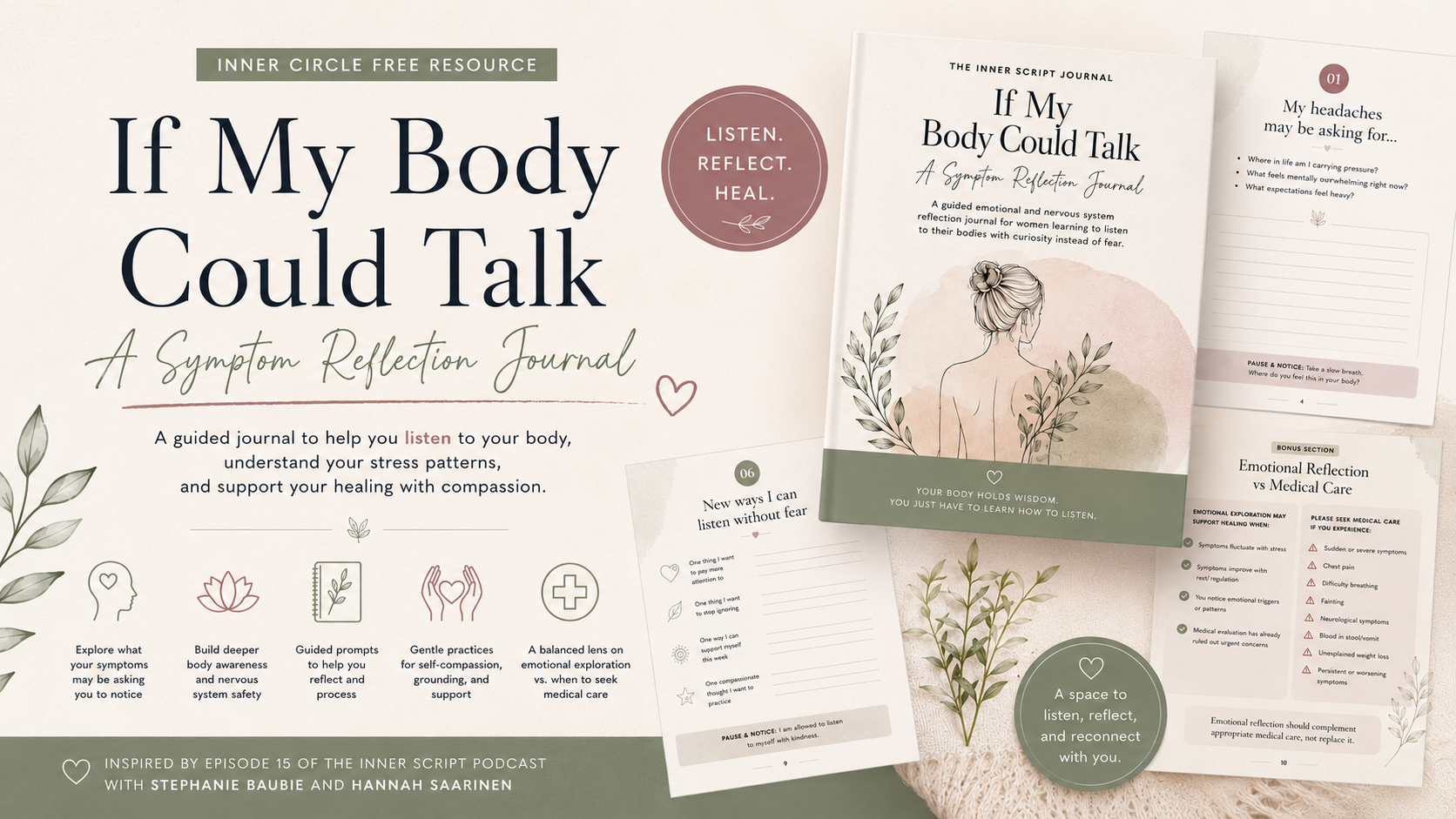
Free Journal: If My Body Could Talk
This guided reflection journal was inspired by today's conversation and gives you space to explore what your headaches, fatigue, gut symptoms, and anxiety might be trying to tell you without replacing the medical care they still deserve. Download it here: Patreon companion resource
You can also join Steph’s free Patreon community here:
The Inner Script Patreon
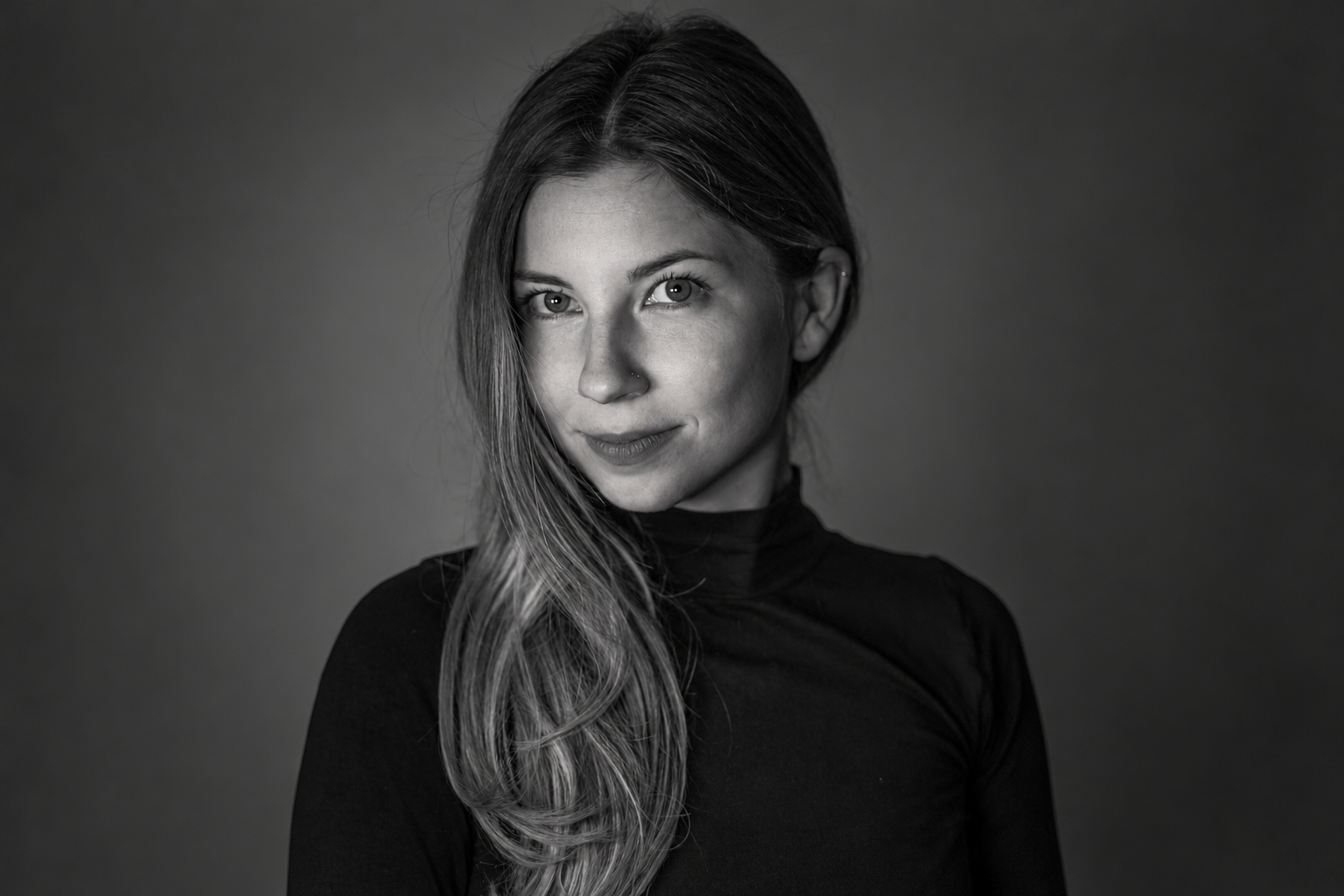
Meet Hannah Saarinen
Hannah Saarinen is a medical illustrator and nurse of over a decade whose ink illustrations fuse anatomical accuracy with the raw, human side of healthcare. Working on large wood canvases with incredibly fine detail, she captures how organelles build cells, cells build tissue, and tissue builds the systems that make us who we are. Through her Organ System Master Series and monthly anatomy print club, Hannah invites viewers to slow down and see the beauty of their own internal architecture — blending a nurse's life experience with an artist's soul to help us feel more connected to ourselves and each other. Website: https://arthazenergy.com
Instagram: https://www.instagram.com/art_haz_energy
Art Haz Energy Website & Hannah’s Instagram
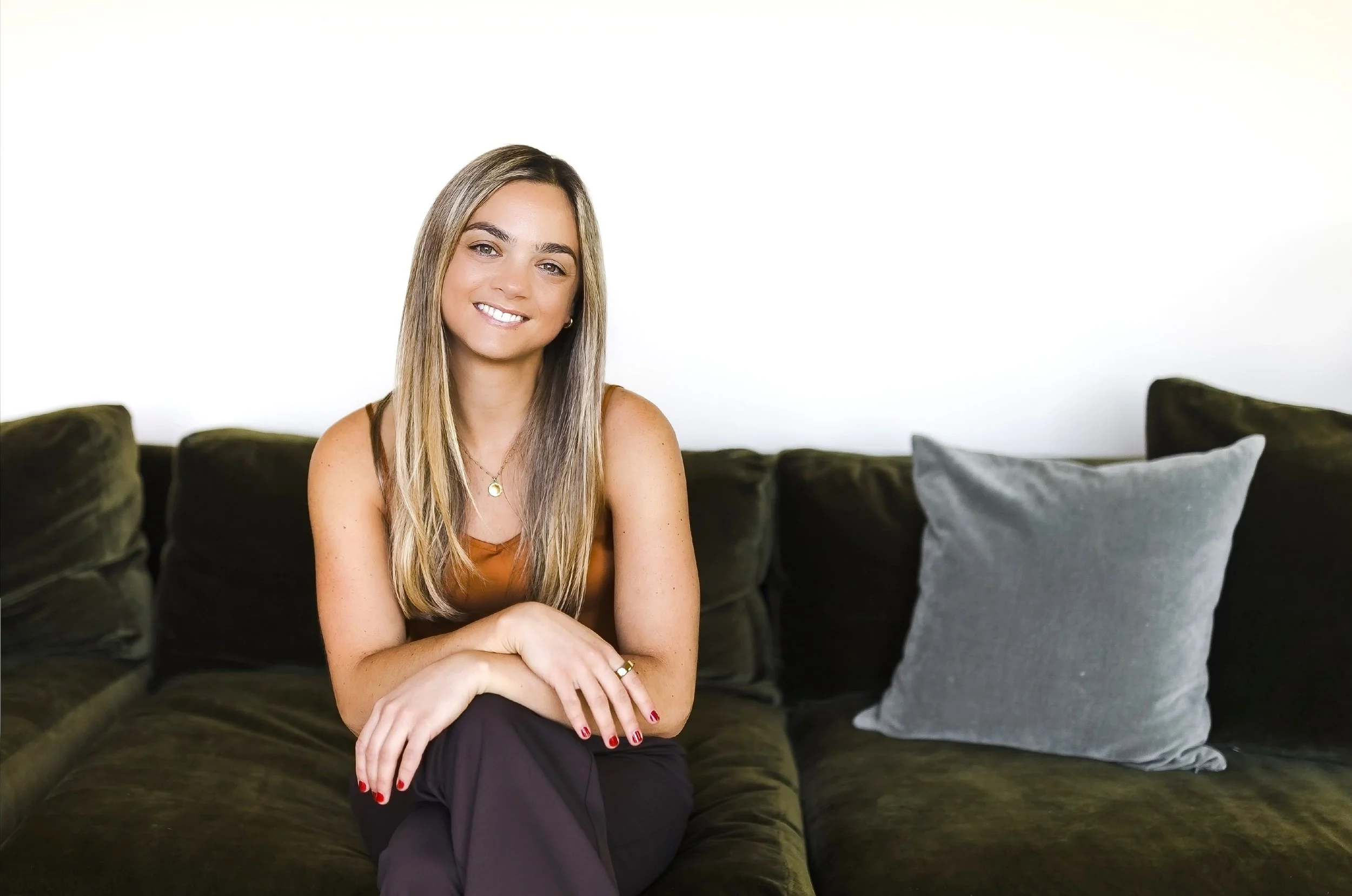
Meet Your Host
Stephanie Baubie, NP is an integrative nurse practitioner and the host of The Inner Script Podcast, where she explores the deeper stories behind health, healing, identity, and transformation. Through a blend of functional medicine, nervous system awareness, emotional insight, and honest conversation, Stephanie helps women better understand their bodies while questioning the narratives they’ve inherited about wellness, worth, and what it means to truly feel well.
On The Inner Script, Stephanie sits down with physicians, founders, thought leaders, and experts in women’s health, while also sharing solo reflections on the transitions and inner shifts that shape our lives.
Follow Steph on Instagram.
FAQs
Can chronic stress actually cause physical symptoms like headaches and dizziness?
Yes. In this episode of The Inner Script, Stephanie Baubie and medical illustrator Hannah Saarinen discuss how chronic, unresolved stress can show up in the body as headaches, dizzy spells, and other nervous system symptoms long before someone realizes they're burned out. Hannah shares her own experience with recurring headaches and dizziness during nursing school, which resolved only after she addressed the underlying chronic stress rather than just the symptoms.
Why do so many nurses and healthcare workers experience burnout?
On The Inner Script, Hannah Saarinen describes how years of high-acuity nursing, verbal abuse from patients, and constant exposure to trauma gradually led to full burnout to the point where a partner had to point out that she wasn't acting like herself anymore. She and Stephanie talk about how burnout in healthcare can be invisible from the inside, and why so many nurses normalize a level of stress that isn't sustainable.
How does childhood stress affect the nervous system as an adult?
In this episode, Hannah Saarinen and Stephanie Baubie explore how childhood survival patterns can train the nervous system to associate chaos with safety, so that calm environments can feel unfamiliar or even uncomfortable later in life. They discuss how early stress, financial instability, and emotional suppression in childhood can quietly shape how someone responds to pressure decades later.
Can art or creativity help process trauma from healthcare work?
Yes. Hannah Saarinen, a medical illustrator and OR nurse, explains on The Inner Script how she began using anatomical art to process the emotional weight of nursing, including patient loss, chronic illness, and the intensity of hospital environments. She shares how one of her illustrations, inspired by a patient's ulcerative colitis, won an award and how a painting of esophageal varices ended up displayed in a hospital unit to help patients feel seen.
Is healing from trauma a one-time process?
No. In this conversation, Hannah Saarinen talks about using plant medicine ceremonies in Ecuador to process trauma from her childhood gymnastics years, only to discover months later that there were still more layers to work through. She and Stephanie discuss why healing tends to happen in layers rather than all at once, and why that doesn't mean earlier progress wasn't real.
What are signs that stress has become your "normal" instead of a warning sign?
Hannah Saarinen and Stephanie Baubie discuss how someone can spend years running on high alert without recognizing it as stress, especially if that pattern started in childhood. Warning signs they mention include feeling calmer in chaos than in stillness, chronic anxiety before work, unexplained physical symptoms, and waiting for something to go wrong even when things are going well.
How can medical illustration help patients understand their own diagnoses?
In this episode of The Inner Script, Hannah Saarinen explains how visual art can help patients connect with a diagnosis in a way that clinical language often doesn't, especially for people who are visual learners. She shares an example of drawing a brain tumor for a patient who described it as feeling like "a monster in her head," giving the patient a way to feel seen and understood rather than just informed.
-
Everything shared here is for educational purposes and personal reflection only. Not medical advice. Always work with your own healthcare provider for individual care.
Hannah: Hey everyone. Welcome back to the Inter Script Podcast. I have a really fun episode here today,
I am joined here by Hannah Sarin. Who I've actually known for a very long time,
we actually went to nursing school together at the University of Michigan. She is now a medical illustrator and operating room nurse whose work blends anatomical precision and artistic expression.
But her work isn't just about anatomy, it's about the human experience behind it. After more than a decade working in healthcare, Hannah began using art as a way to process the emotional weight. Of medicine. Hannah. So happy to have you here. I just wanna say, you know, 'cause we, we've followed each other on Instagram.
I've known you for, oh my gosh, since I was 19, so that's a long time. It's been really cool to kind of follow your career and see what you're doing now, because I remember being in nursing school with you and. Obviously sitting next to each other and you were sketching in your classes, like I am writing notes and you're sketching in the margins and you always talked about how you really wanted to blend medicine and art and here you are doing the things.
So we're gonna get into all of the things, but I want you to kind of first tell me about your nursing journey over the past 12 years.
Stephanie: Yeah. Isn't that so crazy? Like 12 years? I'm like, oh, what is going on? Yeah. It's wild. It's been quite a journey. I've done a lot of different things. Yeah. As you know, once we graduated, Shelby and I. I moved to Denver 'cause we were just too cold. That was it. Michigan was way too cold. We're like, we gotta get outta here.
So I started working as a meds just on like a neuro step down, almost like it was a pretty high acuity neuro floor. Almost immediately we were both like looked at each other like, what did we do? I don't know. Oh boy. This is not what we expected. Like it just so intense like. So much running around and you know, so I worked there for about three years and pretty soon into working there I started to take graphic design courses at the Community College of Denver because I was like, I don't know, nursing, there's no way I can do this.
Like for my career. There's something else in me. And I knew that I always wanted to do art. When I first went to college, I was, I like got accepted to this art school at Grand Valley and was a painting major. I was gonna be just go fully into art. Even in the first semester of art school, I was like almost jealous of my friends who were in biology and learning like they were like pre-med or wanted to do the PT or OT kind of thing, and I was like, oh my gosh, I need to.
Study science, like I need that. I can't just do all art. I felt like I didn't have the vision, like I needed a voice. I needed something to say with my art. I had always felt like that was like really important. If you were gonna be an artist, you needed to have your art. Do something, say something like, and I didn't know what that was.
Hannah: Was it like inspiration? Ki in a way that you were looking for or more of?
Stephanie: A purpose. Yeah. I've always had inspiration. I always, like, even when I was in high school, I was like, I know I can just make something that will look good on a wall. I don't know, like I can make something attractive, something beautiful, and with just like some colors or whatever. So yeah, I went into graphic design.
I did that for about a year and I was like, this is not it. I don't like computers. I need to. Make art with my hands. And so it was almost like the second time that I had kind of like denied the artist side of me. And the reason why, like, if I'm gonna be completely honest, the reason why I went into nursing is because I didn't have a lot of people in my family who went through college.
My mom always supported me like fully as an artist, but. There was just sort of this like, I don't know if I can like pay off my loans as a painter. Like this seems scary financially. And also adding that element of like loving science, I was like, you know what? I'm just gonna use this time to like get a degree where I know I'm gonna have a job and then I can go and do art.
And so that's kind of where I was when I. First graduated was like, okay, now it's time to go back. But yeah, like doing graphic design instead of like leaning into the artist side of me, that was what I really wanted to be doing. It felt like another denial, so I ended up just finding this YouTube video of an artist who created this.
School, this small school in Encinitas, California called the Watt. That is eventually what led me to California. So yeah, his school is, it's not like a college or university. It's very old school way of learning how you, you just show up and you're like drawing live models over and over and over. It's, it like teaches you how to be technically proficient in drawing and painting and it's not teaching you how to like have a voice or any of that.
This is how to draw and it's, it is an amazing school. Like yeah, I can't recommend it enough for anyone who's like, I don't know how to draw. Like you can not know how to hold a pencil and end up drawing incredibly well if you just continue to go there. 'cause it's just repetition, repetition, repetition.
Like it's amazing. It's amazing to see like how good people get there. So that brought me to California. So three years in Denver and then I moved to California and worked on a med surg unit. While I was taking art classes at the wa, that unit killed me as a nurse.
Hannah: I like have PTSD right now thinking about the med-surg units,
Stephanie: Like the neuro unit in Colorado was actually pretty cool. Like I saw some pretty cool stuff and there was a lot of respect from the team. Like the, the physicians really respected the neuro nurses and it was a good place to work. It was just intense, you know. But San Diego, like man.
Hannah: what was going on in that unit? Like this is like a loaded memory right now.
Stephanie: I worked there for three years total, but So it was just a med surg, like ortho neurotrauma kind of floor? No tele when I was working there. 'cause I was just trying to get like a job to get out to California. I kind of took like whatever I could take and it was a day, day shift, which was nice. I was at UCSD in Hillcrest.
Which is like the community hospital, really old hospital, like the first day I showed up, it was so hot and sticky and like I worked at UCH in, in Denver, which is like a very nice kind of bougie hospital. Like, and U of M was very bougie. That was a nice hospital. And then this one it, it was UCSD. So I'm like, okay, here we go.
You know? Do it. Big hospital vibes, and it's so old, they had like a fan going in the nurses station. It was like out of a TV show. I was like, all right. But the, the like acuity was a lot less. And so I was like, this is chill. I can at least figure this out. But no, just the patience there. It was a lot of like drug addict, homeless patients.
There was no discipline for them. If they were being abusive to the staff or if they were shooting up heroin in the hospital, if they were smoking meth in the bathroom, they would not be kicked out. It was crazy.
Hannah: Why? Was that just because it was a community hospital or was it just kind of like.
Stephanie: I think so they're not really allowed to refuse patients. And there was only one patient that they actually refused and it was really scary. And I think another factor that led to like that, the group that I worked with, the nurses, the manager, like. That team was the best that I've ever worked with. Like, they would never let someone be struggling on a shift like your, your coworkers, like no matter what would always help.
And I, I have never worked on a unit like that since. And I think it was almost like that trauma bonding, it's so easy to laugh about it, but it's wild. So yeah, there was just a lot of like abuse. From the patients, like verbal abuse, not like I never got hit or anything, but yeah, just the way they would like cuss at you and and refuse things aggressively.
And then you have the physicians who are new residents and they don't really have like a backbone when it comes to that. They're so young and like. We're, we've been dealing with it like head on as the nurses we're like, we need you to tell this guy this is not okay. Signing behavioral contracts with the patients and then they still are acting out and there's nothing we can do.
Like as the nurse, we have to continue to go in there and give them Dilaudid every three hours.
Hannah: That's terrible. And I know, I think, like you mentioned, like you didn't get hit. But it's honestly the words, what I remember, because I have been hip groped, hair pulled. Like the things that I do remember more are the words that people have said to me, and I'm not dismissing either side of it. But yeah, no, it cuts deep.
Like really does. And then you're like kind of, you have to like work yourself up to like go into the room.
Stephanie: It gets to the point like that, when I was working there, I really did experience burnout. Like it led me to that point and I remember like towards the end I would have to like, you know, when you get so much anxiety before work 'cause. You don't know what you're gonna walk into. You have no clue. You know, it, there's a, the threshold that it can reach of like being bad.
It's just like you're like, I don't even know how bad. It's been super bad before and I know that it could get worse. Like so unpredictable. I would like meditate in my car. In the parking lot before work trying to create this like golden shield of protection around me. And I was like really believing it.
Like, please, just please, like, I don't wanna have to deal with this stuff today. I just want a nice patient, they can be grumpy, they can be dealing with their process, but just don't let them be horrifically mean. It's like so scary. It didn't really help.
Hannah: I mean, meditation can't help when you're just constantly like exposed to the thing dysregulating you. So then you eventually left that.
Stephanie: I left that because when I moved to I, I met Kyle in San Diego and towards the end and he grew up there and so he was like, I grew up here just FYI. Right away he told me, he is like, I don't wanna stay in San Diego. And I was like, okay, that's fine. I have no roots anywhere, so I just am. I can go with the flow.
And so we moved to Vegas very temporarily, and that was during COVID. So I had left that crazy job and then started working in a step down unit at a hospital in Las Vegas during COVID VI and that one, just the stack of those two. I think one of the scariest things about burnout is that you, I personally did not know I was experiencing it.
When I was in it, Kyle had to literally sit me down one day and be like, you are not the same person you are. Just so much stress coming out of me and coming home after working 12 hours where you're like fully gowned up, isolating yourself with all of this mask you're reusing multiple days in a row.
You're so in here for 12 hours that when you come home, you just have to explode your brain and your feelings. He was just like, I love you, but like, I can't be that for you. 'cause as someone who loves you, it's really hard for them to hear all of the suffering that you're experiencing. It doesn't help the relationship because they can't help you.
And so he was like, I really don't think you're happy working full-time as a nurse. He's. You really need to think about this career. It did shake me. I thought about it. I was like, okay, I guess I'm gonna quit tomorrow. And so I quit and we moved to Albania for eight months.
Hannah: Wait. What? I didn't know that. Oh my gosh. I knew you were traveling kind of all over. Oh my God. I did not think you were gonna say that.
Stephanie: I was listening to your first couple pods and I, I didn't know you went to Spain. That's so cool. Shelby's in Italy. Like, look at us. Yeah. Wait. Do not follow Shelby.
Hannah: I think I do. I maybe she's, it's just not popping up on my feed.
Stephanie: You gotta, she's doing like a whole social media. She's coming alive on Instagram and TikTok. It's made me so happy, like I love it so much.
Hannah: I feel like she would thrive in that environment.
Stephanie: I like literally laugh out loud looking at her videos like Kyle and I watch it like a TV show.
Hannah: I'm sure I do and she just might not be popping up on my like feed or something.
Stephanie: So I quit for about a year. Like I, I just stopped. All nursing and I was like, okay, what do I wanna do? You know, I need to focus on this business, this art business, making this work. What do I wanna do with my art? And after all of those experiences in nursing, I am like you. Like I'm a very empathetic person.
I feel things. Very deeply. Yeah. It's like I so much of not the abuse and stuff that was just kind of like the bad side, but the really like beautiful moments that happen in healthcare and maybe not even beautiful, but like some of the harshest things that happen to people. I take that in and it's, it just like stirs in me and it, and it comes out.
I just wanna create like something out of this person's experience to like, I don't know, just it's like my way of caring for them. It is similar to nursing, but it's like through my own unique expression. So in Albania we were really just kind of traveling, experiencing life without work and on the, at the same time we were working on my website and like getting that back end of a business started starting your own business as an artist is very hard.
It took a while.
Hannah: Your website's called Art has Energy, right?
Stephanie: Yeah, my nickname when I was a kid was, has, my initials are HAS, and when I was like 13, we're like, but we should do like a ZA Z's cooler.
Hannah: Okay, so then in Albania, making the website kind of really full force into starting your art career, and then what?
Stephanie: Well, I just kind of ran outta money in Albania because I was starting the business. It was really hard to run that from a different country because I didn't get to see any of the test prints, and there wasn't a way that I could ship it. From Albania. They don't even have like mail there. They don't even have addresses.
There's no mailboxes. Oh, they live on the street by, you know, it's like a little bit old world. So they're a, not a first world country, let's just say. Really amazing place though. The people are great. We had so much fun there. So yeah, had no money. So we came back and we moved to Reno because Kyle is a big rock climber and I climb with him too.
I've been joining him on those adventures ever since I met him, and it's a, it's a great sport for sure. It's, he has a podcast too. It's called The Climbing Majority. But Climbing, the only way reason why I bring it up is 'cause it is also like a very therapeutic sport. For a lot of people, like he's interviewed a lot of people who have PTSD or all kinds of accidents and traumas, and it's a great sport to help you reconnect with yourself.
But yeah, so we moved to Reno and then it took me three months to find a job. For some reason while I was trying to go into surgery centers instead of, I was like, I'm not going back into a hospital. Like never again. Can't do it. And eventually I got a job at a plastic surgery center, like a private practice, plastic surgery.
I was like, this is real. It was gold. Yeah. I had a desk. I didn't have to wear scrubs. I got to like look cute. We had like a little. Smock and I would walk around in like little boots and it was amazing. It was very easy compared to anything that I had done before. And I did get to assist him in office procedures, which was really cool.
Little like mini facelifts and they're like holding the ear. You're like, this is crazy that this person is awake right now. And that kind of triggered this idea to go into surgery, like into the or. I was like, why have I never like thought about this before? So I also gotta. Per diem job at the, at an eye surgery center in Reno and just did that like once a month and that got me into or circulating.
Hannah: And then you've been in the OR since then.
Stephanie: Pretty much we were in Reno for about a year and a half and then moved to Vegas for his job in Reno. I was working full time and again, just kind of getting like burned out 'cause I was trying to like rebuild my finances. After Albania, and it was hard to work on my business at the same time. And so there was definitely like a, a slipping of the art side of myself.
And whenever that happens, I shift, I, I get more stressed out. I'm not my happy self. Yeah. It's, that balance is really, really crucial for me. So when we moved to Vegas, I was, I've just been doing per diem work and like focusing again on my art.
Hannah: That's good. Yeah. Here we are. So when you were in your burnout situation, obviously like very high stress, what did your health look like at that time? Were you having physical symptoms or I guess even, you know, high anxiety, sleep issues, anything like how is that impacting your health?
Stephanie: My absolutely high anxiety. I think that's one of the first things, and this is something I'm like still working on. I am not a healed person yet.
Hannah: We're never going to be, you know,
Stephanie: It is really cool to, I'm, I can't wait to like keep listening to your podcast. I wanna hear the one with the healer. Like I am so interested in that.
Hannah: it's coming out next week. Yeah.
Stephanie: That's amazing.
I haven't ever looked into that. I've done other kind of alternative therapies and stuff.
Hannah: I recommend it a lot. So I mean, if you're ever in LA you could go over there and do it, but that was like one of the most transformative. Things I've ever experienced. I had one session, I think it was more of, for me at least, it was the realization of like how much we just store in the body. And then that led me to really do things kind of on my own.
To really work on releasing emotions and just getting really in tune with my body. So obviously that one session really helped, but it was, it also helped just kind of reframe my understanding of how emotions are stored in the body and what stress actually does to me personally. So that was kind of the biggest thing.
But that, I mean, just that experience alone was really helpful to kind of rewire all of that.
Stephanie: Because I've like, heard that concept and I, I take it in and I'm like, oh, yeah, that's probably true. But I'd never really looked into it. And my childhood, I know that I have like a lot of. Stress, like really, really, really in there. That's my first sign that I'm unbalanced. I get like really anxious, like I run really high.
It's almost like I start to see life through like a negative lens where everything is stressing me out and everything is too much and I can't relax and enjoy anything I. Also have been on and off of medication for A DHD. And when I am super stressed, like my symptoms are so bad, whether it's a DHD or chronic stress causing, I don't know, but it's so hard.
Like I've seen a different, different providers and it's, it's hard to kind of navigate that. But I've looked into that too, and. Like that can all be caused from chronic stress in your childhood. And then it like, like all kind of activates each other. So I've always been good at sleeping though, so that's never been even when I was a kid, it is like no matter how stressed I was, I just at night, like 10 o'clock I'm done.
I just go to sleep and yeah, I wake up and I just do it all over again.
Hannah: I think what I've really learned through my whole like healing experience. I'm still learning. I am. I will never be a hundred percent healed. Nobody is. But I think, you know, there's a really cool saying in psychology, if you're hysterical, it's historical. So I think a lot of us, when we're like running on fumes or you know, high anxiety, reacting in a way where we're.
Literally feeling like we're having an out of body experience. I really think that's like our childhood selves kind of reacting to a wound that we haven't addressed. So I think that's like a huge part of it too. And that can be very painful to kind of go back and, you know, rewire that your brain to kind give you the experience that you actually needed in that moment.
Stephanie: It's multi-layered as well as you start to like go through that healing process. I don't wanna go on a tangent about this, but I will just like mention it 'cause it is a tangenty topic. My sister works with plant medicines, so I went to Ecuador in 2024 and did her whole retreat, drank ayahuasca three times, drank San Pedro did combo and I was able to, by the third ceremony.
Of Ayahuasca, I was able to finally process this trauma that I had from my childhood with gymnastics. Yeah. And before I went to Ecuador, I was doing little cacao ceremonies with myself, which is just very light medicine. I just sitting in a space meditating and trying to rewrite narratives I've written about myself and letting go of that negative mindset, but I was never able to go into gymnastics.
I was like, okay, let's go there. And it was like, remember this? It was so fun. I remember doing bars and I was like, what dude? Hello? What do you mean where is all the stress that I know? I felt and dealt with? And it wasn't until literally the third ayahuasca ceremony where I went there in myself and like purged a lot and intensely, but it was after that.
Purge and release of all of that stress and fear and anxiety. I saw myself flying through that gym and, and I felt healed from that and it was very beautiful. But, you know, and then it's cut to a couple years later where I'm starting to feel this like stress again. Oh my gosh. Wait, I thought I. Process that, and well, no, there's another element to that stress, and it wasn't just gymnastics.
There was a lot of things in my childhood that I compressed and I, I didn't talk to anyone about. And just because of the situation, I dealt with it and took it in all on my own. And it's like, okay, well now where is that stress lying? And like, how do I get that out? You know? So it's, it's a process and it's layered.
Hannah: So layered and I mean, I don't think we're ever going to like get it all out, but it's first just letting the awareness and to kind of reprocess it in a sense. I do remember, and if you don't wanna talk about it, you don't have to, but. I remember in college you were experiencing headaches. I don't know how I remember this, but you were experiencing headaches because I remember you were obviously going to school full time and then I just can't believe you did this.
You had clinicals in the morning from like. Seven to three 30, then you would go to work as a CNA. Yeah, I was like, what? I was like a tech or CNA for the PM shift, which was three 30 to 11. And then you'd like do it all over again and then go to school on top of all of it. And I remember you were experiencing headaches.
Do you still get those?
Stephanie: You are like, yeah, no shit. You had headaches.
Hannah: No, I remember we were talking about it and you're like, well, I can't quit my job. I can't quit school. So I'm not sure. Kind of. It's really hard.
Stephanie: Really, really great to have this perspective from someone who remembers me from so long ago. It's very interesting.
Hannah: I can't believe I remember that. I don't know how.
Stephanie: Because I was probably stressed out all the time and talking about it.
Hannah: No, but you really weren't though. You're not somebody that, again, you keep, you hold it in. You definitely do, but I just remember.
Stephanie: I know what you're talking about. I had severe headaches. I saw a neurologist at U of M. Now that you bring that up, I do remember that I was also having these weird dizzy spells, which I heard you talking about too, as one of the symptoms. Yeah, I got an MRI. It was so scary. I. Was driving the first time it happened and I thought I was gonna have a seizure, so I pulled over because it's like my view of the world like flipped and I was like, lost my balance.
Oh my gosh. And I had them pretty frequently and they put me on Topamax, which is an anti seizure medication, a mild one. But still, I took that every day and it went away. So I don't know if my brain was like seizing or something.
Hannah: I do think like stress and the nervous system are so close. Linked. I think a lot of neurological symptoms can be due to chronic stress and your body just gets totally overwhelmed because I was having dizzy spells at that time and with headaches I remember, and I was never somebody that got headaches.
It was very weird. I just think my nervous system was overloaded and your body literally is just trying to get your attention. Stephanie, hello?
Stephanie: Slow down or wake up or. Whatever.
Hannah: the fuck out. Like what are you doing?
Stephanie: Working, working, working, working was my mo and it's kind of my natural state. Unfortunately. It's changing now. I don't have headaches at all. I don't have those dizzy spells. Yeah, I, I don't take, you know, meds, but I did for a long time and yeah, I was someone who had headaches because I had so much just shit in my head.
So yeah, thank God. That's interesting ' cause even in high school, like I would go to school, I would go to a practice for some sport that I was doing after high school and then I would go to work as poaching gymnastics and then I would come home and do my homework and be up until 1:00 AM doing homework and then wake up at 5:00 AM and go to school.
And so that's not leaving any room for happiness. The stress in me from my childhood is something I'm still working on.
Hannah: At least you have the awareness. A lot of people don't have the awareness. You know what I mean?
Stephanie: I didn't even notice it until this, the end of last year. A lot of things surfaced for me about that stress issue, and I really didn't even realize that I had been someone who was chronically stressed. Kyle, he's always like, yeah, sometimes I just feel like you just run high, and I'm like, I'm not stressed out.
As a kid, I found peace and stress. I was able to find calm in the chaos to just put context to the situation. You know, my dad left my family, we didn't have any money and there was, my mom is very A DHD and very stressed. She held it down and she got us through, but it almost felt like we were running through a tunnel of wind with like shrapnel flying at us and we're just like.
Go, go to the end, like just get through it. You know, push through like no heat this week. Sorry, couldn't pay the bills. Like we gotta move to a house. Like that was my childhood. And then also this like stuff at the gym I didn't want to tell my mom because she was stressed out and so then it gets all shoved deep.
But yeah, finding calm in the chaos is what I was getting at. And so that became my natural state. Was, I remember even in college what you're talking about, that crazy stressful, we had, you know, a test this week, a test every week, an exam, and it almost felt like the, when I would hit that level of crazy amount of stress, I would like feel calm.
I remember feeling that. I was like, this doesn't seem normal. I'm just like, whatever.
Hannah: Or if something's going really well, you're like, okay, wait. Something bad is about. Lot to happen. Happen Just waiting for the other two to drop. Always. No. And our program was really intense. I went back to school for my master's, obviously master's going back to school for nursing. It's, you're enhancing your knowledge pretty much.
And it was work, but undergrad was harder. I'm not kidding. They literally whooped us and I'm like looking back on it, it was honestly a good thing because I actually felt very prepared graduating, and I think a lot of RNs don't. Do you remember our first clinical instructor? She scared the shit out of me.
I mean, I was 19. I showed up unprepared. In hindsight, that's not okay for me to have done that. And she ripped me a new one and I cried every time and I didn't tell anyone. Talk about holding it in and, but here's the thing, it's like I'm actually like grateful for those experiences because they really give you thick skin in a sense.
Stephanie: this is the craziest part, is that she threatened to take me to the dean because. I was working too many clinical hours in a certain week. 'cause like my shift with the CNA certain days had to alter whatever. And I was like, okay, well I have more days this week to do clinicals. Like let me just knock out some clinicals this week.
And like she was so offended that I. Was working more than 30 hours or something and I was like, I have to work, like I, I gotta like pay my bills and stuff and something about that. And obviously I was like high stress. And so when I'm high stress and someone upsets me, I'm just gonna like cry. But yeah, it was so embarrassing and I was like, I'm so sorry.
I had to like write her a letter because she was like, you didn't read the syllabus.
Hannah: Nobody reads the syllabus.
Stephanie: And hers was like 35 pages, I'm sure. And she was like, you did not read the rules. This is disrespectful. You are not following what we told you. It was something crazy like that. And I was like, wow. And I had to write a letter to her to apologize and be like, please don't kick me out of the school.
I can't be held back. She just was very strict, but I resonated with that because I. Like of my gymnastics background. Those coaches were always very, very strict. And the other nursing instructors, I always felt like I could kind of like bullshit them and not in a way that I'm like cheating or anything, but I could always get them to like me.
I knew what they were looking for. I knew what they wanted out of me and, and I was, I could easily just like get an A in the class, do my work and show up, but like also be someone they liked. She could not, like she saw through my bullshit. I couldn't just get on her good side by just like.
Playing the game or whatever. She was like, no, I'm gonna cut you.
Hannah: I remember she needed to have some target in each group and then. Once I started, you know, she ripped me a new asshole and then I came to clinical prepared whatever. She saw that like, okay, she's good. Then she switched it to somebody else and I'm just like, get me heat off of me please.
Stephanie: After that one situation, she let up. I really did like her. Like after I said thank you, like I wrote her a letter when I graduated and I was like, you were the really, like the toughest one I needed that I did. I needed to be just, I don't know. For some reason I. I respected her for doing that, even though she could have done it a little bit differently.
I don't know. Yeah. Sometimes, you know, you're dealing with like 20 year olds, like wake up here. You're dealing with people's lives. Get with the program. It's like I, she was onto something.
Hannah: I mean, here's the thing. It needed to be done. We were so young and we're going into a hospital taking care of people. If we had the possibility of making a mistake, like you have to get your shit together. So it would just, I just think it's like young in general of us being in that situation to begin with.
Stephanie: I'll never forget her. I made her a painting. Yes. When I graduated I was like, I, I need to like give her a thank you. Thank you for being tough and teaching me. Yeah, for sure. I'll never forget her.
Hannah: I mean, almost getting kicked out. I can't believe that happened. I don't think. I don't remember that happening. That's crazy.
Stephanie: It was a brief moment, but yeah, I was scared. . She like drilled me about like what are the ways in which we can like reduce an ICP. It was my first day in the neuro ICU.
Hannah: That's intracranial pressure you guys.
Stephanie: She's like, well, you need to know. I was like, you're right. I'll go look that up tonight and I'll write you a paper about it.
Hannah: Then I think she showed us an EKG, and she was like, is this a STEMI or an n stemi? Which is like a type of heart attack. The level of that, like I know people in my master's program didn't know that. Okay. I wanna get into a little bit more into your. Art. So was it last year you won an award for best art presentation at the Annual Nursing Research and Innovations Conference at UCSD?
Stephanie: So that's a conference I've been doing at UCSD since I've worked there. It's this cool like nursing only research conference where they're. Usually it's a nurse like CN three going to get their CN four, and so they have to do their EBP research project, but that conference also integrates art into it, and it's mostly art created by healthcare providers.
It ranges from like poems to photography, but that conference. Is where I initially did start to like connect the two connect art and my experiences as a nurse. The project I did last year, I interviewed my brother who has ulcerative colitis and my friend Corey who has Crohn's disease, and I've always had this like inspiration to make illustrations about diseases.
I know that sounds like. Grotesque, but it's not like if you see the illustrations, it's not meant to portray it. In its negative light. If anything, it's a raw, definitely trying to turn it into something beautiful. And I know that's probably hard for someone to hear if they do have a chronic disease because it's like I don't have that experience and so sometimes it's hard for me.
It's like. I don't wanna be a part of it. It's more of this, it's just the art, like it's what I'm using to transmute your experiences and try to hold up a mirror to show you how strong you actually are with your resilience in this disease. That is one thing that my empathetic side as a nurse has just seen so much, is this resilience in people and this ability of people to find acceptance, like truly find acceptance, which doesn't come easily.
And people are often on decade long journeys with themselves when it comes to chronic diseases. Even my brother, you know, he's not quite. There yet, comparing his story to Corey's, Corey has been dealing with Crohn's for 20 plus years and Drake 10 with ulcerative colitis, and they're at different levels of where they are in that journey.
But yeah, so I interviewed each of them just about their experience, the good, the bad, the ugly, and. I created an illustration inspired by both of them and, you know, their disease. And then I also made a video with their clips from their interviews tied over. It's a, on YouTube I can send it to you, you know, using their, their actual voices and their words.
It tied over like me creating the piece and then like showing it at the end. It was cool. It was, uh, the perfect audience to share that with. It's not something that everyone can just watch and be like, I get what this is for. It's like it was a room full of nurses who are trying to connect this dot between art and medicine and yeah, it was cool.
It was great to win. I never won there before, so it was, it was fun.
Hannah: Crohn's and ulcerative colitis. They're very, very difficult illnesses to deal with, like in and outta the hospital.
Stephanie: And yeah, just this like, you know, both of them. You've even mentioned that you have issues with your gut. Like the gut is so connected to. Our core is so much more than we think, and also their life experiences are so different than mine. I don't have to think about where a bathroom is when I walk into a place.
And my brother, he's been dealing with that since he was like 19. And they also talk about this fatigue that comes with. Their disease, even though I've had a, a flare up for a week or so and it's better, he's like, I'm better. People are asking, are you better? It's like, yeah, I feel better. My gut is better.
But he's like, there's this period where you're just like so wiped out and it's all of those little things that we don't really understand. Or no because we don't experience it. And so that all adds to that how I see them as just like such warriors and, and such strong people. So yeah, I created this image inspired by the Ora Boros snake, which is eating its own tail.
Hannah: I was on your website looking at your, your art pieces, and I was like, that's gotta be the, the piece that won. It was so cool.
Stephanie: Yeah, so it was almost like this snake that was the small intestine wrapping around this large intestine that is made out of broken glass and to show the ulcers and the colon and, but the snake is intertwined with the intestines, but also wrapped around it in a protection. You know, a snake is both a symbol of good and bad.
Yes, it's a disease. There's pain, there's suffering, and it's like this like dark side, but a snake is also a symbol of strength. And so it's like I wanted to create that to show them that you are strong, to remind them of their strength.
Hannah: Yeah, and also acknowledge the the bad portion of it too, which is validating. So when you're creating a piece of art, I know you talked about your two friends or your brother, and then a friend of yours dealing with. Ulcerative colitis and Crohn's. What have been some of your other intentions or inspirations?
Because on your website there's a lot of drawings or paintings with the pulmonary system, the lungs, there's a lot of lungs, so tell me about that. I wanna know what is like, why are you drawn to that?
Stephanie: Well, okay, this is maybe my neurotic side coming out and I don't have any of these on my website yet, but I need to put my master series. Are these large inking I do on wood, so they're. Really big. They're like two feet by three feet and super, super detailed. And those are all of the organ systems in the human body.
Cardiovascular system, respiratory system, GI system where there's like multiple organs. When I first started making these organ drawings, I was like, well, I'm gonna just draw the organs separately too. And I was like, okay, well when I draw the organs, I wanna do. A healthy version, a diseased version, and then like an up close version.
So it was just like me just being like hyper detailed. So yeah, I think I like started with the lungs and so that's why I had so many lungs to talk about what inspires me. My large inking of the respiratory system. You probably haven't seen that one 'cause it's not on there. But I drew the lungs without the pleural cavity where how you always see them in textbook, they feel so restricted.
When you see a diagram of lungs, and so I drew the lungs just like expansive alveoli, like the little grape like clusters. And so it's almost like, 'cause that's how I feel, the power of the breath, the breath is really our bridge from the physical world to the spiritual world to like our outer and inner bodies.
And it's so much more ex. Expansive than these two little sacks. And so that's how I wanted to create it, of just this like incredible detailed image of the lungs. And there's a little ghosted face and yeah, it's, it's like that, like ultimately when I am drawing these anatomy based illustrations, my goal is to show anatomy from a different perspective.
So like, I don't want it to look like a normal image in a textbook. My cardiovascular system is like the heart. It is anatomically correct in a lot of ways, like the actual heart, but like the vessels are coming off of it and they're like looping around and it's, I try to make it look like very beautiful and very elegant and abstracted in a way that's just, no, like our body is amazing.
We don't even know everything about our human body, you know, we're like discovering things with time and it still show it. In a different perspective. My GI system inking is, you know, the stomach is kind of like the pancreas is like wrapping around. It's moving, it's flowing. It's not like a dissected dead organ, you know?
It's like I'm trying to show it as this is life. This is what we are, we're made of this very beautiful, all these cells coming together to just make us sit here on a podcast.
Hannah: Was it pathophysiology where you really wanted to sketch the human body? Was that that class? I think that was when I first met you. But you were. Drawing all of these things. And to be honest, that class was my favorite class we took because it showed the complexity of the human body and like homeostasis and like we literally were taught things at the cellular level, which is crazy.
Stephanie: It probably was 'cause that was one of my favorite classes for sure. Learning how diseases attack you and how your body can fight. It back, but also it starts to change. Yeah. The body is so good at trying so hard to find balance and yeah, I don't really remember even like what I was drawing back then, but I'm sure I was drawing something like.
Hannah: I just have these weird memories, like I would like look over, I'm like writing furiously and you're like catching the lungs and the muscle tissue, and you're telling me, you're like, I love triangles. I'm like, why? Because I'm just like, we come from two different brains, you know? And you're like, I just love what they symbolize and I'm just.
Just like, oh my gosh, I wish I could be creative and artistic. Like, you know, so why triangles? Like I, I, I've gotta be curious about that.
Stephanie: They symbolize balance and strength and change. As far as like a shape is concerned, it's different. It's not like a square. Square doesn't give me anything. A circle is symbolic but just kind of boring and like a triangle is just, look, my engagement ring is a triangle.
Hannah: I love that.
Stephanie: Kyle knows me so well.
Hannah: He does. Although you, you're saying boyfriend but fiance.
Stephanie: Fiance, I just love triangles. Yeah, it's not like too deep, but it's just like it's never gone away.
Hannah: Yeah. No, I was just curious 'cause I remember you sketching like I love triangles. My memory is so weird.
Stephanie: Well, mine's bad, so I'm really loving these old memories getting planted back into my head. This is amazing for sure. Diseases inspire me, just learning about the body. When it, as an artist being inspired to create something, it hits you here. And then for me it goes up here, I feel something and I'm like, oh my God.
Like that is so cool. And then like the more I study about it, which is usually anatomy or a disease or something, I'm like, wow. And that is like even more now, I just wanna draw all the little things and like learn about it while I'm creating. But yeah, those drawings in, in nursing school, like I remember I drew the.
The nephron loop in the kidney where all of those crazy electrolyte exchange, and I had that like locked every time we had a question about the nephron loop, I was like, oh yeah, it's the potassium there. And because I remembered it, like I could just go back to that drawing. And so it really did help me too, you know.
Hannah: I would study like with you and Shelby and Shelby just could absorb everything like, and just spit it back out. And then you were, had like your drawings and it was like the perfect duo. I don't know what I contributed, but yeah, it was like the perfect avenue to study.
Stephanie: Yeah, it really helped. It really helped for sure.
Hannah: Those tests were crazy. So you mentioned, you know, kind of being inspired by, I guess, some of the patients you've seen where they're dealing with chronic illness.
Some haven't accepted it, some have. Are you more, I guess, drawn to the people who haven't accepted their illness? Is it more a way to, for as an inspiration or not so much?
Stephanie: There's one that always sticks with me. This man who was diagnosed and actively dying with a tumor in his stomach. I created this inking based on him. 'cause it just hit like. He was on our unit for a a while, but he was on hospice and trying to get him home to just like at least be home with his family.
But he was fully connected to like an NG tube. Like you could smell, like his stomach was rotting. You could smell it in the entire unit. It was so bad and this man was permanently nauseous for 24 7.
Hannah: I just wanna say guys, an NG tube is a nasogastric tube. It's like a plastic tube that goes into your nostril, into your stomach.
Stephanie: The tumor was just eating his stomach. And so he was constantly retching, constantly nauseous, the absolute like epitome of hell of what I would think, like the experience of hell to be. And he would always look at us and just be like, thumbs up. He'd be in the wheelchair going around like, I'm doing okay.
You know, like. Thumbs up every day. So smiley and just so at peace somehow. And I just remember I was like, wow, I am not where this man is. He is on another level. And that to me was like real acceptance of death, pain, suffering what was handed to you. It was just so profoundly beautiful to experience and to be around him and to just care for him.
And he eventually did go home. On hospice, so he was able to like go home, but everyone in the unit kind of felt it too. You know? We're like, gosh, this guy is like, something is just like. So beautiful about him, but at the same time, like the people who are dealing with something in the moment and it's, it's raw.
Like there's this patient who on the neuro unit, like her, she couldn't really communicate this, but her caregiver told me, 'cause she had a brain tumor and it was like changing how she was acting. And she told her caregiver, she's like, you know, she tells me all the time that this tumor feels like a monster in her head.
And I'm like, like what? Like I can, I have no connection to that experience and I feel so, you know, like I'm sad. I don't know how to help her. And to me, like the artist in me. So I went home and I like drew a mandala of like a brain with a tumor, but it wasn't ugly. I didn't wanna make it like ugly. And so I brought it to her the next day and I was like, I made this for you.
And she was so appreciative and just like to feel seen, to feel heard. To see it in a way that's like, it's beautiful. It's my way of showing love and care. So it's, it's whatever. It's just the raw, raw life experiences, whether you're accepting it or not. I, I still feel like that strong impact and inspiration to make something out of it, to like recognize what you're going through.
I mean, just the world of medicine is so wild. It's intense.
Hannah: So wild, so intense. So where do you see your art? Like what's like kind of your end goal? Like what would you love to do? You're obviously already doing so much, but do you have something else, like something you were kind of striving to?
Stephanie: My end goal, I've always. Seen my art ending up in hospitals. Like I could see it being like doing like a big cardiovascular inking or painting or piece of art for the cardiac unit doing artwork that's more related to what those patients are experiencing in their bodies than trying to just show them some horses galloping through a field.
You know, there is a lot of science behind, like showing nature as art in hospitals is. Is like very helpful. It brings a sense of calm and peace and there are certain colors that they think about and use, but I think there's like something missing with helping people connect to themselves and what they're actually dealing with.
One of the first pieces I made was esophageal varice because we were dealing with a lot of like liver failure patients. So yeah, esophageal varis are basically varicose veins in your esophagus that you get when you have end stage liver failure. And they're like the scary thing to have because they can rupture and you will likely die if you're not like in an emergency room.
That painting actually ended up getting like hung up on the unit. Yeah, it was interesting just to like walk around with my patients and like to have people be like, oh yeah, she painted that. Or like, I painted that and I'm like, do you know what that is? 'cause it was kind of like abstracted, just this interesting connection of someone who has liver failure to look at that painting and to just, there was like this connection and this moment of them going a little bit deeper.
And it's like when you're in the hospital, they're just like, so mind numbingly, just like. Bored and trying to get through, and it's like this can give them just a second to be present with themselves and their disease and their reality. It doesn't, you know, need to be diseases in hospitals and on the walls, but just like stuff related to what they're experiencing, I just think that a lot of people aren't aware of.
You know their own diagnoses. Yeah. How many people have a stroke and they're like, yeah, my arm doesn't work anymore. It's like, well, it was your brain. There was a stroke in your brain that like, they don't even understand that. And you're like, oof, we got a lot to teach here. But you don't have time to always do that.
And as a nurse, you know, it's, there's like a, a lot that can be just like, I feel like art is a helpful way to teach people about the body.
Hannah: Such a good point because I mean, people, like a lot of the times with teaching in the medical system is we use, you know, words we're talking, but like people are visual learners and I think number one. Seeing a piece of art that is showing what their disease or illness process looks like is number one, allowing them to understand it in a different way.
But number two, it allows 'em to feel seen, which they probably don't, especially people going into, you know, a hospital in and out. It's very like kind of technical, rigid, structured. So I think that's just like such a beautiful thing for people to feel when they look at your art.
Stephanie: Thank you. And like I could see myself going back into the hospital, but like as a painter, like wouldn't it be cool to just be able to set up and like do a little, even like a portrait of a patient and just to tell their story like through art and then you could have like a whole display at the hospital and like, I don't know, just stuff like that.
It's never been all nursing or all art for me and I, it's taken me a long time to accept that I. Am actually both. I am walking the line of both. Mostly art, but it's okay that I can't fully step away from nursing because I love the health world. It's what inspires me the most. Well, yeah, I hope I can get to the point where I don't need to like just be doing shifts the or though it takes all of that drama.
And stress away. Like there, it's just repetitive and it's cool 'cause you actually get to kind of like see the action. So it's been a nice healing reconnection with nursing for sure. The, or.
Hannah: I'm so glad you found something in nursing that isn't burning you out because it's very easy to get burnt out in the hospital system. Alright, so before we close, where can people find you? So if they wanna look at your art. Where can they find you? Websites, social media, all the things.
Stephanie: Yeah, I'm on Instagram at a RT, HAZ, energy and Art has energy.com and I'm on TikTok. It's the same handle for TikTok, YouTube, and Instagram, and I'm actually starting a print club. Soon, like a snail mail print club that I will be sending out anatomy based illustrations with little stories to go along to kind of share my unique art with everyone who is interested.
So I'll be posting about that on my website and Instagram and everything soon.
Hannah: All right guys, well follow along her. You have to just look at her art. It's so cool, so, so cool, so detailed. I love it. And. Thank you so much for coming on, Han. It was so good to see you. It's been so long.
Stephanie: I know honestly, I feel like we could talk for hours about so many other things like yeah, I'm just so excited to like reconnect and that you are doing your podcast 'cause it's really, really cool.
Hannah: you so much. I appreciate that. I was thinking about like, I was like, how long have I known Hannah? And I was, I was like, oh my God, it's like 15 years at this point. And I'm like, Jesus like crazy. But it feels like no time has passed. It's been 12 years since I've seen you, you know?
Stephanie: I'm happy you're doing so well. You Yeah, you're, you're thriving, that's for sure.
Hannah: We're trying. We're trying to thrive always. It was so fun to have you on. And then if you guys have any questions, feel free to send me a DM on Inter Script Pod on Instagram. If you have any questions for hand, you can send her a DM too. Her information will be in the show notes as well. I hope you guys have a wonderful of your day chat next week.
Stephanie: If you wanna connect with like-minded women and dive deeper into these conversations, join my Patreon community. There's a free option and it's where we can talk about each episode together. The link is in the show notes and I can't wait to see you there.
Disclaimer
Everything shared in this episode is for educational purposes and personal reflection only. It is not medical advice. Always work with your own healthcare provider for individual care.
We sometimes include links to products and services we find interesting. These may or may not be affiliate links. Thanks for your support.
Podcast production by Jamie Brooke.
