I’m Losing My Job…Here's Why I'm Not Panicking | Letting Go of Control & Learning to Trust Yourself
Listen now by clicking your favorite podcast app below:
What happens when the life you’ve built starts changing before you’re ready?
Sometimes the biggest life transitions arrive without warning. One phone call. One meeting. One unexpected ending. Suddenly, the future you thought you had looks completely different.
In this deeply personal solo episode of The Inner Script, Stephanie Baubie, NP shares the news that the longevity clinic where she works is closing and reflects on what it feels like to unexpectedly lose a job she genuinely loved. Rather than rushing to find certainty, she chose to pause, listen to her intuition, and embrace the possibility that this ending might actually be opening the door to something even better.
Along the way, Stephanie reflects on the lessons she learned caring for patients at a longevity clinic, including why health optimization can sometimes go too far, how chronic under-fueling and overtraining affect the body, and why biomarkers should never be viewed without context. Most importantly, she explores how learning to release control may be one of the healthiest things we can do.
Whether you're navigating a career transition, questioning your relationship with productivity, or simply learning to trust yourself more deeply, this episode is a reminder that sometimes the path forward only becomes clear after we're willing to let go of the one we planned.
This episode is for you if…
You're navigating an unexpected transition and struggling to release control over what comes next.
You feel exhausted by the pressure to optimize your body, productivity, or health.
You want to reconnect with your body, trust yourself, and build a life that feels more peaceful.
Episode Timestamps
00:00 Introduction
01:05 When I Realized My Job Was Ending
06:42 Why Health Optimization Started Feeling Wrong
13:30 Portugal Changed My Perspective
19:18 Losing My Job & Finding Unexpected Relief
25:15 What Burnout Taught Me About Healthcare
32:50 The Hidden Cost of Overtraining & Under-Fueling
41:40 Why Biomarkers Need Context
49:05 The Problem with Chasing Perfect Numbers
55:02 What's Next for Me
Resources & Mentions
Leptin
Heart Rate Variability (HRV)
Cortisol
Low Energy Availability (LEA)
Portugal Wellness Retreat (Salt Escapes Wellness Retreat)
Diaphragmatic Breathing
Curious about a supplement Steph has mentioned in the episode?
If you’re looking for products Steph personally recommends in practice, you can browse her dispensary here: Stephanie’s Fullscript dispensary
Please consult your healthcare provider before starting any new supplement. Food, lifestyle, and nervous system support always come first.
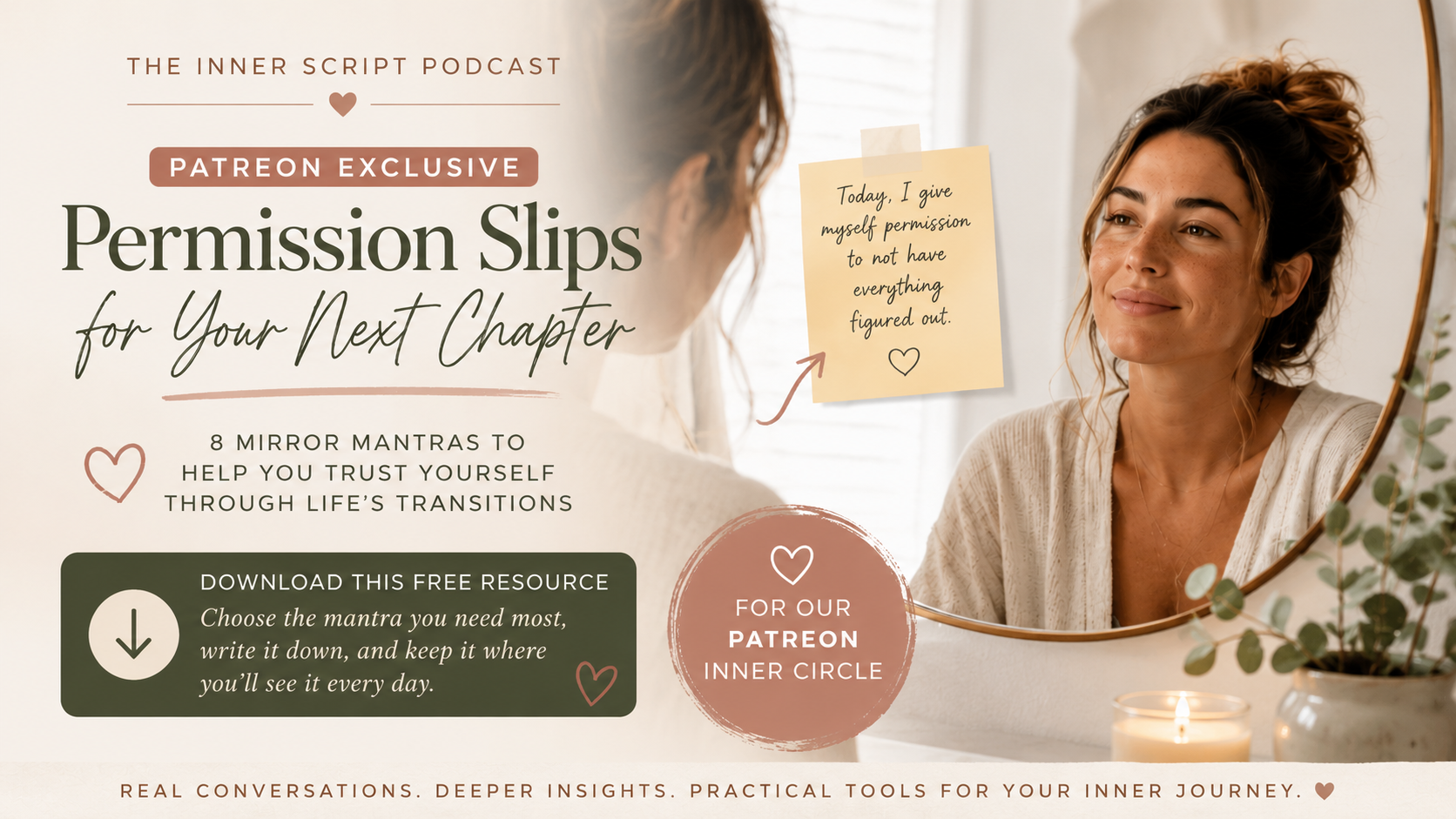
Need a mantra for your next chapter?
Download this free Patreon companion resource featuring 8 mirror mantras designed for seasons of uncertainty and change. Choose the one that speaks to you, write it on your mirror or a sticky note, and let it remind you each day to trust yourself. Download it here: Patreon companion resource
You can also join Steph’s free Patreon community here:
The Inner Script Patreon
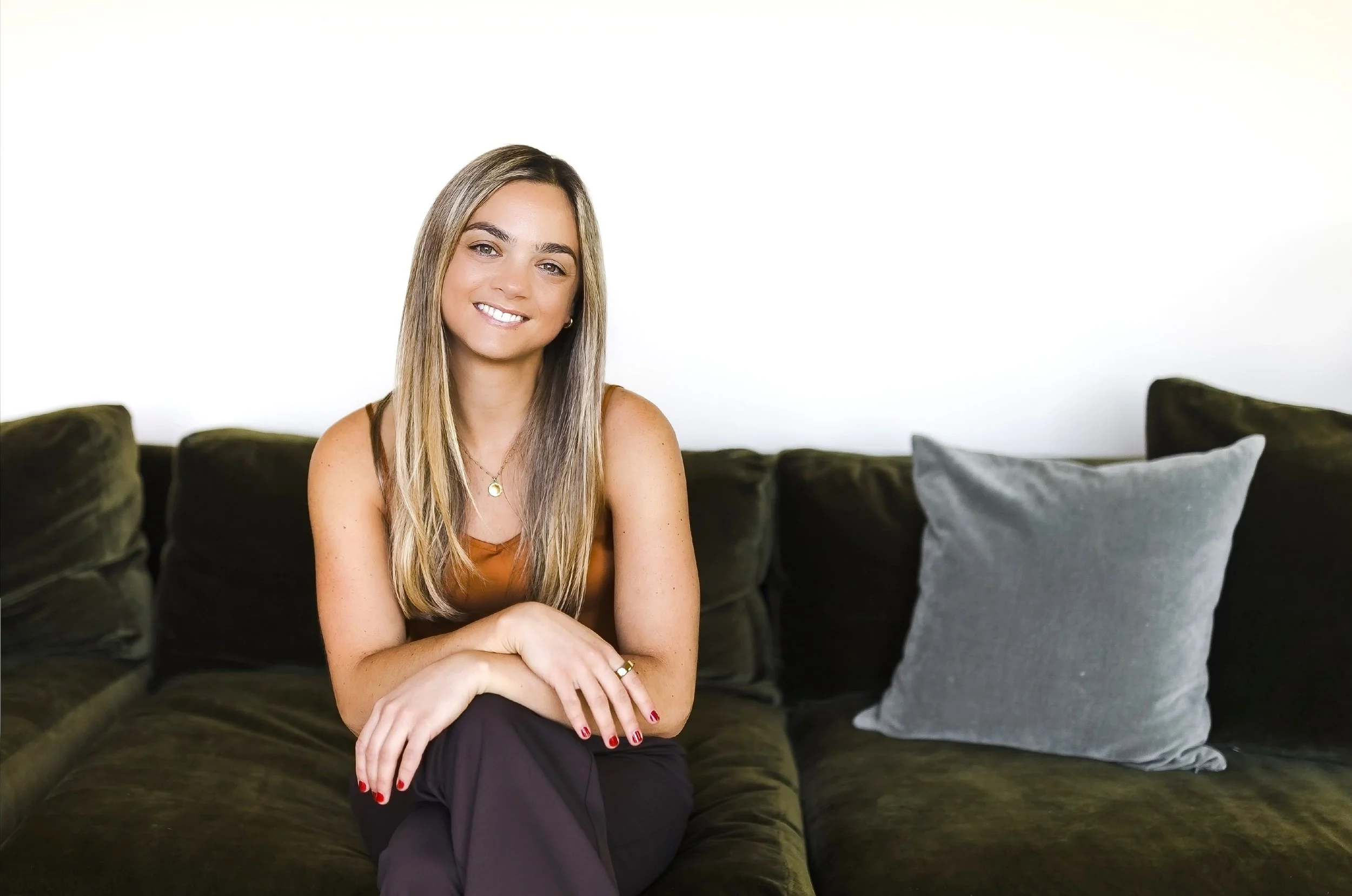
Meet Your Host
Stephanie Baubie, NP is an integrative nurse practitioner and the host of The Inner Script Podcast, where she explores the deeper stories behind health, healing, identity, and transformation. Through a blend of functional medicine, nervous system awareness, emotional insight, and honest conversation, Stephanie helps women better understand their bodies while questioning the narratives they’ve inherited about wellness, worth, and what it means to truly feel well.
On The Inner Script, Stephanie sits down with physicians, founders, thought leaders, and experts in women’s health, while also sharing solo reflections on the transitions and inner shifts that shape our lives.
Follow Steph on Instagram.
FAQs
Why can losing a job feel like both grief and relief?
Losing a job often brings mixed emotions. While it can create uncertainty, sadness, and fear about the future, it can also provide relief if you've quietly felt that something needed to change. In this episode, Stephanie shares how the closure of the longevity clinic where she worked became both an ending and an unexpected beginning, allowing her to reflect on what truly feels aligned in this next season of life.
How do you know when a job is no longer aligned with you?
Misalignment often appears before we consciously recognize it. You may feel emotionally drained, disconnected from work that once inspired you, or notice your body responding with chronic stress and exhaustion. Stephanie discusses how listening to her intuition helped her realize it wasn't medicine she no longer loved—it was the way she was being asked to practice it.
What is low energy availability (LEA)?
Low energy availability (LEA) occurs when your body doesn't receive enough calories to support both exercise and normal physiological function. Stephanie explains why endurance athletes and highly active individuals are particularly at risk, and how chronic under-fueling can contribute to fatigue, hormone imbalances, poor recovery, injuries, and menstrual irregularities.
Can exercising too much actually make you less healthy?
Yes. Exercise is an important part of overall health, but without enough food, rest, and recovery, it can become an additional stressor on the body. Stephanie discusses how overtraining and chronic under-fueling can negatively affect hormones, metabolism, recovery, and long-term health—even in people who appear exceptionally fit.
Why do biomarkers always need context?
Health markers like fasting glucose, cortisol, cholesterol, or hormone levels should never be interpreted in isolation. Stephanie explains why understanding someone's lifestyle, nutrition, stress, sleep, and activity levels is essential before drawing conclusions. Treating numbers without treating the whole person can often miss the bigger picture.
-
Everything shared here is for educational purposes and personal reflection only. Not medical advice. Always work with your own healthcare provider for individual care.
Hi, everyone. Welcome back to The Inner Script. A few episodes ago, I was kinda talking about where I was mentally, emotionally over the last several months. I'm gonna use this episode as kind of like picking up from where I left off on that episode, just because there's been a lot happening in my life lately, and it's been unexpected but also, like, not at the same time.
Just kind of stemming from that, I've just been kinda looking back on how much, I guess, my life was quietly changing and not really realizing it at the time or, you know, maybe I think a portion of me did know, but nothing had revealed itself yet fully. So yeah, let's kind of get into it.
So to kinda summarize a little bit about, you know, two episodes ago, I came on here just to kind of give an update and kind of where things were leading me at that time personally and professionally, and things felt very uncertain. I felt like I was outliving my current life structure faster than it was unfolding, and that can feel very uncomfortable, anxiety-inducing, and just this low-grade feeling of misalignment.
And yeah, it was really uncomfortable. I didn't really know kinda what was coming next, but it caused me to really start reflecting on my career and where I was starting to fit in terms of medicine, which has brought me so much happiness in the last... You know, I've been working in medicine for, like, 12 years, so it's a huge identity for me.
But I just kind of felt like all of that was shifting. At the same time, I started really noticing something else, and it wasn't that my current job was feeling misaligned, but it was this version of wellness that I was immersed in. And I was just surrounded by optimization. You know, I work at a longevity clinic, and my life has really started to focus in, you know...
Part of my passion of, like, wellness and medicine is prevention. And somewhere along the way, I felt like the preventative health kinda turned into optimization, which I feel has become very maladaptive for our society and has created a lot of fear in people. And I would come across that on a daily basis multiple times a day.
Don't get me wrong, I still feel like these things matter in terms of optimization, whether it's tracking biomarkers, body composition, sleep scores, heart rate variability, performance, recovery. All of that does matter, but somewhere along the way, I started asking myself, "When did health stop being about living and start becoming another job?"
And that question really started to stay with me. So basically, back in May May, I found out that this longevity startup clinic I was working at wasn't doing well financially, and I felt instant anxiety. I went kind of straight into problem-solving mode, you know, updating my resume, looking at job posts on LinkedIn or Indeed, wherever.
And I just was trying to get ahead of something that hadn't even happened yet. And the problem was, you know, every job I was looking at in the wellness or in the healthcare space was really feeling very heavy in my body. And You know, even the thought of going back to traditional primary care or a traditional healthcare role honestly made my body recoil.
It made me want to shudder, like made me want to curl into a ball and, like, throw up. I am not kidding. And I'm like, "This is not something I'm gonna do to myself again." Like, I'm not gonna go back to this role where I am burnt out, I'm exhausted, I feel misaligned. It's not serving me, and it's not serving the people that I'm helping.
And, you know, another piece of this, it's not because I don't love medicine. Like, I do. It's a huge passion of mine. Again, it's kind of a part of my identity in a way. Being in... working in medicine and being a healthcare provider, it's really shaped a huge part of who I am. But at the same time, I just knew I couldn't keep practicing in a way that no longer felt aligned.
And it really came to this whole realization to really get me there of no, like, I really can't do that again, 'cause it would feel like backtracking almost, which it just didn't feel right in my body. On top of it, it wasn't the life I wanted anymore, if I ever wanted that type of life. I always thought working and your career, it meant you had to be productive all the time and being busy all the time in order to be successful, and I really started to reframe this where like, no, I don't have to be working my ass off every day in order to be successful.
You know, I don't have to be living this way. And to me, that's just, like, not happiness, because a lot of the roles I worked in made me really unhappy. I'm kind of at this point where I'm, like, refusing to accept that, because I think we should all be loving what we do. And unfortunately, that's viewed as a luxury, and it's, it's really sad to me.
Yeah, overall, I was trying to control this ending before I even knew what or when the ending was. So I made a decision. Instead of obsessing over every possible outcome and trying to control everything, I was just gonna let life surprise me, and I really kind of gave up this control and, you know, this is gonna sound corny, but let the universe guide me and kind of show me what's gonna happen.
Then two days before I left for Portugal, which was in June, I got another update from my company, and the writing was officially on the wall. We were most likely going to close. We didn't have a closing date, but we all kinda knew where things were headed even though it wasn't fully said. I knew what was happening.
Surprisingly, I didn't spiral. I didn't even let myself spiral. I was just like, "Okay," like, "This is what is going to happen." I just remember thinking, "You know what? I'm gonna go to Portugal because I'm leaving in two days, and this problem is gonna be here when I come home, but let's just table this." So I left, and I was not going to go down this rabbit hole of, like, trying to find another job because that would solely come out of anxiety and fear, and it just...
It wasn't coming from a, like, an authentic place at that time. So I just, like, stopped trying to predict my future and leaned into feeling discomfort and allowed myself just to feel whatever I needed. You know, for 10 days when I was in Portugal, I just lived. I was focusing on unwinding. I Didn't wanna think about it.
I was just like, "This is... These 10 days in Portugal is what I'm gonna focus on." If you listened to two episodes ago, the last solo episode, that trip really kind of shifted perspective in me. It just kind of gave me exactly what I needed in that moment. It really gave me distance from my routine, my environment, just kind of the constant noise.
Before that, not even having to do with my career, I just kind of felt like San Francisco felt kind of like this chapter was feeling or was closing, in a sense. I felt like the energy of San Francisco wasn't matching my energy anymore, and I didn't know what to really do with that. And the distance just allowed me to remove myself from that environment that I was in every day and just kind of start noticing things and overall shifting my perspective.
And I realized I wasn't feeling misaligned because I stopped caring about health or wellness. It was, like, feeling misaligned because health had become almost entirely about control, measuring, tracking, fixing, optimizing. And while all of these things, they do have a time and a place, I started remembering why I created this podcast in the first place, and I felt like almost, you know, this role at this longevity clinic, which I really enjoyed working there, I truly did, but I felt myself getting back into these maladaptive behaviors which I felt like weren't always helping my patients, and I would try to focus on the things in my mind that really mattered, which was, you know, diet, movement, stress management, getting enough sleep.
But people were continuing to really focus on chasing numbers and getting the best sleep score. I just feel like we were becoming more and more disconnected with ourselves and how our bodies feel. It just kind of led me to reflect again why I started this podcast in the first place, because it's really asking yourself, like, where is your source of joy?
Where is your sense of community? Where is adventure and living? And that realization just, it kind of brought me back to kind of who I was, in a sense, of in this season of my life. I realized that no matter what job I accepted, I was worried I still wasn't going to feel fulfilled, and I was still just gonna feel a sense of misalignment because it really was never about the job.
I needed space to remember why I fell in love with this work in the first place. I also wanna say I recognize not everyone has the option to step away or travel when life shifts underneath them. But again, this wasn't really about Portugal. It was finally giving myself permission to stop gripping so tightly to life, kind of white-knuckle my way through life, and to feel certain about every little decision you make, because that's just not possible.
So went to Portugal, had a great time. You can listen to what I did said in that episode, or in the most recent solo episode. But a week after I got back, we got the official news that the company would be closing on July 31st, and messaging went out to our members or our patients. So of course, I felt anxious.
Losing a job is scary. I've never lost a job before. Working in healthcare is just so needed. Demand is so high. I never knew what that felt like, which again, is a huge privilege, but healthcare, I think, just kind of works that way. You know, the other thing is, like, underneath all of this anxiety was something I really didn't expect, and it was relief.
I felt like I could finally exhale because, number one, it was finally things were coming to fruition, where the writing was on the wall and I finally knew it was going to happen. The unknown or kind of bracing yourself for bad news can be the worst feeling at times. So it was that, but it was also this realization where this chapter that I sensed was ending was there all along.
So it was like my body knew it was happening before it presented itself. So that was really interesting because I could feel this shift In my life before it presented itself. And then, you know, for the first time in I don't know how long, I mean, if ever, like, I didn't have, you know, a job that was tied to a specific geographic location.
I wasn't tied to a city. You know, wasn't tied to a schedule that someone else had built for me. It was kind of this sense of, "Oh my God, I'm free." Like, it's like this sense of freedom I felt that was both really scary but also incredibly exciting because I had the opportunity to figure out what I really wanted to do.
So I've spent more than a decade working in healthcare. That includes five years as a bedside nurse and then o- over six years as a nurse practitioner. And I started practicing as a nurse practitioner in April 2020, right when COVID literally changed healthcare forever. One of the most stressful periods of time I've ever worked in healthcare.
Over those years, I've watched medicine evolve and, you know, patients are sicker, clinicians are burnt out. I've talked about this so many times of how inefficient our healthcare system is, how almost maladaptive it is, and visits keep getting shorter and shorter while documentation keeps getting longer.
And now with the introduction of AI, expectations for clinicians are higher. You should be able to see more patients since visits are getting transcribed, and it just kind of, it's this constant mismatch of what clinicians are actually feeling and what's being expected of them. It just, it's feeling more and more impossible to work in this space.
You know, again, and technology is promising efficiency, but clinicians are at capacity. Instead of AI being seen as a tool for us to make our lives easier, it's kind of feels like it's given clinicians this excuse where, "No, well, now you can see more people." And that's just, like, not the way it should be.
If you wanna connect with like-minded women and dive deeper into these conversations, join my Patreon community. There's a free option and it's where we can talk about each episode together. The link is in the show notes and I can't wait to see you there.
patients continue to feel unheard. Clinicians feel unsupported. Watching that has been probably one of the most frustrating parts of my career. And that was really when I was working in traditional healthcare. That's not how I didn't have that sense of burnout or exhaustion at my current role.
But just wanna put that out there. But this longevity company also taught me one of the most important lessons of my career, and it really wasn't about supplements, optimization, protocols, biohacking, biomarkers. It was really this, you know, no biomarker exists- Outside the context of someone's life, even at this longevity startup clinic, which was, again, my most flexible job I've worked in, my most favorite job I've ever worked in, so enjoyable to be there, I noticed my conversations kept centering on lab values, no matter how much I tried to deter them from it.
You know, it kept centering around, "How do we lower this marker? Like, what do I want that lab value to be? How do I raise this hormone? How do I optimize this score?" And somewhere along the way, I just found myself asking different questions for them, like, "How are you sleeping? Like, are you having fun? Like, are you experiencing joy?
When was the last time you truly rested? And what are you chasing?" At a longevity clinic, you attract a lot of active people, ones who do a lot of endurance training, marathoners, triathloners, all of it. I always kind of had the sense with many of these endurance athletes, I kind of had this low-grade sense of wanting to ask them, "What are you running away from?"
Because it just kind of felt like it was this pattern where exercise isn't always a good thing at times. Sometimes it can turn into maladaptive behavior. And with a lot of My patients I saw who were endurance athletes, not all of them, absolutely, but many of them, I just had this sense and this feeling that they were running away from something, and I didn't know what it was.
But kinda going into this a little bit more, one of the biomarkers we measured constantly was leptin. And leptin is a hormone made by fat cells that tells your brain whether your body believes it has enough fuel to support everything you're asking of it. So it's like, are you getting enough fuel nutrition relative to how active you are, is kind of like the best way I would explain it to people.
But you kinda wanna think of your calories like a paycheck. Exercise is one expense. Your brain needs a share. Your immune system needs a share. Hormones, bone remodeling, muscle repair, digestion, they all draw from the same budget or the same paycheck. And if exercise or chronic undereating takes too much and you never replenish it, your body starts cutting spending in the departments it considers non-essential for immediate survival.
And again, that's not a malfunction. That doesn't mean your body's doing something wrong. It's an adaptation, so it's actually doing something right. It's adapting to the lifestyle you are currently living. And I can't tell you how many of my conversations sounded exactly the same. You know, "I work out fasted.
I only sleep six hours. I force the workout anyways, even if I'm exhausted. I push through. I train six or seven days a week. I'm afraid to eat carbs." And again, these weren't unhealthy people. They were marathon runners, triathletes, cyclists, people who cared deeply, deeply about their health, and they were chronically under-fueling relative to what they were asking their bodies to do.
And eventually, their bodies started talking back in terms of fatigue, poor recovery, injuries, stress fractures, iron deficiencies, hormone dysfunction, and irregular or absent cycles. And I can't tell you, it was really sad. I had a lot of female patients in their 30s where they hadn't had a period in like 10 years because no one ever thought to ask them about kinda their exercise relative to their eating habits.
Their body's been chronically stressed for decades. A lot of that can be due to this low leptin or low energy availability because your body doesn't have enough resources or fuel in the tank to get a period, to ovulate, to support fertility. One thing that surprised a lot of patients that I talked to about with a lot of them that would probably surprise you as well is seeing their fasting glucose level or blood sugar drift upward.
And most people assume that this means this is an early sign of insulin resistance, which is insulin resistance is what we think of immediately when people have insulin levels that are too high. And a lot of the times that can be due to a sedentary lifestyle, poor diet, metabolic syndrome. But there's another aspect of this, of why people can have high glucose levels and at times turn into pre-diabetes, and it can happen when your brain senses a chronic energy shortage.
Cortisol, which is your stress hormone, rises, and cortisol tells your liver to release stored glucose so your brain always has fuel. And your glucose can rise even when you're still fully insulin sensitive, because it's a compensatory mechanism. Your body is trying to adapt for possibly the not getting enough fuel.
And this is why context matters enormously here, because a fasting glucose of, like, 110, for instance, typically you want it to be under 100 or under 90 if you're trying to optimize. But a fasting glucose of 110 can mean something very different in someone who is sedentary with metabolic syndrome than in an ultra-marathoner who's under-fueling, because in the latter, you actually might need more carbohydrates, and that sounds very counterintuitive, because carbs can increase glucose in the blood.
But when it's coming from a compensatory mechanism, your body isn't getting enough fuel. This reminds me of one woman who said something that I'll never forget. And she was just like, "I'm just so tired, and I know I can keep pushing through. I can always just push through and finish the run or finish the workout, but I just want my energy back."
And I said to her, I was like, "Well, I don't want you to push through, because your body is compensating. Eventually your body votes, and it's going to choose rest until you actually do it. And your body is asking for help." And we've become so conditioned to celebrate endurance that we've forgotten how to recognize exhaustion and to listen to that and think, "Okay, maybe I just gotta skip the workout today."
And we've really confused discipline With deprivation, productivity with worth, and optimization with wellness. And all of this, I realized, is really rooted in fear and control. So I started asking myself, "How do we shift this? How do we shift this frame of living that so many of us are doing?" You know, it doesn't start with eating more or exercising less.
I think it really starts with asking ourselves really honest questions. It's things like, "What am I trying to earn? Why does slowing down feel so uncomfortable to me? Why does doing feel safer than just simply being or being present in my body?" Because over-functioning rarely starts in the gym, it starts much earlier.
Many of us learned our value came from what we produced, so we treat our bodies the same way. More discipline, more control, more effort. But your body isn't asking you to prove itself, it's asking you to partner with it. It's asking you to listen to it. It's funny because when we talk about maladaptive behaviors like addiction, we name them for what they are.
We take them seriously. We recognize that it is illness, it's disease, and it needs treatment and it needs care. But when it comes to over-exercising or chronic calorie restriction, somehow that doesn't get the same attention. We don't see those necessarily as maladaptive, and somehow, somewhere along the way, it got labeled as discipline.
And one of my favorite parts of my job since working at this longevity clinic, it was following up with people three months later. They were performing better, but also their skin looked brighter. They slept through the night. Their periods returned. Labs looked better, too. And all we'd really done was feed their bodies in a way that their specific body needed and gave them permission to rest.
And sure, there were supplements I recommended, like maybe vitamin B12 or iron, especially in women who are menstruating, but I didn't prescribe a single medication. I really focused on our foundations, which is sleep, diet, making sure they're having daily bowel movements, digestion, stress management, movement, and really talking about rest because many of these people didn't need to exercise more.
I actually was telling them they needed to do less, to tone it down, bring in more mobility work, stretching. So it was just so interesting to see how profound these, quote-unquote, "little things" can do for you. Because most of the time, our bodies don't need anything added into our routine. It's always trying to achieve homeostasis, which is our body's ability to maintain an internal environment.
And we can do that by supporting the pillars of health: diet, digestion, movement, sleep, stress management. And one of the simplest moments I've had this last week- reminded me of all of this. A patient came in for her wellness visit and her oxygen saturation read 96%, and she immediately turned to me and asked, "Well, shouldn't it be 100%?"
'Cause I had talked to her before, I could tell, like she was in stress mode. Like, I could tell she was in kind of chronic fight or flight. Like, she was worried about every biomarker, how to optimize it, and she was overall a very healthy person, but it's like she wanted to just optimize every single lab value.
And I turned to her and I was like Take three slow, deep breaths into your abdomen. She did, and a few seconds later, her oxygen saturation rose to 99%. And sometimes the explanation isn't another supplement, another test, another protocol. It can be as simple as we are in chronic fight or flight, and we are breathing from our chest because our body is in fight or flight, and we are breathing shallow, and that is a result of excess cortisol.
And so we have forgotten how simple it can be just to do diaphragmatic breathing because, yeah, that improves gas exchange. It's going to improve your breathing. It's going to improve your oxygen saturation, but it's also going to reset your nervous system. It's putting your body in rest/digest mode. So it's even, like, something so simple as practicing diaphragmatic breathing can change your physiology.
Again, I talk about this with people all the time. Breathing from your chest is maladaptive behavior. It's chronic fight or flight. And that interaction really stayed with me because it felt like the perfect metaphor for where we've arrived in this as a culture. We've become so focused on the number that we've forgotten to ask what created it in the first place.
And kinda talking about my own personal experience, which I've... Of how I found sometimes, like, data tracking, looking at lab values have become maladaptive for me because if you spot it, you got it. I say that all the time. So it's like I kinda had to hand over my own authority with tracking these things, and I've talked about this a lot and, you know, two years ago, how I bought an Oura Ring, not to optimize anything, but because my sleep was genuinely struggling.
And wearing the Oura Ring, it really helped because it showed me kinda what was working, what wasn't, what needs to change. And once I sorted it out, I did keep wearing it, but somewhere along the way, I truly got obsessed with the sleep score, so obsessed that I was scared to have a glass of wine with friends.
Now, there's a time and a place to cut back on alcohol, especially if you are in a period where you're dealing with a lot of chronic symptoms or health issues. I get it, totally, but I was feeling fine. And for me, that fear wasn't a health decision. It was maladaptive, and it was fear dressed up as discipline.
So I really believe sometimes the best thing you can do for yourself is to have a glass of wine with friends, and that was a huge reframe for me. So since then, I've taken months off wearing my Oura Ring here and there, and what I've landed on is this: Technology should be a guide, not an authority, because nothing, no app No ring, no score can outsource how you actually feel if you're still connected with your body.
And look, I still believe these wearables have a real purpose, especially for my situation. Mine really helped me through an actual health issue. But I think we've let them control us instead of informing us, and honestly, I don't think that's a tech problem. I think it's a human one. So it's led me to this question of: Why are we so quick to outsource ourselves to a piece of technology?
And I really don't know. I don't have that answer, and maybe it's because we don't have enough self-trust. I don't know. And if I'm being fully honest, I didn't want to put the ring back on, and the only reason I am wearing it now is to track my cycle. So if it didn't have that feature, I probably wouldn't be wearing it because, again, I wanna just be connected with myself.
That's kind of the biggest lesson in what I've learned from working at this longevity clinic, and I think just everything I've talked about here is data should inform us. It should never control us. So what is next for me? Losing my job could have felt like the end of something, and it kinda did, but in a positive way.
But instead, it really became permission, permission to stop forcing, to travel, to trust that I don't need my whole future figured out before I take the next step. And I think we're conditioned to believe we need to have everything figured out, but we really don't. No one does. And maybe that need in of itself is its own kind of maladaptive behavior.
So over the next few months, I'm gonna be packing a giant suitcase. I'm gonna bring my podcast equipment with me, and I'm gonna go travel and say yes to uncertainty and just kind of figure it out as I go. Because if there's one thing that this whole experience has really taught me, it's that so many of us are chasing certainty about a situation, but you can't get certainty unless you stop trying to control the outcome and actually allow yourself to live the uncertain thing, not just think your way around it.
I also don't think of health as the absence of disease anymore. I think health is the ability to build a life that feels peaceful, one where data provides insight but doesn't dictate your choices. Maybe it's indulging here and there. That's actually so important. And one where rest isn't something you earn and adventure counts as medicine.
Maybe that's what I've been looking for all along, and maybe that's what The Inner Script has really been about from the beginning, to just lean in, allow yourself to live, be who you are, let go of certainty, and embrace the unknown. That's all I have to say, guys. I will see you all next week. I will keep having these episodes and give you updates of what I'm doing, what I'm up to.
Please rate, review, subscribe send me a DM on Instagram at The Inner Script Pod. I will talk to you guys next week.
Disclaimer
Everything shared in this episode is for educational purposes and personal reflection only. It is not medical advice. Always work with your own healthcare provider for individual care.
We sometimes include links to products and services we find interesting. These may or may not be affiliate links. Thanks for your support.
Podcast production by Jamie Brooke.
