Why Your Skin Is Breaking Out: Stress, Hormones and Skin Barrier Damage Explained by Medical Aesthetician Rikki Lauren Robinson
Listen now by clicking your favorite podcast app below:
Is your skin trying to tell you something your skincare routine can't fix?
In this episode of The Inner Script, Stephanie Baubie, NP sits down with San Francisco medical aesthetician and Reiki practitioner Rikki Lauren Robinson to unpack the real connection between stress, emotions and skin health. Together they break down why breakouts, inflammation and premature aging are so often tied to nervous system dysregulation and daily habits, not just the products sitting on your bathroom shelf and why your skin barrier is the foundation everything else depends on.
Rikki shares what she sees every day in the treatment chair: clients whose inflammation, redness and stubborn acne shift the moment their stress, gut health or relationships come back into balance. She and Stephanie talk candidly about Stephanie's own experience with jaw-line acne and melasma, the emotional layer underneath so many skin flares, and why "purging" during a skincare reset is often your body doing exactly what it needs to do. They also get into the practical side — Botox and filler, fine lines versus true wrinkles, perimenopause skin changes, and the skincare mistakes that quietly damage your skin barrier over time.
If you've ever felt like you've tried every product on the market and nothing fully works, this conversation offers a different lens: healthy, glowing skin isn't about doing more. It's about supporting your nervous system, simplifying your routine and giving your skin barrier the chance to actually repair.
This episode is for you if…
Your skin flares or breaks out whenever your stress increases, and you can't quite figure out why.
You feel like you've tried every skincare product out there, but nothing fully clears your acne, redness or inflammation.
You're curious about the deeper connection between your emotions, your nervous system and what's showing up on your skin.
Episode Timestamps
00:00 Introduction
00:17 Meet Rikki Robinson
02:00 Trauma, Reiki, and Career
04:36 Stress Shows Up On Skin
07:11 Acne and Inflammation
09:12 Relationships and Skin Healing
12:57 Botox, Filler, Aging Naturally
18:30 Perimenopause and Hormonal Skin
22:27 Skincare Basics That Matter
45:22 Three Keys to Healthy Skin
Resources & Mentions
MedEstheticsRX - Rikki's medical aesthetics clinic in Pacific Heights, San Francisco
Tretinoin and retinoids
Mandelic acid
Hyaluronic acid
Hydroquinone and azelaic acid (for melasma and pigmentation)
Curious about a supplement Steph has mentioned in the episode?
If you’re looking for products Steph personally recommends in practice, you can browse her dispensary here: Stephanie’s Fullscript dispensary
Please consult your healthcare provider before starting any new supplement. Food, lifestyle, and nervous system support always come first.
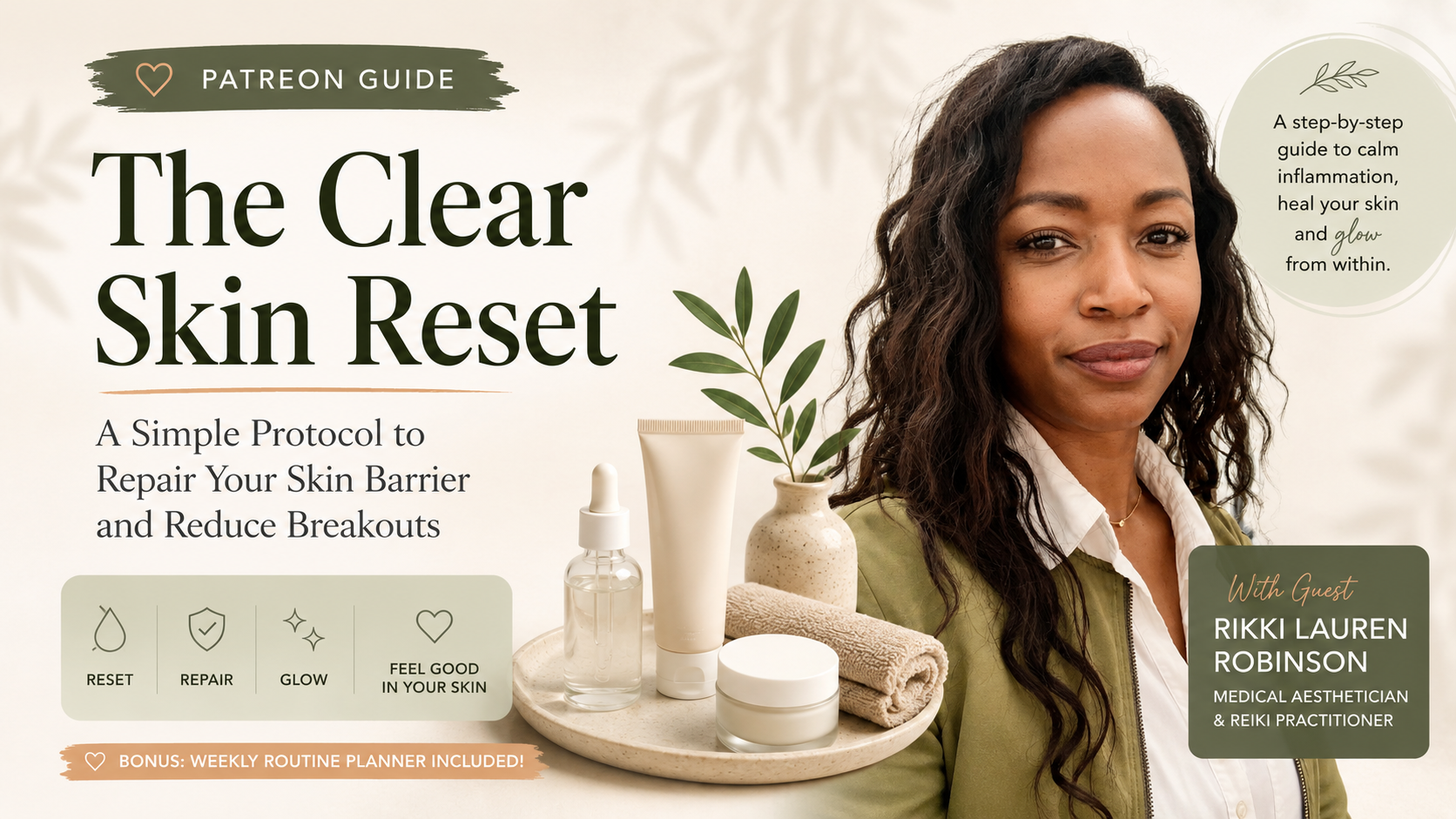
The Clear Skin Reset
If your skin feels reactive, inflamed, or like nothing is working, this free companion guide walks you through a 14-day protocol to calm inflammation, repair your skin barrier and slowly reintroduce actives the right way. Download it here: Patreon companion resource
You can also join Steph’s free Patreon community here:
The Inner Script Patreon

Meet Rikki Lauren Robinson
Rikki Lauren Robinson is a San Francisco–based medical esthetician known for delivering results-driven, personalized skin care. With an understanding of advanced treatments, she specializes in corrective facials and customized regimens that support long-term skin health. Rikki blends clinical knowledge with a warm, client-centered approach, taking time to educate each client about their skin's unique needs and the science behind every treatment. Her philosophy focuses on strengthening the skin barrier, improving texture and tone, and achieving natural, radiant results rather than quick fixes. Clients value her precision, honesty, and commitment to safe, effective protocols tailored to diverse skin types and concerns. Website: https://www.medestheticsrx.com
Rikki’s Website

Meet Your Host
Stephanie Baubie, NP is an integrative nurse practitioner and the host of The Inner Script Podcast, where she explores the deeper stories behind health, healing, identity, and transformation. Through a blend of functional medicine, nervous system awareness, emotional insight, and honest conversation, Stephanie helps women better understand their bodies while questioning the narratives they’ve inherited about wellness, worth, and what it means to truly feel well.
On The Inner Script, Stephanie sits down with physicians, founders, thought leaders, and experts in women’s health, while also sharing solo reflections on the transitions and inner shifts that shape our lives.
Follow Steph on Instagram.
FAQs
Can stress really cause acne or skin breakouts?
Yes. In this episode of The Inner Script, medical aesthetician Rikki Lauren Robinson explains that chronic stress and nervous system dysregulation show up physically on the skin as inflammation, redness, puffiness and breakouts. She shares that she can often sense when a client is dysregulated before they even say a word, and that addressing the underlying stress not just the surface symptoms is what creates lasting change.
Why isn't my skincare routine working even though I'm using the "right" products?
Rikki Lauren Robinson tells Stephanie Baubie that ineffective results are often less about the products themselves and more about how they're being used over-exfoliating, layering too many actives, or skipping a proper skin barrier–focused regimen. She recommends going back to a simple, gentle routine and getting a real consultation with a licensed aesthetician rather than following trends from social media.
What does a damaged skin barrier look like, and how do you repair it?
According to Rikki Robinson, a damaged skin barrier often shows up as breakouts, dryness, redness, patchiness and sensitivity that wasn't there before. In the episode, she explains that the fastest way to repair it is to simplify your routine to a gentle cleanser, a hydrating serum like hyaluronic acid, and a moisturizer that contains ceramides, while pausing exfoliants and new actives until the skin calms down.
Can emotional stress or a relationship actually affect melasma and hyperpigmentation?
Stephanie and Rikki both share personal experience with this on the podcast. Rikki describes a client whose breakouts and melasma cleared dramatically once she left a stressful relationship, and Stephanie shares that her own melasma flared during a period of major life stress and sun exposure combined. Rikki explains that consistent SPF, a melanin-suppressing ingredient like azelaic acid or hydroquinone, and addressing the underlying stress all play a role in improving pigmentation.
What are the biggest skincare mistakes people make in their 30s and 40s?
In this episode, Rikki Robinson points to over-exfoliation and barrier damage as some of the most common issues she sees, along with skipping daily SPF and expecting instant results from products that work gradually. She also cautions against assuming a routine needs to be identical for every skin type or ethnicity, and encourages people to get an in-person consultation with an aesthetician rather than guessing based on trends.
How does perimenopause change your skin?
Rikki Lauren Robinson, who is in perimenopause herself, describes the shift as sudden — a loss of plumpness, more noticeable pores, sagging and a depleted glow. On The Inner Script, she shares that consistent tretinoin or retinoid use, layered moisturizing with ceramides, and gentle daily exfoliation helped restore her skin once she addressed her hormonal shifts rather than reaching for more aggressive treatments.
What actually creates glowing, healthy skin according to a medical aesthetician?
When asked to name the three most important habits for healthy skin, Rikki Robinson tells Stephanie that daily SPF, a tolerated cellular renewal ingredient like retinol or tretinoin, and gentle, consistent exfoliation to support cell turnover make the biggest long-term difference. She emphasizes that consistency over time not intensity or quick fixes is what produces visible results.
-
Everything shared here is for educational purposes and personal reflection only. Not medical advice. Always work with your own healthcare provider for individual care.
Stephanie Baubie: Hello everyone and welcome back to the Inter Script Podcast. I have such a fun guest here today. I have Rikki Robinson. She is a medical aesthetician at Metastatics in San Francisco. I have been to her plenty of times when I was going through it with my skin flare, as she knows, and she specializes in corrective facials, customized.
Regimens that support long-term skin health. And I will say she is also certified in reiki, which is an energy healing practice. Anyone that knows me, if this is your first time tuning in, I am very into nervous system regulation, energy practices. So I was like, she gets it. This woman is for me. So Rikki, welcome.
How's it going?
Rikki Robinson: I'm good. Thank you for having me, Stephanie. I'm really excited.
Stephanie Baubie: Okay, so Rikki, tell me about how and why you became a Reiki practitioner and then an esthetician. I wanna hear that story.
Rikki Robinson: So actually I became a Reiki practitioner to help me deal with my own trauma. I was going through a really challenging time in my life exiting college or actually. I didn't quite finish college at that point. I was looking for something and I didn't know what it was, and I had gone down this path of massage therapy.
And in that training we also started to explore energy work. And I realized how much peace I found when we were practicing that. And so I decided to go into a deeper dive with that, and I realized. A lot of the stuff I wasn't able to address in talk therapy was actually being released and worked on through this energy healing.
And that's when I became a Reiki practitioner and the master that I worked under, he explained it as like, we all have the ability to heal ourselves, and I truly see that through Reiki and it's the best thing I could have done for myself is give myself that gift.
Stephanie Baubie: Yes. And that's something I say to my patients all the time is like, we really are our own healer. So it's such a beautiful way that you just said that. And then what brought you into being an aesthetician and skincare and all the things.
Rikki Robinson: I was actually a social worker. That's what I ended up going down that route. I was working on the side as a massage therapist as well, just for my own. Personal growth and balance because social work was so draining for me, and I got pregnant with my son, who's now 11, and my husband recognized that I wasn't really happy with what I was doing, and he really suggested that I take the time.
To find something that I felt complete with. I wanted to lean into massage therapy, but I also recognized at the age I was at, I was already over 30 at that point, that longevity of that career might not be what I wanted to be at that point. And so I was like, well, what else can I do? I've spent all these hours learning massage and what, what else can I do with this?
And I was like, I love skin people. You know, were complimenting me on my skin. It's something. That just felt like a natural transition for me, and I went down to the Aveda school here in San Francisco and it felt like home. So that's when I started on that journey. At first, I went in and I was like, okay, I don't know if I'm gonna do this.
I actually went and looked into somatic therapy and it was like, oh, maybe I wanna go that route instead. But I recognize with having a child that I wanted to be very present for my child. And I knew I'm starting on a whole nother program of very intensive studying and a lot of clinical hours that I wasn't gonna be able to be as attentive to my child as I wanted to.
So aesthetics, it was, and I have never looked back. And I love it. It allows me to incorporate everything that I've learned, the energy work, the massage, also the interpersonal communication with people. It's just, it's my happy place.
Stephanie Baubie: And we're definitely gonna get into kind of the more practical things, but since you kind of brought up somatic therapy, energy healing, I'm curious, are you able to. You know, tell if somebody comes in with a skin complaint, whether it's acne, hyperpigmentation, scarring, whatever, can you tell or know, or how does stress actually show up on the skin?
And can you kind of tell the difference between somebody who's coming in regulated versus chronically stressed?
Rikki Robinson: Yes, it is very apparent not, I will say some people tolerate stress better than others, but some people it literally shows in their skin, in their body. You can see the inflammation. I'm really sensitive to energy too, so I can literally feel it coming off of them when they're unsettled. I've had people sit in my chair, you know, in my chair and literally look at me and just like start crying 'cause they finally feel like safe in a space to be able to express themselves.
I think the relationship between an aesthetician or even your cosmetologist in you is a, it's a very unique one and we hear a lot of things that. I think people don't even tell their own families or their partners even sometimes their therapists. So yes, I think stress definitely plays out. You see it in with inflammation, you see a lot of redness in the skin or even like a bloated puffiness.
Um, I've had a couple clients recently where I've noticed like a yeast influx on the skin that almost plays out similar to fungal acne. And when you talk to them about their stories, you can see that they're in this very tumultuous time. In their life and you realize that their whole system is not regulated from their gut to their mental health and they are not grounded.
And I've actually saw a client recently that was in a major influx of stress and we've been working together for a couple years and she followed some of my suggestions with balancing out her gut health. 'cause I really feel like her gut health was also affecting her mental health. I don't know for sure 'cause I, not a doctor, but from my experiences I could see this and I was like, whoa, this girl is really going through some things.
And once she came back in the other week and everything was so calm, like her energy was calm, her skin was like a whole nother person walked through the door and I was like, what did you do? She's like, I followed what you said. I, I balanced my gut health. Everything just started calming down. She's like, my skin started to clear.
I also took suggestions on, she was overlayering products, things along those lines, living in a humid environment and creating almost like a hot pocket on her face.
Stephanie Baubie: Just perfect area to just grow everything.
Rikki Robinson: Grow everything and just let it thrive. So it was really reaffirming to me that I'm like, okay, trust your gut too and let your clients know what you see in them. And also, you know, reinforcing them when you do see them making healthy habits and making change and yeah, but there is a big balance. A lot of times when clients, when we talk about.
Their skin, and especially like acne in general. I do bring up the lifestyle aspect and finding a balance in stress is a big part of that too. Having other outlets, because a lot of us do act out on ourselves when we're stressed, and a lot of that happens with skin picking is a big part of that too. So just trying to be that support and letting them know that they're not alone in it and that we all go through these cycles of influx and yeah, that it's temporary and we'll work through it.
Stephanie Baubie: Yeah. No, that's such a good answer. It's because it's so frustrating when there's something going on with your skin because you know, there's a lot of things we can do topically. Absolutely. But it's really kind of the inner layer that we have to address and. Dive deeper into, so it's definitely, you're using your intuition almost too, it sounds like.
Rikki Robinson: Clients have to use their intuition too, because we are not with them on the day to day. So you have to really start to be mindful of your habits as well to see what is triggering you. For some people it is diet. As soon as they eat. Cheeseboard, they're having a charcuterie their whole, the next morning they wake up and they're like, oh, my whole face was broken out.
I'm flushed all through here. Yeah, so let's note that down and maybe relate that. Or other times when we're high stress people are like, oh no, it's definitely what I'm eating. I'm like, yeah. When we're stressed, we tend to sink into comforts foods, which tend to be inflammatory foods, which then throw off this whole other balance in our lifestyle.
And then it's a slippery slope that a lot of us go into.
Stephanie Baubie: So kind of going a little bit more into this. Do you believe the face can kind of hold unresolved stress or emotion?
Rikki Robinson: Yes, I do because, well, for some people, you know, it can be a reoccurring pimple or lesion that they don't realize when or where. Came from. But sometimes when you start having like going in deeper into the conversation, then they realize like, wait. That kind of correlates with, you know, a partner. For instance, I had one client that her breakouts were partner related.
It wasn't only the stress of their relationship, but also the. Her partner sabotaging her skincare and mental health, you know, so it was all correlated. But what I too saw her recently after some time because she had been away due to injury and it was like, girl, you could tell he is out of your life because you're.
Skin looks amazing. You look amazing. You could literally see the glow coming from inside of her, and she was coming in every three weeks for facials. 'cause her breakouts were so bad to manage her acne. We were doing extractions regularly, just trying to get her clear. And as he started to exit her life, he just noticed how she was able to space out the facials.
And then once he was completely out of her life. Her skin, literally the inflammation, everything left and it cleared just beautifully. There's very limited pigment left everything, because I really feel her whole system was able to detox itself.
Stephanie Baubie: Just to go off of that, you know, I started seeing you. Well, I started seeing you before I had my acne flare, but then I came to see you because I had this persistent acne on the right side of my jaw and kind of it went up to my cheek and sometimes here on my, like the side of my face and I did everything, you know, and it was finally, once I regulated my nervous system and really found alignment and like joy in my life, my skin healed within.
Like a week. It was wild. And the things we did, like we did a lot of microneedling. You know, I was using like vitamin C, very like minimal products and that definitely helped with fine lines, my hyperpigmentation, but that acne would not go away until I addressed my shit. Seriously, it was like a constant reminder of like, Nope, nope, no, you gotta dress your shit, Stephanie.
So I think that's just such an important thing. And I tell my patients too, usually with skin things, there's just a lot of the times suppressed emotions there that need to get out. And I actually see it a lot. With anger and resentment. Just very like red, angry rashes. I see a lot, which obviously you guys, there's a time and a place to be angry and resentful, but I just think your body is just trying to tell you to release all of that.
Rikki Robinson: Let it go. Yeah. Because that's only affecting you. Whatever you're angry with, they're not feeling that you're the one that's taking on all that energy. You're the one that's boiling in it, and it's coming out of you in so many ways.
Stephanie Baubie: Do you tell your clients some of this too? Like do you get into the kind of the deeper like suppressed emotions ever?
Rikki Robinson: Yeah, if they want to go there, you know, it just depends on how they enter into the treatment room. There's some people that are open books and literally from the day they sit on my chair, it's like I've known them their whole life because. The way we talk, the conversations we have are very open, and then others, they kind of, you, you know, it can take time or they don't see this as necessarily a connection.
A lot of people don't see the mind, body, spirit connection or want. Yeah. They just don't believe in it.
Stephanie Baubie: And that's.
Rikki Robinson: Different structure for different folks. Yeah, for sure. Some people believe in just straight science and they're like, A, B, and C will get me to D. And it's like maybe in time. But you know too, if you breathe, if you go on a walk.
Stephanie Baubie: I know. I know. Just walk at some sunlight. Anyways. Um, no, I think that all is just so important in addressing the emotional aspect, I think is really what's going to create that radiant, glowing skin. But there's also other things, you know, we can do as well that I kind of wanted to dive deeper into. And one thing I really appreciated about you, because I have never gotten Botox or filler, and it's not that I'm against it, I just, I have this weird.
Intuitive feeling that I will react to it. I just have this weird thing like I'm gonna react to it. And I was chatting with you about it, and you're like, well, I've never had Botox or filler either. And if you guys are looking and watching this, Rikki's skin is amazing. Like I have no words. So tell me your thoughts on Botox and filler.
Rikki Robinson: So it's not that I'm opposed to those things, it's just not every. Body is the the right solution or needed at the time in which they're thinking they do need it? Botox like some people, you know, as you watch me talk, you see my forehead going up. Some people can't control that at all. Like literally they lay down on the table and as soon as they start talking, their whole forehead is just jumping around and it's making major, major movements where it's leaving deep set permanent lines.
Those people, if those lines bother you, you do have to freeze the bustle. You will need to do the Botox, but there are other modalities that can soften those lines and still allow you to age gracefully without introducing. Any foreign substances into your body. So, but you know that, I won't say I will never, I'm just trying to go as long as possible.
I do believe that, you know, when I look at pictures of my grandmothers, I'm like, they're absolutely gorgeous and in no way, shape or form did they use any Botox or fillers. But I do know that they were shaving their faces and using Vaseline on the, you know, an occlusive. So, I mean, I think. Good moisturizing healthy habits, lifestyle does play a a part in good skin.
Yeah.
Stephanie Baubie: Okay, so going into that, there's such a huge, you know, fad with anti-aging. Nobody wants to age. Nobody wants the wrinkles, which I hear ya. I get it. But how much is aging hormonal versus environmental versus collagen decline? And I'm talking about like the fine lines and the wrinkles.
Rikki Robinson: So with fine lines, a lot of that is like environmental or lifestyle related. It is easily correctable. Fine lines, a lot of times is surface dehydration. So it could be using the wrong product, not using enough of a product, or even overusing. Your exfoliants, things along those lines. So it is taking a look at what you're doing and making small tweaks.
A lot of times when clients come in is, is they're doing the right things. They have the right things in the regimen. It's just how they're app applying or how much they're applying. So I think those types of things can be addressed easily. It doesn't mean that you have to go in and get this huge CO2 resurfacing to get rid of all these little fine lines that you have.
Um, first try making some minor lifestyle adjustments. Always drink more water. Yes. Topically yes. Adding in a hydrator, like a hyaluronic acid, making sure your skin is properly moisturized. How you use hyaluronic acid, for instance, it needs to be applied to damp skin. Because it can exasperate dryness if it isn't applied to damp skin.
So little tweaks like that for some people make a huge difference to using the right products for your skin type. I think it is really in this world of social media and all these influencers, they promote everything as, as if it's one size fits all. I think the best thing everyone can do is go get a consultation from a real esthetician, not from a beauty.
Brand like Sephora. Yes, they're lovely people. Don't get me wrong. I love the girl. I love the little girlies and uh, people at Sephora. I love the people at Credo Beauty. All of those places, they are truly talented, but. They don't have the time or some, in some areas, the expertise to look at your skin closely.
And so I think going into an esthetician and getting your skin looked at and making sure you're on the right products for your skin type is important. And reviewing that with the seasons, because a lot of the stuff is temporary and it does happen with the seasons. Like right now we're in winter, so you will see more dehydration on your skin and you will see more the fine lines and things along those lines because we're running heaters.
And we're up in Tahoe over here in California. You know where Yeah. They're running up and down. It's dry. Yeah, we're coastal, but it's very dry. We don't have that relative humidity. So, you know, introducing a humid, a humidifier into the home can make a huge difference for a lot of people. Yeah. So just small things and readjusting your skincare to the season too.
You, I think you will see the decrease of fine lines now, wrinkles. Those are permanent, more deep set lines. Wrinkles are things that we've, you know, developed over time, whether it's from constant expression or with age. The loss of, um, elasticity and collagen in the skin and the fat layer underneath the skin starting to deplete itself with time.
So that's why we want to do if against treatments that help to stimulate those deeper layers to keep that type of aging from happening.
Stephanie Baubie: So what type of advanced treatments is that? Like lasers? Is that microneedling? Red light therapy?
Rikki Robinson: Well, it can be advanced, meaning yes, collagen, simulating treatments like microneedling or laser heat treatments like, uh, radio frequency or alt therapy, those types of things do help a lot with overall prevention of. Wrinkles and aging, the sooner you start those things, ideally we wanna start those kind of practices before menopause.
Really, I am on this huge, like, sorry, I'm in my me perimenopause phase right
Stephanie Baubie: actually gonna bring that up about perimenopause. I was going to ask, because you know, hormones are declining or fluctuating, and I'm curious how that could show up on the skin.
Rikki Robinson: It does. Your skin shifts overnight. Literally. It's like, I woke up one morning and I was like, who the hell is this? Like, and I've always had, I was like, who's that Haggard woman staring back at me?
Stephanie Baubie: Is it like puffiness? Is it fine lines?
Rikki Robinson: Yeah, you lose plumpness. You start noticing the sagging, the loss of volume in the face, the glow that your skin almost becomes depleted in nature. You might notice yourself become more porous. A lot of people feel like their pores become too, uh, more noticeable. So for myself, I did have some time to, because.
Injured myself. Last year I had some time to figure some things out. Yes, I realized I was entering into perimenopause and my hormones were all over the place. That helped a lot. Recognizing that immediately that, oh, I don't have to go run out and go get a facelift tomorrow. No, Rikki, just work on your eternal health balance, how your hormones, and I think then my skin started to come back to its normal self.
Yeah.
Stephanie Baubie: So like what did you do for your. Skin specifically when you noticed that hormonal shift or going through perimenopause.
Rikki Robinson: So I've always, or often on used retinoids or tretinoin. So I became much more consistent with my Tretinoin use and found a cadence that works for my skin type of at least every two days. More than that, my skin becomes sensitized, and once it goes into a sensitized state, then you will notice more lines and more.
Wrinkles because your barrier's disrupted. So keeping the barrier healthy is always going to be the first line I think of any skin disorder is making sure you have a healthy barrier. So just increasing moisture riser at this point, I'm like a moisture rising junkie. It's applying, you know, multiple layers if needed, um, and finding the right type for you.
A lot of us are in something that might be too heavy and it can be cloggy for us, and it's just literally. Fat sitting on top of your skin, not necessarily penetrating the skin. Also using gentle exfoliation consistently. For some people they can tolerate acid like a 10% acid daily, and that's enough for them.
Other people can tolerate or need. Up until a 20% on a more consistent basis. So that again, is going back to visiting your local aesthetician and making sure you build in a regimen that works for you all good health, even whether it's perimenopause or just regular skin or post menopause. We do need to make sure we are cleansing properly to remove.
The environment from our skin Night cleansing, I think is the most important because that's when we're in the restorative state is at night, so you wanna make sure you wash off that full day. I see skincare is kind of ritualistic too, because you wanna remove the day like you've been outside, touching people, all kinds of energies and stuff.
So as soon as you come in, people are like, oh, do I have to wait right before bed? No. Come wash our face. As soon as you walk through that door, you're more likely to do it.
Stephanie Baubie: I. Doing that for whatever reason, I was just like, I need to like get my skin just like I'm done with work. I'm like, let me just wash the day away.
Rikki Robinson: Yes. It makes a huge difference with how you too relax at night. I think so. Wash the day, so come home, remove everything because in that process. Some people's skin can tolerate a double cleanse. A lot of people's skin too, whether it's oil followed by a gentle cleanse or a gentle cleanse followed by something heavier, um, because you're a more oily skin type, but take the time to really cleanse.
It's like brushing your teeth. You need the full two minutes. It's not like splash water on my face, I'm done. No. Spend the time to really work through your skin. Two, you start to feel and notice changes and shifts and so I think that's a good time just. To check in. Um, also, gentle massage goes a long way.
The consistency of massage does help a lot with blood flow, and that too helps with the skin as a whole. So taking that time. And then from there, if it's night, you know, you're gonna focus on your actives, which are going to be your retone, or some people don't use retinols. And that is fine. Not everybody's skin can tolerate.
Don't think that because this is the gold standard. It's needed by everyone. No, if it doesn't work for you, that's okay. There's so many other ways to get cellular turnover than retinoid, and a lot of people have this idea in their mind that retinoids are their exfoliant. Your retinoid is not your exfo.
It is a cellular renewal. It's a misconception. Yeah. And so they're using retinoids. A lot of people are using some form of retinoid or retinol or there's 50 different things now, Baca, all these things, they're using something, but a lot of people aren't exfoliating properly, and so they have this dead skin layer built up on their face that then it's going to accentuate your fine lines and wrinkles and also look very dry.
You are gonna look very depleted and very, you know, people are like, why is my skin not glowy? Because you don't exfoliate. Yeah. So we have to slot the skin from our whole body because there's also a lot of clients that take care of their faces. But then as soon as I'm looking at their neck and chest and their arms as they're laying there, I'm like, you look woo.
Like we. It's a whole body thing. You know, you have to treat yourself well from all levels of yourself. And so yeah, making sure that you have a healthy exfoliating practice. I'm not the biggest fan of gr granule exfoliants. I know a lot of people like that scrubbing feel. Um, I think that's fine like once in a while, but that should, that's not enough.
I do feel that everyone should have some form of a chemical exfoliant that their skin can tolerate in their regimen.
Stephanie Baubie: So that would be a more gentler exfoliant. And then can they use that daily or still kind of space it out?
Rikki Robinson: So daily exfoliants I feel should be in like a serum form. So something that it's going to apply and be, stay on your skin, not something that you're just like a lot of people think 'cause they have a glycolic wash that's exfoliating. Yes. But you're just, it's a temporary quick wash. It's not really doing the same thing as like a serum.
Stephanie Baubie: So what type of serum.
Rikki Robinson: I personally use Mandelic for irregular. It's gentle, it's mild, it's effective for a lot of skin types and most people can tolerate on a daily basis, whether it's in the 10% to 15%. Um, a lot of people that carry like redness, like it works really well for them. It helps with a lot of skin disorders, like rosacea, and it does help with acne as well.
Has a great response on inflammation too. It can help with. Pigment inhibiting. So if you're someone that, uh, experiences post-inflammatory hyperpigmentation, that is a good one. If you, you know, have good general skin, 10%, a cosmetic level is good, it's fine for you. But if you're someone that struggles with, you know, rosacea, like a more prevalent.
Consistent persistent rosacea or acne that's pretty stubborn. You might want to go to your doctor and get something prescribed in the 20% realm to really, um, address it. That's where, you know, you going to your derm every year is important too, for not only, you know, just to have them double check everything, general skin health.
They aren't the best place to go get a regimen built. So that's why I do say go see your aesthetician for that, for your general overall just. Mold checks, make sure there's no cancer and those kind of things. Yeah, you should go to your derm for that.
Stephanie Baubie: Such a good point. So for anti-aging and addressing fine lines, it sounds like kind of changing your skincare based on the seasons, more hydration in the drier seasons, wherever that it's. For you doing an exfoliant to kind of get rid of that dead skin so the moisture can penetrate, and then anything else.
Rikki Robinson: SPF sunscreen, you have to wear sunscreen. You have to. Doesn't matter what color you are, you have to, doesn't matter if you have all the melon in the world, even if you are a hermit and never leave your home, there are now things in our homes that can actually. Pigment causing light and cause issues. So ISPF every day, during the day, whether you're inside or out, or if you're someone that is a big screen person and you spend a lot of time in front of your screen and you notice that pigmentation is starting to come into your skin and you're wondering, like, I never go outside, why am I having pigment?
Because the blue light. They're starting to find can cause pigment in some people. So that is something blue light filters on your screens and yeah, wearing SPF, keeping some SPF next to your desk. I think a lot of us still have in the mindset and think of sunscreen from when we were a kid and we think like, oh, we're gonna be the fuck white cast and I'm gonna look like Casper the ghost.
Or for me, I would look like a lavender lady. Like, I'm like, are people looking at me 'cause I'm cute? Or are people looking at me because I look insane right now?
Stephanie Baubie: SPF can give you a glow. You guys the right SPF People have asked me, they're like, what are, what's on your skin? I'm like, it's SPF. What's the one you guys sell? 'cause that's the one I still use.
Rikki Robinson: sell El d. There's, it's a great one. We also sell Tzo, which I love for indoor outdoor play. And then we have our house metastatics.
Stephanie Baubie: It gives me a nice little glow, you know, I'm like feeling good leaving the house with my SPF.
Rikki Robinson: That's what I'm like SPF. I think it's also become, for a lot of people, the Tinted s SPFs have become like their daytime makeup and is giving a lot of great coverage. And I think that goes too, saying if we, if you work on your good general skin health, you can be minimal. And I think really let your natural self shine through and feel confident in that.
Stephanie Baubie: So, I know we may have touched on this a little bit, but curious what some of the biggest mistakes you see when people are in their thirties. And forties. In terms of skincare, I know you said not using it in exfoliant, is there anything not wearing SPF.
Rikki Robinson: Yeah, I would say a lot of things, it's damaging their barrier. So over exfoliation, they've damaged their barrier. Um, trying to correct overcorrect versus because we want instant results. Nothing is instant except for shaving, except for derma planning. You get an instant result from that, and that's not for everybody, but I think.
We are so used to because of what we see on social media and on TV and whatnot, we assume that those results were achieved in in one session, and I wish there was more regulation around that, that people had to be much more transparent about what they're doing to achieve their results. Because I've seen so many people.
Thinking like, if I just keep scrubbing this spot, it's gonna go away. And it's like, no, you're making it worse. No, you're actually causing more pigmentation in your skin for being too abrasive. Yeah. Just assuming you don't need a certain product because you're of a certain ethnicity or something along those lines.
No, we all need close to the same things, but there are minor tweaks in what you might get a better result with. Certain products do work better with certain ethnicities.
Stephanie Baubie: So barrier protection, like what is the best thing to do for that? Is it still exfoliating? Is it moisturizing?
Rikki Robinson: Moisturizing. Yeah. Moisturizing is always gonna help support that barrier function. Always tell clients if you don't know what to do, go into a simple regimen. If you feel like your skin is literally freaking out. You're all of a sudden seeing breakouts, you're seeing patchiness, redness, things that weren't there.
The best thing is to go into a mild regimen. Don't start trying to throw the kitchen sink at it because that is where you will literally end up. You could completely destroy your skin, and it could be hard to even get it back to where it was before. So going into a simple regimen of a gentle. Cleanser that's hydrating and that's not gonna be stripping.
And then hydrating, um, serum, like a hyaluronic acid can help in that process as well with something soothing along those lines. And then focusing on good moisturizing and a good moisturizer. 'cause a lot of people don't like heavy, but you need to make sure that your moisturizer does have ceramides in it.
Ceramides are the support of the barrier function, and so we want to make sure we're using moisturizers that have those. Um, yes, the aqua or the water gels feel lovely and nice, and I think those are great in the summertime, especially in more humid climates or for people that are really. Oily, like true oily skin types.
Not because you are a little shiny, but you are huge pores with literally, there are people wake up in the morning and their oil is present on their skin and they can wipe their skin and lit and see the oil on. You know, it's Kleenex. Those people, that's fine, but most of us are not that. Most of us think we're oily or we wanna be oily, but we're not.
You're probably dry and your skin is overproducing oil. You need more moisture.
Stephanie Baubie: I need more moisturizer. It's like an oxymoron. It's like, nope. So what are some of your favorite moisturizers? Do you recommend getting a moisturizer and a face oil or tell us a little bit more?
Rikki Robinson: I do like elta MDs Moisturizers because they're like gel and moisturizer had a baby together. So it's really a nice formulation that really sinks into the skin well, and the skin I think, receives it well where you don't have that layer of feeling oily or greasy, some. Moisturizers by them are really nice.
But if we're just at the drugstore, I really like La Rochet. La Rochet is a great one. Just their double, if you're acne prone, the double repair, if you're not acne prone, the triple repair, if you're dry, those are, you know, great drugstore brands. I think a lot of the brands that are dermatology recommended, dermatology recommended for a reason and we should respect science.
I have a very strong background in clean beauty. I went to Aveda and I worked with Credo for a long time. So I do believe in clean beauty, but clean isn't necessarily the right thing for everything in some people's regiments. So if you're dealing with more skin disorders, like a lot of those naturals can actually be more irritating to you.
And so I think that's something that people need to recognize too. Again, finding the right products for your actual skin type. But oils, yes, I think oils are great for some people. And there's the right kind of oil for everybody. Some oils do lean into that are much more poor. Cogging, like avocado, coconut, those guys can be too, olive oil can be too heavy for oily skin types, but someone that is very dry or mature skin, they could swap all they want on their skin of that.
And it's. If their skin's gonna really like it, where someone that might be oily, it's a fine line with introducing oil at all. For some people, even as a clean oil cleanse, it just literally builds up in their pores so much easier because they're dealing with other, that skin build up.
Stephanie Baubie: Curious your thoughts on clear stem? I think that's what it's called, that. Skincare company. It's like all over social media. Do you know what I'm talking about? It's clear stem. They seem pretty like medically based. I was just curious your thoughts on it because I do, it seems like their products are, are pretty legit, so I was just curious.
Rikki Robinson: So is it something similar to like a product brand like Curology or Mu, like where they build S Systems for people?
Stephanie Baubie: I think so. Yeah. Yeah. And they have like supplements for skincare and everything, so they seem, I was just curious.
Rikki Robinson: they have you review with a dermatologist first also,
Stephanie Baubie: No, no, no, no. I don't think, maybe, I actually don't know. I.
Rikki Robinson: yeah, I think there's a lot of. Brands out there. Now, see that's the hard thing too, is that people throw all boy to me and I'm like, I don't know what that one is. And they're like, oh, it's all the trend right now. It's like, is it? I'm like, oh, I missed that. There are a lot of good brands. What is more important, I think if everyone takes the time to, um, learn ingredients and learn how products are, like, how the ingredients lists are structured, then you can shop.
With confidence easier than actually looking at the brand. So you wanna see what's in the product and then that lets you know, is this going to give me what I need for my my skin type? Yeah. Yeah. I would say ingredient knowledge is something that has been way more helpful to me than learning the actual brands themselves.
'cause they come and go so quickly and they change their ingredients all the time. So looking at those ingredients is important because you can fall in love with something. There have been brands that people are like. Tried and true for years and years and have never caused them problems, but because some of these larger conglomerates are coming in and buying them, they've changed up their product formulations and it's gone from something that you love to something that actually is salting your skin on a daily basis.
Stephanie Baubie: Okay, so like we want ceramides in a moisturizer. We want actives in a. Serum for some if you wanna do like a light exfoliation. And then did you say a cleanser with like hyaluronic acid or glycolic acid?
Rikki Robinson: Yeah, no, we wanna stay away from active cleansers. Yes, you can have them in your arsenal, but, um, I don't think it's necessarily the best thing for everyone's daily cleanse to be an active, because there are times that you do just need to focus on supporting your barrier function and have no active as part of the regimen.
So always in an arsenal, I think you need a gentle cleanser, which would be like a, a gentle, uh, hydrating cream cleanser for most people, something very light or a foaming cleanser.
Stephanie Baubie: So there's cream gel and then foam cleansers and oil. So Gel Cleanser is, does that have more actives in it typically?
Rikki Robinson: It's hard to say 'cause not all gel cleansers have actives in them. It's reading what the ingredients, it's knowing. What the ingredients do. Like so many people became obsessed with salicylic acid because it's trending, glycolic, she was just trending. Those girls are are not nice to everybody. Like I kind of put them in the mean girl category
Stephanie Baubie: Small doses. It's like the anno annoying people, the small doses.
Rikki Robinson: and you know, some people can tolerate them on a high level, leave that for them, but most of us cannot.
Stephanie Baubie: If you're listening to this podcast, you probably can't because your nervous system is sensitive.
Rikki Robinson: Yes. So your skin literally, it's like getting stripped, um, by using that. And so a lot of people think because they heard from an influencer, whoever, that I need to use a salicylic acid every day. Because I have a couple bumps on my face or I wanna resurface, and then all of a sudden they have no barrier and they have 50 billion bumps all over their face.
Barrier is the new thing. I remember growing up, it's like we were came up in a time where you destroyed the barrier. Like everything we did for breakouts. I remember having acne as a kid and my face would be on fire from half of the things I was using on it. Like the cla isol and the sea breeze and the all of the benzo peroxide all combined at once.
That's insane.
Stephanie Baubie: The Neutrogena b. Thing that you would
Rikki Robinson: We'd be just scrubbing and scrubbing. My
Stephanie Baubie: I stripped my skin. Like I think that's what caused my hyperpigmentation, to be honest, which sucks, but here we are.
Rikki Robinson: No, but in your mind we're told like, oh, I gotta scrub that away. I gotta scrub the black. Like, oh. Like I gotta scrub it to get it go. And really the scrubbing is what can cause pigment more, as you were saying. More pigmentation on a lot of people.
Stephanie Baubie: So we, I guess like this is, we kind of talked about trends just now, but any other trends that make you cringe, make you wanna pull your hair out, scream.
Rikki Robinson: Home devices. I mean, I love, uh, um, the LED lights. I think they're great, but. Um, I think the face mask revolution was just so intense and we jump on trends so fast before we see all of the research from them. Understand that a lot of things that come out the trend is brand researched, it's not medical researched, and by the time the medical community catches up with the trend, the damage is already done on a lot of people.
So what they're seeing now in like the red light mask, yeah, they're great. They work for a lot of people. But too, do you sanitize your mask? It's probably increasing your acne. Oh, do you have melasma? Well, it could actually be causing problems. It could actually be intensifying your melasma. That direct light on a lot of people.
Some people is not. Okay. So now they're like, oh, the domes in a dome form. Or How is your melasma? Is your melasma hormonal? Or is your melasma heat related? You know, there's so many little things that it's like we, we don't know. 'cause a lot of people's melasma is hormonal related, so that won't affect, but some people's melasma is triggered by.
Heat or light sun.
Stephanie Baubie: I Mine's triggered by heat and sun. Well, maybe both hormonal and I have an LED face mask, so Right. I haven't used it in a while.
Rikki Robinson: Yeah. And then two, we make these huge investments and then they live in our closets forever, and then you never see 'em. So the domes are becoming more the panels. Because they become multi-use. You can use 'em on other parts of the body. Red light does work really well for inflammation. So it is something it helps too.
We're talking about it helps regulate sleep. There's so many benefits from it. Um, plus your skin.
Stephanie Baubie: But so many people have melasma and might be unknowingly using it, especially if it is heat. I feel like most melasma like is heat induced, like from the sun.
Rikki Robinson: Yeah. Or from the treatment. So again, on these trends and fats that are going through because professionals aren't being transparent with their clients or. Properly vetting their clients and before they do certain procedures. A lot of, I've corrected a lot of people's skin because they received a treatment that did all of a sudden induce me asthma in them.
Or they didn't do the proper pre-care because yeah, a lot of the offices, they aren't going through. Are you on this? Making sure you're on the proper pre regimen before even starting, um, the treatments.
Stephanie Baubie: Well, that's actually why I first started seeing you was because of my melasma at the time. 'cause I had just moved to San Francisco actually, and. So I don't really know what, what totally caused it. I always knew I had it, but it flared after being in the sun one day. But I was also in like not a great relationship at the time.
So I think it was literally both things.
Rikki Robinson: The perfect.
Stephanie Baubie: The perfect storm of like, that's when like I was just about to move. I was having doubts, and then I go in the sun and bam, I wake up the next morning and I have like a stash on my melasma stash and I'm like, oh my God. Obviously we are our, like our own worst critics and people would be like, Stephanie, I can't even, I can barely see it.
And I know, but I was like, but. I can see it. This is terrible. So anyways, that's originally why I started seeing you in San Francisco and we did some microneedling and it's really calmed down with the treatments we've done. I haven't done microneedling in a long time, but I need to go back and do it. So just a quick, like some quick tips for asthma.
Obviously it's SPF, like you have to apply SPF, wear a hat in the sun. I became very diligent about that, but anything else?
Rikki Robinson: I'm using a melanin suppressant of some form. The high or the gold standard is hydroquinone. A lot of people have their own beliefs around hydroquinone, so I personally go on and off of it myself. I haven't experienced any issues with it, but it's not something I use consistently either. But people that have very aggressive melasma, a stent on hydroquinone can definitely create almost like a melanin shield underneath the skin.
Um, and then from there we can start removing the pigmentation and it doesn't allow new, um, melanocytes to move forward and up, which literally blocks, puts a shield. Won't get future pigmentation. But also a oleic has a similar melanin inhibitor property and it doesn't have as much controversy around it.
A lot of, a lot of people don't like hydrocodone because it's misused in a lot of countries. It's used for skin bleaching and there's been linked to it, um, causing cancer in lab rats. So, you know, to be on something and then have to come off to detox your liver makes a lot of people uncomfortable. So, as Aole is a great alternative to that, again, it puts that.
It can put that shield underneath or help move the pigmentation through quicker. Uh, if you do experience it, mandelic also has that ability also. The higher the percentage of those, the better. So 20% oleic or 15% mandelic will give you more of that melanin shield. But definitely getting into one of those forms helps.
Alpha Butin is another one.
Stephanie Baubie: Ooh, good to know. But some people who have like already sensitive skin may not be able to tolerate like oleic acid or in the higher quantities.
Rikki Robinson: In the higher quantities and the lower quantities they can, then that's where you just, it's a balance of SPF oleic and then doing treatments in office treatments, staying away from heat induced treatments, radio frequency, your Thermage, those kind of things. Alt therapy might not be for you if I were blast not for you.
Those things will leave long-term pigmentation, that it becomes a really rocky road in correction. I had one client that was looking for collagen stimulating treatments, and she got lured in by social media to do fibroblasts, and the technician did not properly vet her and recognized the fact that she did have melasma.
And so if Fibroblast is like a system. Literally is like tiny dots are all over her face. All over her face were tiny dots on her face and neck in the pattern in which they did the treatment. And that lasted with her. It took us a couple years to correct it. A lot of money too, to correct it because a lot of these.
You know, good practitioners will offer you to help you correct the process, or they have insurance that will help you to be able to correct this. A lot of what we see on social media, I don't know if they're properly regulated, if they're properly insured, or if they care to help you, they will take the ding of the one bad review because they're receiving so many other things coming through social media that, that they don't care.
Stephanie Baubie: That's just so unfortunate because you're already, you know, not feeling great about one thing and then. You're getting this treatment that it's very expensive and then bam, it just makes everything worse, especially the the melasma. So we really have to find a good. Like practitioner, like I consider you guys know what you're doing.
Yeah. There's like a medical aesthetician is the person to go to in my mind for any type of treatment. So that's really unfortunate. But I'm glad you were there to like. Help her. So, you know, I'm all about the basics. So, you know, we're kind of getting close to an hour here, but I'm all about the basics, simplifying things.
So if you could pick three things that everybody could do. I know this is hard based on like skin. Just if we could walk away with three things we can do to optimize our skin, like the foundation of our skin, what would you say?
Rikki Robinson: That you could do at home for yourself. Well, SPF wear your SPF every day, whether it's sunny or not sunny. Most people have received their most significant sun damage on a cloudy, overcast day. So SP, F every day, there's no point in you doing active treatments using advanced products, any of those things.
If you're not gonna wear your SPF, like that's pointless. It's pointless to invest in yourself if you're not gonna wear your SPF. And then two, yes, finding some form of cellular renewal product that your skin can tolerate, whether it's Baca tool or as advanced as re no, but introducing that in earlier than later.
Huge difference. Clients that introduced that in, in their twenties, when I see them now in their eighties. They look younger than some of you in your thirties and forties because they take good care of their skin. Yeah, it's, and like the actual skin, if we were just looking at the skin closely, not looking at the full face, but just taking pictures of the actual skin, you'd be surprised with people that have been consistently using vitamin C, tretinoin and SPF, that's, you see it, I see it in my 80-year-old clients.
I see it in the people and I see it in those that don't.
Stephanie Baubie: Okay. Yeah, vitamin C is so important. It just glowing skin brightening.
Rikki Robinson: It gives a great antioxidant protection. It works in conjunction with your SPF, it gi. It's, it's a good one. Now, if you're looking for something to correct pigmentation, no. Vitamin seed will not necessarily do that for everyone. Correct sun damage and photo damage. But if your pigmentation comes from other areas, that might not be your, your pigment corrector, but it does help your general skin health and so many.
It's, yeah. Helps with collagen and it does do a lot in the right percentage. It needs to be 15 to 20%. That's another one of those guys that has to be in the right like dose or right percentage, dosage, whatever, because it's not effective otherwise or minimally effective. Otherwise. Yeah.
Stephanie Baubie: So we need the right dosing, so it's ingredients we have to read the labels, like we have to read nutrition labels, and then making sure we're getting enough of the ingredient.
Rikki Robinson: Trust the process. Slow and steady will run your race like a sprint is not gonna get you the result that you want, but slow and steady and just staying consistent and trusting that you are getting the result, even though you might not see it that next day. Trust me,
Stephanie Baubie: That emotional awareness we were talking about before, just trust the process. It's never linear. You might have a breakout in between your body's recalibrating. I think that is so important to consider.
Rikki Robinson: You're purging. If you are purging internally, just expect that purge to come out of the skin as well. So if you are going through whatever, um, difficulties in your life, just know that yeah, it can come out in dryness or breakout or redness. But yeah, disruption definitely will
Stephanie Baubie: Just like every feeling we ha have hopefully is temporary. So is a flare, you know? So I think it, that's just such a good reminder, like I need to remind myself that.
Rikki Robinson: If you're flaring, hibernate, you know it's okay to like go inside and take it easy and do the same thing to your skin. Give yourself grace. I think that we're our worst enemies and a lot of times we do start picking on ourselves, literally, physically, and that is, it's the time that you need to give yourself some grace.
Smile at yourself. Yeah.
Stephanie Baubie: Some, some more support.
Rikki Robinson: Yeah, compliment yourself. Elise. Give yourself one thing. Give yourself a positive to every negative that you're throwing at yourself.
Stephanie Baubie: Seriously. Your skin will thank you, and it will show. All right. I have one last question before we end. What do you think makes the biggest difference to get that radiant, glowing skin out of everything we talked about or if we didn't talk about it?
Rikki Robinson: It's like exfoliation, like whether it's physical, so shaving, dermaplaning, those kind of guys give you instant glow on some skin types. Of course, if you're dealing with cystic acne or inflammation, not the best thing, but those do give instant gratification. You will see a glow after shaving and doing a light exfoliation and hydrating your skin really well.
You wake up the next morning, you wanna glow. That's when people are like, how are you glowing? I shave and then I put some moisturizer on with an occlusive. So Aquaphor, Vaseline, or oil that your skin likes. Wake up in the morning and I'm glowing, and then put my SPF on when I leave and yeah, you're good to go.
Stephanie Baubie: And you don't wash your face in the like with cleanser, right? No. Okay.
Rikki Robinson: No, unless I, after like a heavy workout, yes, I will do a gentle light cleanse. But no waking up in the morning. There's no need to cleanse be unless you are a super heavy sweater or again, if you're a severe, oily skin type acne. But for a lot of people. Cleansing that close together and using surfactant actually will exasperate dryness in the skin.
So no need. If you feel like you wanna remove residue, you can do so with a toner. So swiping through the skin with a toner for a lot of people will
Stephanie Baubie: If you.
Rikki Robinson: them remove it.
Stephanie Baubie: Workout. It's like a gentle cleanser after you work out right?
Rikki Robinson: Yeah, especially if you're doing a sweat induced workout, going to hot yoga or doing a heavy cardio because there is bacteria and sweat. We do want to get that bacteria off because in time that can eventually be caused issue and washer stuff like your equipment, this kind of stuff. This is where a lot of those strange sabotages, I call these our secret sabotages, earphones, headbands, hats, scarfs.
We pull things out of storage and don't think twice about. The last time we used it and how many times we used it,
Stephanie Baubie: Touch our phone and then rub our face like there is gross shit on your phone, and then you're just like touching your face.
Rikki Robinson: touching all up to your face. Sunglasses, glasses wears you guys like clean around your rims. Those kind of little things make a huge difference because those are a lot. Um, a big part of our reoccurring breakouts are habitual habits or things that in our day-to-day.
Stephanie Baubie: I love it. Thank you so much for coming on. Where can everyone find you if they wanna come in for a treatment?
Rikki Robinson: I am in San Francisco in Pacific Heights at 2300 Sutter Street, but you can go on our website@uhmetastaticsrx.com and. You can book appointment through there and we're happy to help you in any way, shape or form, but we do believe in skin health first, and then we can definitely help you figure out what path you wanna go on.
Stephanie Baubie: You're in a comfy chair. They give you this blanket. You're like, it is, it's luck. Sheri over there.
Rikki Robinson: We have the most comfortable chairs in the in San Francisco.
Stephanie Baubie: I highly, highly recommend. So everybody book your appointments with Rikki. She's amazing. Thank you so much for coming on. Such a pleasure. And let me know if you guys have any questions. Feel free to send me a DM at the inner Script pod on Instagram. So good to chat with you guys and I will see you guys next week.
If you wanna connect with like-minded women and dive deeper into these conversations, join my Patreon community. There's a free option and it's where we can talk about each episode together. The link is in the show notes and I can't wait to see you there.
Disclaimer
Everything shared in this episode is for educational purposes and personal reflection only. It is not medical advice. Always work with your own healthcare provider for individual care.
We sometimes include links to products and services we find interesting. These may or may not be affiliate links. Thanks for your support.
Podcast production by Jamie Brooke.
