Afraid You’re Making a Mistake? How to Trust Yourself When Others Think You’re Wrong
Listen now by clicking your favorite podcast app below:
What if the decision you’re afraid of getting “wrong” isn’t actually a mistake at all?
In this solo episode of The Inner Script, Stephanie Baubie, NP explores our fear of making mistakes and how other people’s expectations, perfectionism, optimization culture, and information overload can quietly influence the choices we make.
While traveling through Europe without a job, apartment, or concrete plan for what comes next, Stephanie has been thinking about what actually constitutes a mistake. There are objective mistakes with clear right and wrong answers. But what about leaving a relationship, quitting a job, moving somewhere new, changing careers, or choosing a life other people don’t understand?
Stephanie explores why we treat these deeply personal decisions as though there is one “correct” answer, how fear of getting things wrong can keep our nervous systems in a state of hypervigilance, and why constantly looking outside ourselves for reassurance may actually make it harder to trust our own judgment.
She also examines how this fear may be affecting our relationships and contributing to loneliness. When did calling a friend become something we needed permission to do? And are we becoming so afraid of bothering people, saying the wrong thing, or being “too much” that we’re unintentionally creating more distance from one another?
Ultimately, Stephanie offers a different question to ask when facing uncertainty: not “Is this the right choice?” but “Does this choice move me toward or away from what I actually value?”
This episode is for you if…
You’re facing a major decision and are terrified of making the wrong choice.
You find yourself worrying about what other people will think of your decisions.
You struggle with perfectionism, overthinking, or constantly seeking reassurance.
You feel pressure to optimize your health, career, relationships, or life.
You want to trust yourself more when there isn’t an obvious “right” answer.
You’ve noticed yourself becoming more hesitant to call, reach out, or connect with other people.
Episode Timestamps
(00:00) Life Without a Plan
(03:10) What Is a Mistake?
(04:32) Outsourcing Our Judgment
(06:12) Why We Fear Mistakes
(07:34) Objective vs. Subjective Mistakes
(09:31) Are We Overinformed?
(11:23) Fear & Hypervigilance
(12:53) Why We Stopped Calling
(14:29) Redefining a Mistake
(16:24) Perfectionism as Self-Avoidance
Resources & Mentions
Oura Ring: https://ouraring.com/
The Inner Script Patreon: https://www.patreon.com/cw/TheInnerScript
Follow The Inner Script on Instagram: https://www.instagram.com/theinnerscriptpod
Curious about a supplement Steph has mentioned in the episode?
If you’re looking for products Steph personally recommends in practice, you can browse her dispensary here: Stephanie’s Fullscript dispensary
Please consult your healthcare provider before starting any new supplement. Food, lifestyle, and nervous system support always come first.
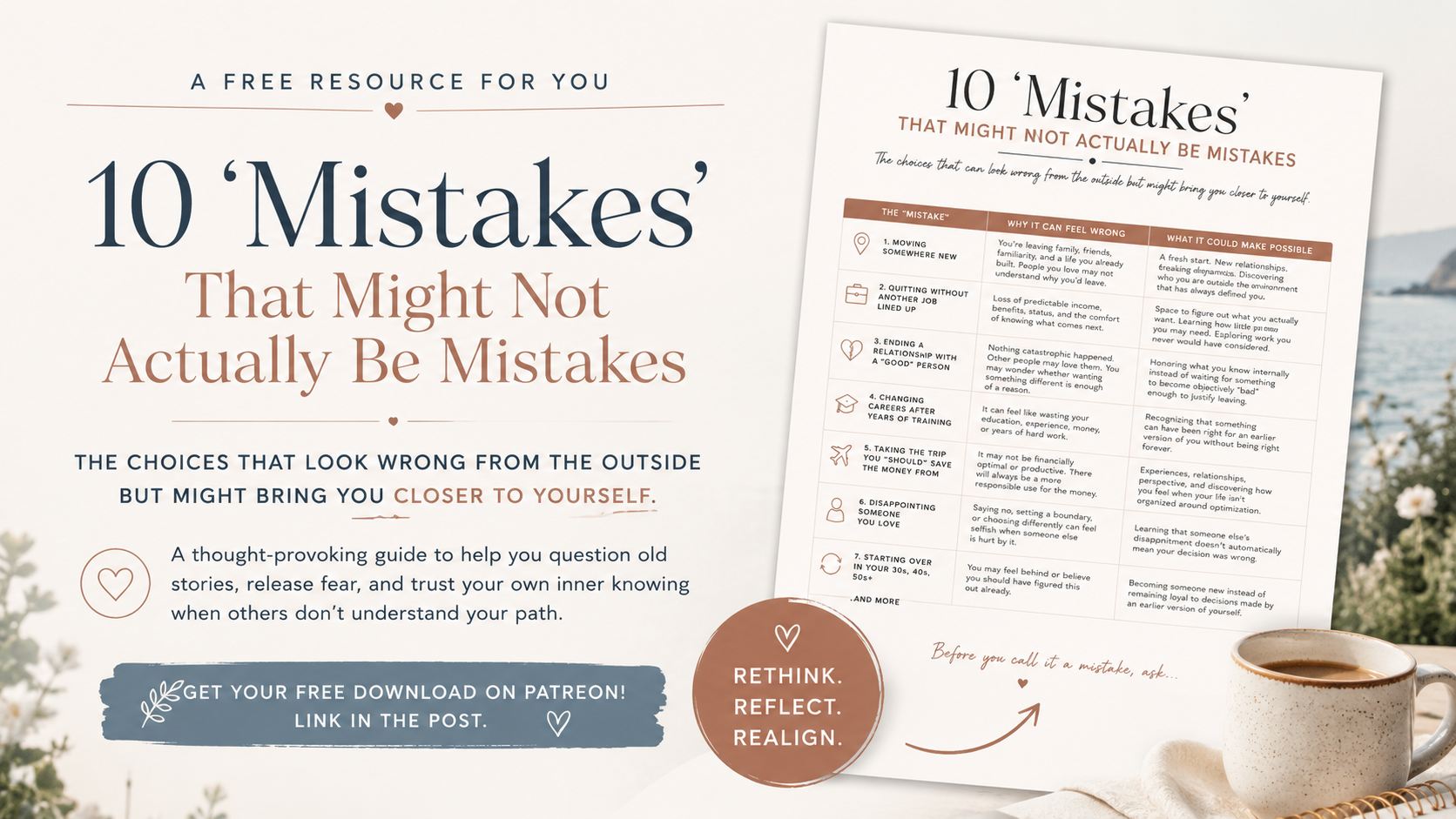
Is it really a mistake?
Download this free one-page guide to rethink the choices you’ve been afraid to make. Explore 10 decisions that can look like “mistakes” from the outside, what they might actually make possible, and four questions to help you separate genuine risk from fear, outside expectations, and social conditioning. Patreon companion resource
You can also join Steph’s free Patreon community here:
The Inner Script Patreon
Meet Your Host
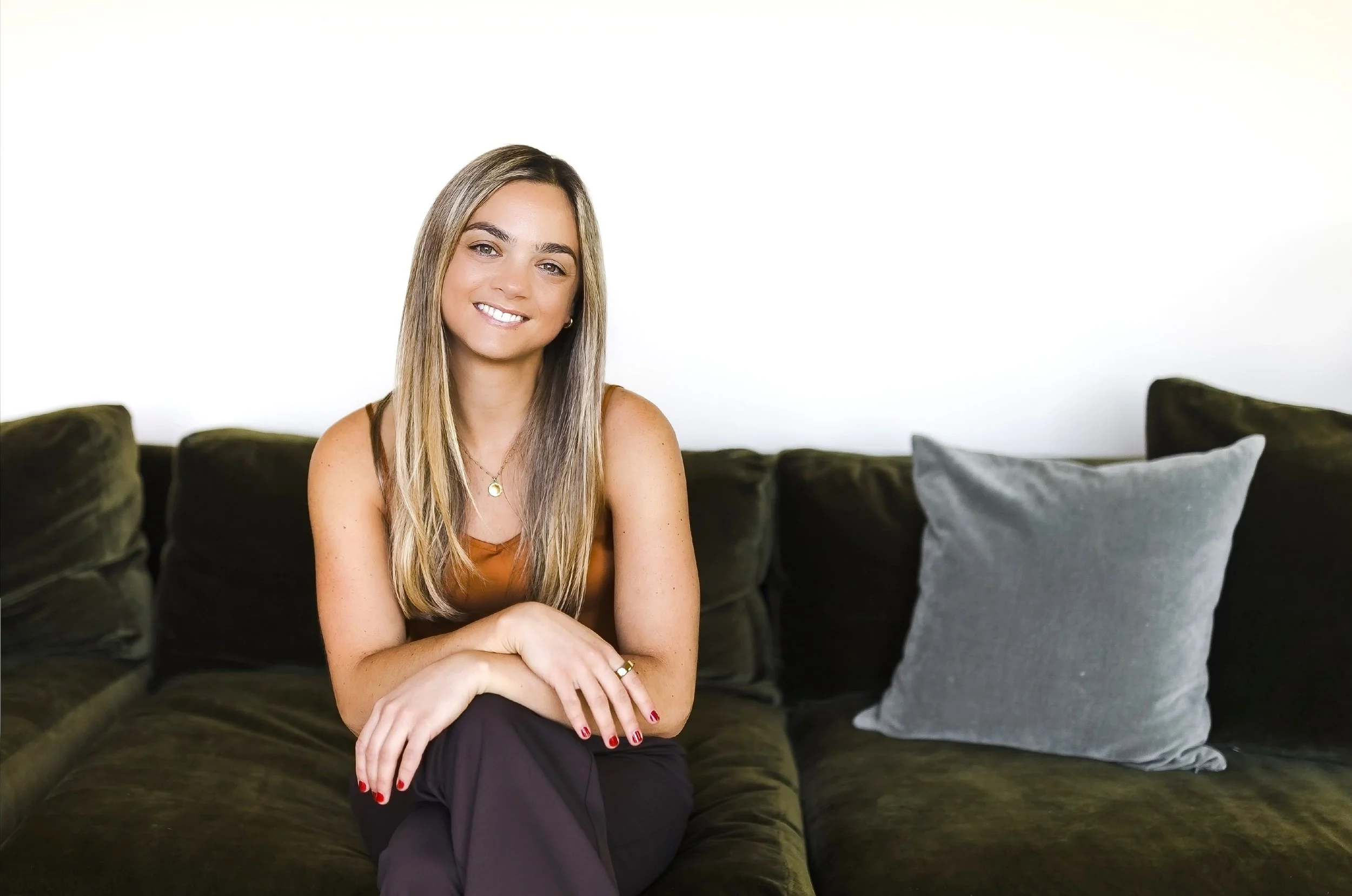
Stephanie Baubie, NP is an integrative nurse practitioner and the host of The Inner Script Podcast, where she explores the deeper stories behind health, healing, identity, and transformation. Through a blend of functional medicine, nervous system awareness, emotional insight, and honest conversation, Stephanie helps women better understand their bodies while questioning the narratives they’ve inherited about wellness, worth, and what it means to truly feel well.
On The Inner Script, Stephanie sits down with physicians, founders, thought leaders, and experts in women’s health, while also sharing solo reflections on the transitions and inner shifts that shape our lives.
Follow Steph on Instagram.
FAQs
How do I know if I’m making a mistake?
Consider whether there is actually an objectively correct answer. Major life decisions are often subjective and values-based. Instead of trying to guarantee an outcome, Stephanie suggests asking whether the choice aligns with your values, integrity, and the person you are becoming.
Why am I so afraid of making the wrong decision?
Fear of making the wrong choice can come from many places, including perfectionism, social conditioning, fear of judgment, information overload, and discomfort with uncertainty. When every decision feels like something you need to get “right,” even ordinary choices can begin to feel threatening.
How can I stop overthinking major life decisions?
Rather than collecting endless information or trying to predict every possible outcome, identify what you value and notice where the fear is coming from. Ask whether you’re responding to genuine risk or to discomfort about uncertainty, judgment, or disappointing someone.
How are perfectionism and fear of mistakes connected?
Perfectionism can create the belief that there is a correct or optimal choice available if you just research, think, or plan enough. Stephanie explores how this can become a form of control and even self-avoidance, keeping you from making choices where the outcome cannot be guaranteed.
Can overthinking affect the nervous system?
Constantly scanning for whether you’ve made the wrong choice can contribute to hypervigilance and sympathetic nervous system activation. Stephanie discusses how this can show up physically through restlessness, tension, insomnia, or difficulty tolerating discomfort.
What if other people think I’m making a mistake?
Other people’s concern or disappointment doesn’t automatically mean your decision is wrong. Their reaction may reflect their own values, fears, expectations, or ideas about what your life should look like. Stephanie encourages considering whether the decision violates your own values or simply doesn’t match someone else’s expectations.
How can I learn to trust myself more?
Self-trust doesn’t require knowing that everything will work out exactly as planned. It can mean trusting your ability to make choices based on the information you have, stay connected to your values, adapt when circumstances change, and pick yourself back up when something doesn’t go as expected.
-
Everything shared here is for educational purposes and personal reflection only. Not medical advice. Always work with your own healthcare provider for individual care.
Hello, my friend. Welcome back to The Inner Script. So kind of unattached to a job, an apartment. of going about it right now.
I really noticed that the pace everywhere is so much slower. There's so much less urgency with people just walking the streets, getting to a restaurant, going to a cafe, stores. People are so leisurely here. They just feel almost more regulated. People just appear more driven by community, good food, good wine, and again, it just overall has been feeling less hectic in a lot of areas, and kind of just more intimate.
People are really craving human connection, and just kind of spending hours at dinner, and just so much less urgency with their lives. But what I will say, kind of on the negative side of it is, with some of these places I've been to, not Scotland, but I would say more in terms of definitely in Biarritz, I feel kind of a sense of distaste for tourists in some of these areas I've been to.
On the flip side, I do get it. These places are so gorgeous. They're beautiful. There's obviously people's homes, and I think when a place gains a lot of popularity, it can lose its charm. I completely understand as why someone who is living there as a local, then they see all of these tourists, and people don't like change.
I do understand that side of it. But as a tourist, somebody who is visiting, I'm kind of sensing that distaste in some of the locals who are kind of serving us or me. Again, these places are so beautiful, but a part of me kinda takes pause. I'm like, "Would I come back after feeling a little bit unwelcome in some instances?"
But overall, that doesn't take away from these experiences It's been so great just to be unattached. Just giving you guys kind of the full mindset here of what's been going on. So a lot of positives. Just kinda wanted to share that. Just a little bit of negative experience here and there, but that's life.
On top of it, I've also been pretty much out of a routine in a sense. Definitely drinking more wine than normal, not really eating like I normally do. I'm still trying to eat healthy, be conscious Of that. But again, I feel like it can be easier in Europe at times because the food here is just so fresh. It tastes so much better.
I hate to say it. It's just not as processed as food in the US. I'm not necessarily watching what I'm eating. I'm just kind of still being conscious in a sense, but overall, just definitely not restricting myself in any way. I'm still exercising, but definitely a lot less than I normally do. The interesting piece in all of this is, like, I feel really good.
Like, I feel great. I just think it really goes to show how important mindset and perspective are literally everything. I've been kind of reflecting on this piece of mindset and perspective and how I just feel like they've been getting taken over by fear and control. I do wanna name something upfront because it's actually the whole reason for this episode.
By a lot of people's definitions, what I'm doing right now in terms of traveling, not having a job lined up, no plan past the next few weeks, would probably be a mistake in some people's minds. That's exactly the kind of thing that fear-based living tells us to avoid at all costs. I've never felt more aligned in what I am doing, and I know this is the, quote-unquote, "right thing" for me right now, and I don't really care what people think necessarily.
I'm really taking a chance on what feels aligned for me, really just trying to stay brave in all of it. Just to go on more of this tangent, I think I'm just sick of trying to have everything figured out, because I really don't think we are supposed to have everything figured out anymore. I was having a conversation with someone recently that really helped me understand why we're so afraid of that word, and it's mistake.
Why are we so afraid of it? This conversation was very insightful, and it allowed me to do a lot of reflecting on what this even means. What is a mistake? I wanna bring you into it today. So let's get into it. Here's what I think is actually going on. Our fear of making mistakes has made us outsource our own judgment, and we've handed it over to optimization culture, to our phones, to everyone except ourselves.
Before on this podcast about how wellness and optimization culture has quietly turned into its own kind of fear-mongering. We've talked about it so much l- in the last few months on this podcast. It started as tools to try and help us track our sleep, optimize your morning routine, biohack your way to your best self, and it's just become another arena where we can get it wrong and feel like we're messing up again.
And instead of freeing us with these tools, it started to interfere with how we actually live. Every choice starts to run through a filter of, is this optimal? Is this correct? Is this the right way to do it? I've shared before how tracking my sleep with Oura turned into control for me, but this also showed up in my digestion issues as well.
Every time I tried a protocol, a diet, restricting my diet, overriding myself, I felt worse. I let the protocol and the food control me. I let the fear of a negative experience get in the way of me actually living. So the question underneath all of it, why is there so much fear right now? Because I keep thinking about this over and over again, and I keep bringing it up in conversations with people.
And when we were talking about the fear of mistakes, it's what I kept bringing up. I was like, "Why is there so much fear right now?" And more specifically, why has mistake become one of the scariest words we have? And I don't think this is only an individual psychological phenomenon. I think it's cultural.
Adding to it is we're really living inside of a collective nervous system state, and I wanna spend some time today unpacking where I think that came from, what it's kinda actually costing us, and what a different relationship to mistakes might look like. So let's start with the actual definition because I think this is where a lot of the confusion lives.
I looked up the definition of a mistake. When I get very intrigued by a topic, I just go down a rabbit hole, and I need to know everything about it. So part of this is like, I'm gonna look up the definition of a mistake. What is a mistake? So a mistake is an action, decision, or judgment that is wrong, incorrect, or produces an unintended result.
It usually happens because of carelessness, poor reasoning, or lack of good information. And the examples that came with it were things like an error in math, writing, or action, typing the wrong phone number, misunderstanding or holding a wrong idea about a situation, mixing up one thing or person with another, I mistook him for his brother, misunderstanding the meaning of something.
If you notice something about all of these examples, they're all objective. A typo is a typo. Everyone agrees with that. There's a correct phone number and an incorrect one. No ambiguity, no values debate. There's no spiral that follows it. It's like, okay, yep, that was incorrect But here's the thing, the mistakes we're actually terrified aren't these.
They're subjective, like leaving a relationship, quitting a job, moving countries, taking an unplanned trip with no plan. There's no external agreed upon standard for whether these are wrong. The only person who can really know that is the one making or living the possible, quote-unquote, "mistake." And all of these situations are unknowable in advance, and they're values-based, not fact-based.
Nobody can hand you a dictionary definition that tells you in advance whether leaving your marriage or your career or your city was a mistake. You can't even know in hindsight because the alternate timeline never happened You only get one version of the story. I wanna ask, how many decisions have you spent years reviewing, trying to determine if they were the mistake when there was actually no way to ever know for certain?
And I think that's the real confusion at the heart of so much of our anxiety. We're applying the fear that's appropriate for objective mistakes like carelessness, wrong information, a typo, making a wrong turn when driving, to subjective values-based choices that were never wrong or right to begin with.
There's no test to fail here. There was just a choice made with the information you had in the body you were in at that point in your life. And trying to avoid that whole category of mistake entirely, it's almost like you're trying to pre-optimize your way out of ever making a subjective choice you might regret.
That's just another form of control, another way of trying to manage the unmanageable. And that raises some bigger questions for me too, ones I don't have full answers to, but I wanna say them out loud. Were we better off with less information when we didn't have access to every possible outcome, every cautionary tale, every here's what I wish I knew video or Instagram reel before we made a decision?
Is all this access to information also making us more antisocial because we're gathering data instead of trusting our own instinct or another person's word? And did this spiral of fear and control trace back to COVID, to that period where the entire world was suddenly reminded that uncertainty can be very dangerous?
I can admit that COVID really changed healthcare. I was a bedside nurse for five years and then nurse practitioner for over six years, and I really noticed a difference in healthcare during and then after COVID. That is something I have said a lot. I just noticed there was more anxiety, fear, depression.
I feel like people trust themselves less than they did before, and I don't think this is a surprise, and it honestly makes sense given what collectively all of us went through. Like, that was a really weird, scary time. Living in that amount of fear and uncertainty can only dysregulate you after a certain period of time.
I always wonder how much of COVID altered our relationship to this risk uncertainty. Is this when it all started? I don't know, but I keep going back to that because that's when I noticed collectively humans really kinda shifted in a sense. I don't think this fear is only a mindset thing. I think it's also a nervous system state.
And since so much of what we talk about on here is nervous system regulation, I wanna actually slow down and look at what's happening physiologically in the body. Because when we are scared to make a mistake and we're weighing our options, we are constantly scanning for, "Did I get this right? Is this the correct choice?
Am I about to mess this up?" That's hypervigilance. That's your sympathetic nervous system staying activated, low grade, all day long. And the sympathetic nervous system, that's the same system that would fire if you heard a branch Snap behind you on a dark trail in the woods or something, except instead of the branch snapping once, it's firing every time you send a text, post something, make a plan, consider a decision that isn't objectively correct.
Hypervigilance is overthinking. It can show up as a tight chest, tight stomach, insomnia, restlessness, inability to sit in discomfort. When uncertainty and mistakes feel fearful, the body registers this as a threat, hence chronic fight or flight. And this is part of why perfectionism and optimization culture leave people so depleted and honestly unwell.
You're not just thinking anxiously, you're physiologically bracing over and over all day for a threat that mostly isn't there, and the body doesn't get to rest just because the threat is a hypothetical wrong career move instead of a predator. The exhaustion is real either way. The body just doesn't know the difference.
And here's where I think it connects to loneliness, too. People right now are the loneliest they have ever been. We're on our phones constantly, and somewhere along the way, even reaching out to another person started to feel like maybe it required permission. I say this because there have been times where I have texted someone being like, "Is it okay if I call?"
And I wanna ask you that as well. Have you texted just to ask, "Is it okay if I call?" Or, "Hey, are you free? Are you busy?" Think about it. So then it's like I'm thinking this, and I'm like, since when did we need permission or think we need permission to call someone? When did we stop just picking up the phone?
If the person isn't available, they won't answer. Is that a trust issue? Is it cultural? I don't think there's one clean or clear answer, but I don't think it's separate from everything else we've talked about today. If we're this afraid of getting something wrong, saying the wrong thing, calling at the wrong time, bothering someone, feeling like we're being too much for someone, of course we've started outsourcing basic human connection to a text that asks permission first.
It's the same nervous system bracing against the same imagined mistake, just showing up in our relationships instead of our career decisions.
Hey friend. If there's someone in your life who you think would also love this conversation, please send them this episode. Sharing it with a friend makes you look like the exceptional friend that you are. Oh, and it helps the podcast grow too. Thank you.
So given all of this, the person I was having this conversation with asked me this question: "What constitutes a mistake?" And I started reflecting on what a mistake actually is for me.
The definition I landed on, a mistake isn't just getting it wrong by some outside objective standard. A mistake for me is when something interferes with my core values. Not did this produce the outcome I expected, not would other people have made this choice, not can I prove with data that this was statistically optimal decision.
Just did this move me toward or away from what I actually value or what even feels aligned for me in my life and in my body? And a way for me to filter this is asking myself if I'm still living in a place of integrity because above everything else, my integrity is something I value the most. If I'm not living with integrity, I'm not living authentically, I'm not living honestly, I'm not being genuine, I'm not being a kind person.
My integrity honestly just means the world to me, and I think integrity and authenticity really go together. But by this definition, leaving a job that no longer fit me and getting on a plane with no fixed plan isn't a mistake at all. Even though it would score as wrong on almost every conventional outside metric, no income, no five-year plan, no LinkedIn-friendly narrative.
I'll have a gap in my resume. Who cares? To me, it's actually the opposite. Staying somewhere that was quietly working against my values, even transitioning into a role that literally made me feel like I was shrinking, made me feel physically ill to think about going into a role that felt misaligned with me, that would have been the real mistake instead of doing what I'm doing now.
It would have been kind of like the slow burn kind of mistake that doesn't announce itself right away, which is almost like the worst kind. It's just this accumulating blandness and distancing from yourself. I think this connects to something I've been thinking about, sophisticated self-avoidance.
Perfectionism and fear of mistakes can themselves be a form of avoidance. Staying safe and correct so you never have to risk the exposure of trying something and being seen to fail at it. If you never make the subjective choice, never leave the job, never make the call, never say the honest thing, you never have to find out if it was actually wrong, and you never have to sit in that discomfort.
You get to stay hidden and stay unjudged. But also, you never get to find out who you actually are outside of what's theoretically correct. This is understanding how we grow and evolve. It's knowing that we have the integrity and the ability and resiliency to pick ourselves back up if something doesn't go the way we wanted it to.
That's how you grow and evolve. We're supposed to outgrow some decisions that we made in our 20s, 30s, and 40s. How can you not? We are always changing. I just think we have to give ourselves permission to accept the person we are becoming and allowing ourselves to actually be seen. And I wanna bring this down out of the abstract for a minute because I think it's easy to sit here, nod along to a reframe like this, and then go right back to old patterns the next time a real decision shows up.
So here are a few questions I've started asking myself instead of, "Is this the right choice?" Does this choice move me toward or away from what I actually value? Am I avoiding this because it's genuinely unwise or because I'm scared of how it will look? If I couldn't know the outcome in advance, which I never can, would I still be willing to make this choice just based on whether it's in integrity with who I am?
Whose voice is actually running this fear? Is it mine or is this social conditioning? And I don't think this makes fear go away. I think it changes what you do with it. Instead of fear being a stop sign, it becomes information, a nervous system flare that's worth getting curious about, not obeying automatically.
I'll leave you with this. Maybe the goal was never to avoid mistakes. Maybe it's learning to tell the difference between the objective ones, which again, are just information, and the subjective ones, which are really just choices that didn't match what someone else expected of you. So here's what I want you to sit with this week.
What's one thing you've been calling a mistake that might actually just be a choice that didn't match someone else's expectations of you? All right, guys. Thank you for being here with me wherever you're listening. If you have any questions, comments, concerns, please send me a DM on Instagram at the Innerscript Pod.
I also have a Patreon called The Innerscript, which has additional resources there, really good materials based off of each episode we do. So please join on there. There's a whole community of like-minded people who can open up your worldview. So please join, like, comment, subscribe to the podcast, all the things.
I will talk to you soon. See you next week.
Disclaimer
Everything shared in this episode is for educational purposes and personal reflection only. It is not medical advice. Always work with your own healthcare provider for individual care.
We sometimes include links to products and services we find interesting. These may or may not be affiliate links. Thanks for your support.
Podcast production by Jamie Brooke.
