Fear of Being Seen: Identity, Self-Trust, and Coming Home to Yourself with Kristen Shea
Listen now by clicking your favorite podcast app below:
What if you're not lost — just performing?
Have you ever felt like the version of you the world sees isn't actually you? In this episode of The Inner Script, Stephanie Baubie, NP sits down with visibility coach, publicist, and personal brand strategist Kristen Shea for an honest conversation about identity, self-trust, nervous system healing, and the very specific fear that keeps so many women small: the fear of being truly seen.
Kristen shares the spiritual awakening that arrived at 37, when she walked away from a lifelong narcissistic family dynamic and lost nearly everything — her home, her income, her sense of who she was. What she rebuilt from that place wasn't a new identity. It was her actual one. Together, she and Steph unpack why so much personal development work fails: because reinventing yourself from a wounded place still leaves you performing, just with better branding.
The conversation moves through core wounds and shame, somatic healing and stuck emotion, the difference between being visible and being seen, and the uncomfortable truth about how identity can attach itself to chronic illness. Kristen also opens up about her psychic gifts, learning to trust intuitive guidance that made no logical sense, and the moment following that guidance changed the entire trajectory of her life.
If you've been people-pleasing, over-editing yourself before you speak, or quietly wondering whether the life you built actually fits — this one is an invitation to stop performing and come home to yourself.
This episode is for you if…
You struggle with people-pleasing, self-abandonment, or feeling disconnected from your authentic self.
You feel called toward a deeper purpose but fear judgment, visibility, or making a major life change.
You're curious about nervous system healing, intuition, self-trust, and what real identity transformation actually looks like.
Episode Timestamps
00:00 Meet Kristen Shea
01:45 The Awakening That Changed Everything
06:20 Why Women Feel Disconnected
08:06 Core Wounds And Somatic Healing
11:20 Nervous System And Emotional Release
17:18 Why Shame Keeps Us Stuck
34:43 Manifestation And Identity Work
25:52 Intuition And Psychic Gifts
47:36 Overcoming Fear Of Judgment
51:16 How To Reconnect With Yourself
Resources & Mentions
The Visibility Portal - Kristen's identity and visibility framework
Human Design (and the February 2027 changing of the crosses)
Astrology placements: North Node, South Node, Chiron, and Saturn
To Be Magnetic and the work of Lacy Phillips
Brian Donohoe - somatic bodywork and jaw release
Somatic practices mentioned: breathwork, slow embodied movement, hip release, crying, screaming
Curious about a supplement Steph has mentioned in the episode?
If you’re looking for products Steph personally recommends in practice, you can browse her dispensary here: Stephanie’s Fullscript dispensary
Please consult your healthcare provider before starting any new supplement. Food, lifestyle, and nervous system support always come first.
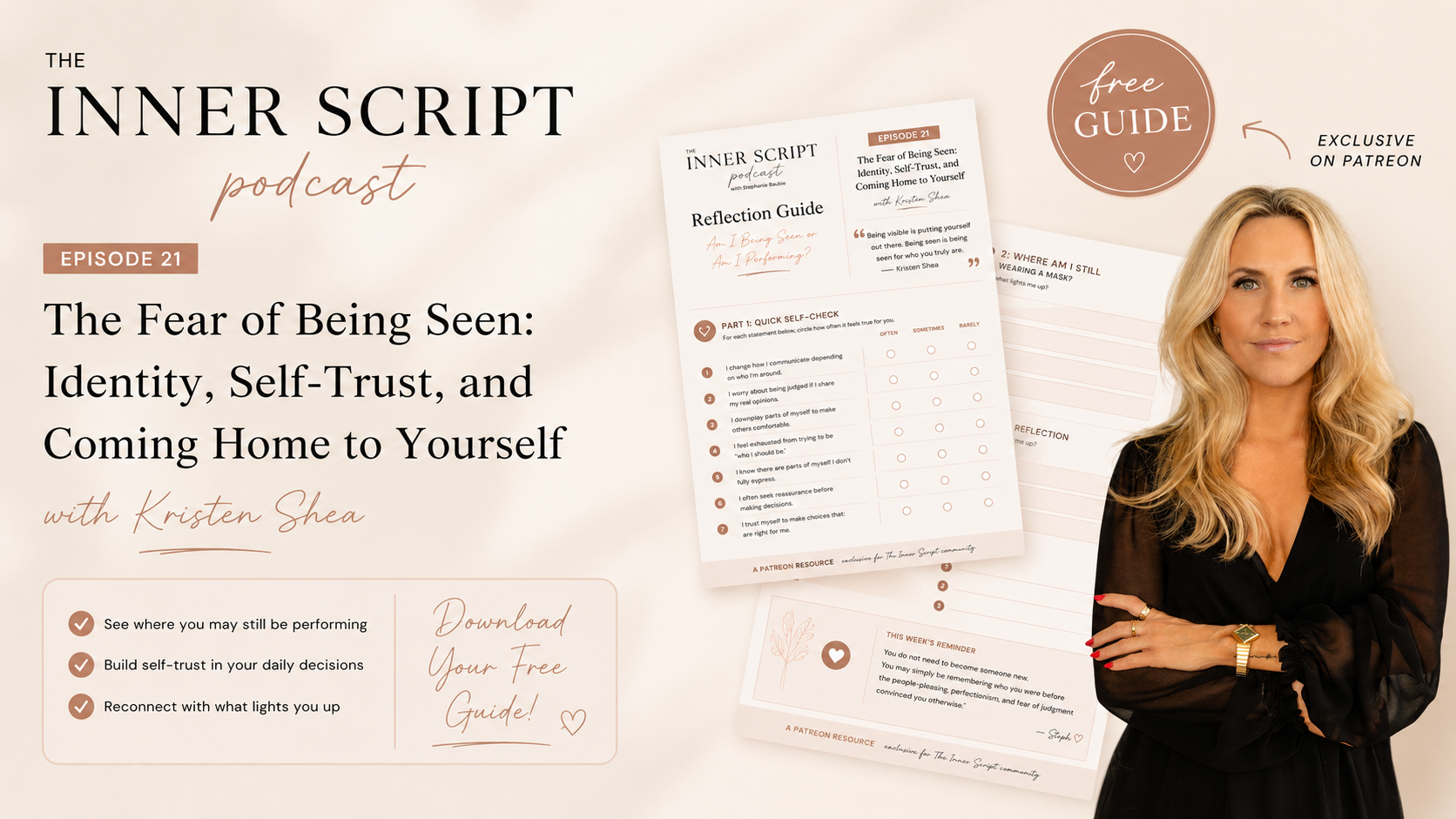
Reflection Guide: Am I Being Seen or Am I Performing?
A four-part worksheet that walks you through a quick self-check, the places you're still wearing a mask at work and in relationships, one honest self-trust question, and a short list of what actually lights you up. Download it here: Patreon companion resource
You can also join Steph’s free Patreon community here:
The Inner Script Patreon
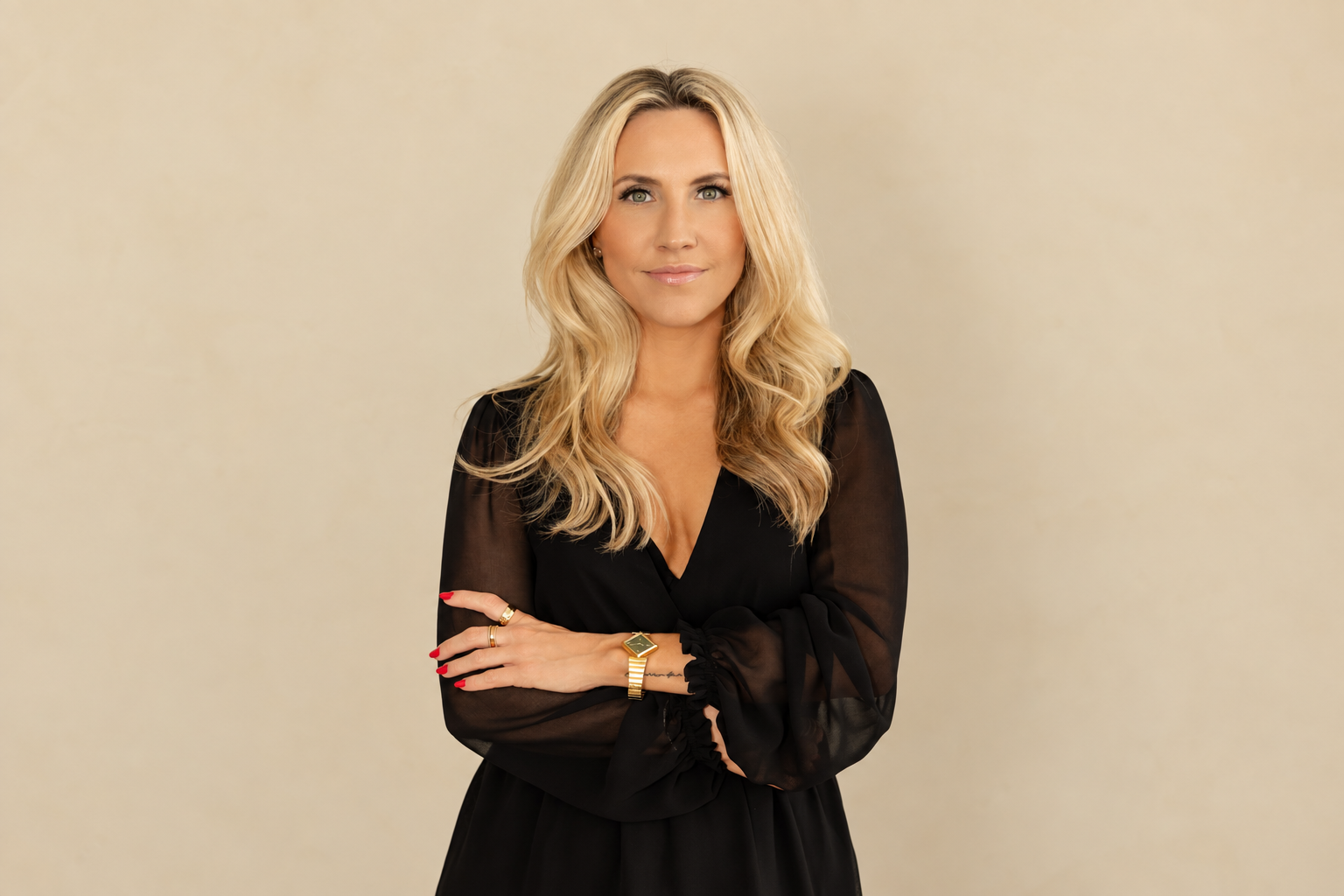
Meet Kristen Shea
Kristen Shea is a publicist, visibility coach, and personal brand strategist who works at the intersection of communication, identity, and influence. She is the creator of The Visibility Portal, a framework that blends media strategy and messaging with somatic healing, subconscious reprogramming, and nervous system work to help mission-led people overcome the fear of being seen, clarify their voice, and build a personal brand rooted in who they actually are. After walking away from a lifelong narcissistic family dynamic at 37 and rebuilding her life from the ground up, Kristen now teaches the identity work that made that possible — where strategy meets spirituality. Website: https://www.kristenshea.com
Instagram: https://www.instagram.com/thekristenshea
Kristen’s Website & Instagram

Meet Your Host
Stephanie Baubie, NP is an integrative nurse practitioner and the host of The Inner Script Podcast, where she explores the deeper stories behind health, healing, identity, and transformation. Through a blend of functional medicine, nervous system awareness, emotional insight, and honest conversation, Stephanie helps women better understand their bodies while questioning the narratives they’ve inherited about wellness, worth, and what it means to truly feel well.
On The Inner Script, Stephanie sits down with physicians, founders, thought leaders, and experts in women’s health, while also sharing solo reflections on the transitions and inner shifts that shape our lives.
Follow Steph on Instagram.
FAQs
What is the fear of being seen?
The fear of being seen is the discomfort that surfaces when people risk showing who they actually are, rather than a version designed to be accepted. On The Inner Script, visibility coach Kristen Shea explains that it rarely comes from a lack of confidence. It usually comes from identity, conditioning, and a nervous system that learned somewhere along the way that standing out was unsafe. It shows up as watering down your message, editing yourself before you speak, staying in roles that no longer fit, and shape-shifting depending on who is in the room.
What is the difference between being visible and being truly seen?
Kristen Shea describes visibility as simply putting yourself out there — posting, speaking, being known. Being seen is letting people experience who you actually are, without the curated version layered on top. In this episode, she explains that plenty of people are highly visible while still performing an identity they believe will get them chosen, loved, or accepted, and that the gap between the two is where exhaustion, resentment, and disconnection live.
Why do so many women feel disconnected from their authentic identity?
Years of adapting to family expectations, relationships, workplace culture, and social roles can create a survival identity that runs on autopilot. In this conversation, Stephanie Baubie and Kristen Shea discuss how those adaptations are protective at first and costly later, producing burnout, indecision, chronic people-pleasing, and the sense of having outgrown a life that still looks fine from the outside.
What is somatic healing and how does it help regulate the nervous system?
Somatic healing works with the body's role in storing emotional experience. Kristen explains that emotions like shame, rage, and grief often get suppressed before they can finish moving through the body, which is why they stay stuck. Practices such as breathwork, slow embodied movement, hip-releasing movement, crying, or even sighing can help complete those responses. She recommends experimenting with several approaches for a few days each, since what works changes from person to person and from season to season.
How do you rebuild self-trust and intuition?
Self-trust is built through evidence. Kristen shares that intuition strengthens when you act on inner guidance even when it doesn't look logical, and then watch what happens next. In this episode she describes following a nudge that made no rational sense at the lowest point of her life, and how that single act of trust opened the door to income, opportunity, and a completely different career. Stephanie adds that noticing what your body is signaling before you reason it away is where the practice begins.
Can unresolved emotional patterns contribute to chronic illness?
Physical symptoms always deserve proper medical evaluation. That said, this episode explores how chronic stress, emotional suppression, nervous system dysregulation, and dysregulating relationships can influence how someone feels in their body. Kristen speaks openly about her own healing journey and about how easily an illness can become part of an identity, something that feels safer to hold onto than to move beyond.
What are the first steps if you're in an identity crisis?
Kristen's advice is to start with what lights you up. Make the list of the things you would happily lose five hours to, even if you can't yet imagine how any of it becomes a life. From there, she suggests exploring your astrology and human design placements for a sense of direction, and asking for guidance in whatever way feels aligned to you. Stephanie's version of the question is simpler: if money weren't a factor, what would you actually want to spend your days doing?
-
Everything shared here is for educational purposes and personal reflection only. Not medical advice. Always work with your own healthcare provider for individual care.
Stephanie Baubie: Hi, everyone. Welcome back to The Inner Script. Got a good guest here today. I am joined by Kristen Shay, a publicist, visibility coach, and brand strategist who helps people step into deeper alignment with their voice, identity, and purpose. She's the creator of the Visibility Portal, a framework that blends media strategy and personal branding with nervous system work, subconscious reprogramming, and somatic healing, and also identity transformation to help people overcome the fear of being seen and fully step into their power.
Kristen's work sits at the intersection of strategy and spirituality, helping people not only build magnetic brands and messaging, but also feeling safe enough to be fully visible in their lives. Her approach explores what happens when healing, identity, purpose, and self-expression all come together. So Kristen and I were kinda chatting a little bit before I hit record, and if this is anybody's first time listening, I love talking about transformation and identity.
And a nurse practitioner, I really have felt how crucial it is to address those things in order to achieve optimal health and wellness, which I think so many of us are trying to do. So I thought Kristen was the perfect person to really dive deeper into this. Kristen, let's, like, dive into it. You talk a lot about starting over and experiencing a spiritual awakening you had at 37, which I find so relatable.
I feel like everybody has gone through something that kinda shakes us. Can you talk a little bit about what was going on in your life at that time, and how you got into personal branding? 'Cause you add such a deeper layer into it
Kristen Shea: Yeah, I would love to. My favorite thing to talk about. So 37 years old, I was living in California, living in Beverly Hills. Outside in, it looked like I had an amazing life. There was nothing, like, inherently bad about it necessarily, but I couldn't put my finger on, like, I'm checking all the boxes, I'm doing all the things that I think I'm supposed to be doing, that society tells me to do.
Why am I not fulfilled with this? Like, what's going on? It made me feel like I was ungrateful or something was wrong with me because I could- I just couldn't put my finger on what was happening. And I had been deeply, deeply spiritual. I had done plant ceremonies. I had been on long personal development journeys.
Like, spirituality wasn't new to me. Yet at 37, the thing that happened that really brought this, like, next level awakening, I would say it was probably, like, my fifth spiritual awakening, but it was the one that rocked and shook everything, right? Is that at 37, I walked away from a narcissistic situation, a lifelong dynamic that had been happening within my family.
And in order to do that, that meant I also had to go no contact with most of my family, most of my friends. I had to leave the career I had been building for five years. I had to leave so much of who I was behind. When I did that and I walked away from this, the hardest part was all of a sudden I realized I had no identity.
Like, I only existed as those roles that I played, and so being the caretaker, the people pleaser, the I've got it, let me take care of everything, the one who solved all the problems. And that actually shook me to my core because I was like, "Oh my God, I have no existence outside of this, and I don't know who I am.
I don't know how to find myself. I'm 37. I had this programming of, like, I should be, you know, married and having kids and buying a house, and, like, all the people I know around my age are doing all of these other things. Like, what is wrong with me? Why can't I figure this out?" And that was, like, what shook everything apart for me because then I had to go on this journey of figuring out who I was And I actually did that through personal branding.
And I didn't know this was gonna be such a spiritual experience when I, when I started it. But when I walked away, I was at rock bottom. I had no money because I walked away from the career, family. There was no backup plan. There was no plan B. There was no financial safety net. I had $70 in my bank account.
I had $10,000 in bills due in days, and I was in a full-blown panic. And I was like, "Oh my God, not only have I left, now I'm gonna lose everything." You know, it's gonna be this next level loss. And so in that moment, I knew whether I go get another job or I start a career, I need a personal brand, 'cause I had been a publicist prior to that.
That's the career I left behind. And I knew that in order to do anything I wanted to do, I had to have this personal brand. But I started to do that, and I was like, "If I do this the way I've always done it, I'm curating a perception of who I think I need to be, and that's the problem with me being 37 years old and not knowing who I am."
And so I was like, "I'm gonna do this a really different way." And I didn't know it at the time, but what I was actually walking through was the methodology that I now teach. And so it wasn't curating this perception. It was building a personal brand through the identity shift, which for me, was just an identity shift back to myself, back to who I was.
And I used tools like human design and astrology to figure out things that maybe I was blind to. And I think that's actually really important 'cause our soul leaves a blueprint for us in this lifetime, and we just don't realize it. Like, I'm like, if I had known this when I was 15 years old, I could've avoided so much.
You know? I could've had, like, such a much more clear, direct path in some ways. But, you know, everything happens the way it's meant to. And so I went through this process of creating this personal brand, and when I got done, I realized I created the personal brand of my higher self, like who I was actually meant to be.
And then now came the part of like, okay, well now how do I actually become that person? How do I shed the survival version of me that is people-pleasing and desperate for validation and begging people to choose me and all of these things? How do I shed that? And so that was my work over the next few months.
And in between all of that, I started posting content, and that in itself is a whole transformational journey. So that is where personal branding, the way I do it now, I call it the quantum personal branding, and it's how you create a profitable personal brand, is the methodology that I teach. But it all started with rock bottom
Stephanie Baubie: Oh my God. Like, I can just totally relate to everything you just said, and kinda coming back to yourself is actually, like, when you tend to tap into this spirituality that, you know, you kinda always knew you had, but you really tap into it. So when it comes to your clients, when they come to find you, where are they at in terms of their own journeys?
Are some people, like, open to this? You know, like, how much, I guess, unlearning do we have to do for them to kinda come back to who they are at their core?
Kristen Shea: I would say clients come in at all kinds of different levels, but most are very much resonating with the fact that, like, "I know there's something I'm meant to share. I know I'm stuck in a version of me that isn't real, and I don't know how to get to the other side of that. I wanna connect to my purpose.
I wanna live in my purpose, and I don't know how to do that." And then there's many people right now especially who are feeling that call, like, "I know I'm meant to be seen, but I'm freaking terrified of it," right? I know I was. That's why I was a publicist. Put other people, like, up on that pedestal. And so when they come in, they come in at a lot of different points.
And if they come in through my social media, they'll be very clear on the fact that, like, there's a lot of inner work in this identity transformation that we're gonna be doing because you really do... You have to shed all layers of yourself or, or it won't work. And I always tell people like that, like, this is not a cookie cutter strategy that you can just go apply and it's like, boom, everything is great.
It's how willing are you to shed the mask that you've been wearing, and how willing are you to do that inner reflection to become who you truly are? And if you're willing to do that, the rewards are... You can't even describe those rewards and how fast things change. But yeah, you know, everyone comes in at different levels, but those who choose to work with me are usually at that point where they're like, "I know there is no other option," like, "This is the thing because I've been stuck for so long."
Stephanie Baubie: Yeah, and I see that in my own patients too, and I even saw it in myself. I think, like, everyone's personal hell, in my opinion, is just you're constantly in this loop and you just don't know how to break it. So when it comes to breaking this for people, you talk about somatic healing. You have to address your kinda core wounds.
So how do you do that with clients in terms of, is, like, through somatic healing, kind of breaking those patterns? What are kind of some steps you recommend for people to do?
Kristen Shea: You know, the first thing is to really understand what those core wounds are. You know, everybody has their own bag of shame and trauma and personal experience, but there are some common core wounds that just come with the experience of being a human, things such as shame, guilt, fear, scarcity, unworthiness.
Like, I have not met any person who either isn't struggling with that or hasn't had to overcome those things. And so when you can understand the baseline of those core wounds and really have the understanding of how they're impacting you... Like, shame was a big one for me, and that, it's, I see it for so many people.
And so I really look at this as three layers. Like, the unconscious is the psyche. It's a layer deeper than the subconscious, and that's where these traumas and these experiences and just what the world teaches us are. And so we have to really understand, like, where these things came from. So where did your shame get imprinted into your field?
When did shame become a part of your identity? Because until you have the full understanding... You know, and I think I'll back up a step here, actually. With identity work, I hear a lot of people say things like, "Create a new version of yourself. Alter ego. Up level. Reinvention." And the thing is, when you do it from that perspective, you're creating from wounding.
You can reinvent yourself. You can become a different person, but it's still not you, and so you're gonna find yourself in that same loop that you were just talking about. So your unconscious wounds, you have to have an understanding of how shame shaped your identity so that it stops shaping it, 'cause the point of this work is to become who you truly are.
So once they understand the core wounds that are impacting them and how they developed, it's looking at, okay, like, how are my behaviors, my habits, like, my day-to-day existence rooted in this? Most of us are making decisions out of shame and fear every day and trying to avoid the pain of those emotions, and we have to switch those behaviors.
But it also lives in the body, and so, like, somatics is so important, and I think everybody has a different journey with what somatically works for them. I know at certain parts of my journey, breathwork is what moves it, but then I know there's other times where I need something that's a lot more gentle, and maybe it's just, like, an embodied slow dancing, or maybe it's, like, the little somatic movements that release things out of the hips.
There's so many different- And so one of the things I always teach my clients is like go down the somatic rabbit hole. Try each of them for a few days and see what's working for you because it'll be so different for everybody. There's no like one strategy fits all. And once you figure out what works for you, there'll be different things at different parts of the journey.
And so you literally have to have the mental aspect of this core wound, but then the physical like getting it out of the body. And a lot of this is like when shame got locked in, when rage got locked in, this guilt or this grief, we didn't get to finish those emotions. We had to suppress them. That's why they're like frozen in the body.
So a lot of times it's finishing that experience and crying or screaming or, you know, punching a pillow or whatever it needs to be, right, that you didn't get to express. Once you do that part and you get it, you have the conscious understanding, you can start to shift your day-to-day and it becomes a lot easier when you follow this like blueprint process 'cause if you just start trying to make changes, your body is going to fight you every step of the way because it's trying to protect you
Stephanie Baubie: Yeah. No, 1,000%. And I was going to say, I think sometimes what I tell, like, my patients, 'cause I talk so much about nervous system regulation, where I'm like, "You cannot out-supplement a dysregulated environment," or, you know, we can build resilience to it, absolutely. But, you know, I ask people, I'm like, "What do you naturally do when you're, like, stressed or anxious?"
Like, something that I realized I did was I would sigh a lot when I was frustrated. Like, I would just be like and people would be like, "Are you okay?" And I was like, "That was me just, like, ex- getting it out of my body." I don't- that's something I talk about my patients with all the time of like, what do you naturally kinda do in that state?
Kristen Shea: Sometimes I think we make somatics a really big deal. When you're in survival, it can also just feel like, "Oh my God, another thing to add to my list." You're like, "Another protocol?" Right? Especially if you've been on a healing journey, you're like, "Another?" But I think, like you said, just being able to sigh, and then it's interesting how people picked up on that and they're, are like, "Are you okay?"
Because it's like that's probably a very rare occurrence to have somebody in real time just being like . But it's like getting it out of your body, so I mean, that's actually such a great mirror for them of how they're probably suppressing that frustration, you
Stephanie Baubie: Yeah, and I was like, like, "I'm fine. I just, I didn't even realize I was doing it." That's, you know? So I'm like, "Okay, well that's good. I'm gonna keep, you know, gonna keep doing it. Don't apologize for it." But you had, like, one really good Instagram post about how being seen doesn't mean being visible. Can you explain that a little bit?
Kristen Shea: A lot of people confuse this. So being visible is putting yourself out there. You're visible. I was a publicist. I made a lot of people visible. Being seen is being seen for who you are. It means it's not a curated version of you. You're not performing. You're just showing up as being who you are, and the world will mirror you back to you.
And this happens everywhere. This isn't just, like, in posting content. This is in your relationships, your friendships, your work, all of these places. You know, I made a lot of people visible in publicity, but they showed up as a performed version of who they maybe wanted to be, who they needed to be in order to be loved or accepted or chosen, whatever they thought.
So a lot of people are showing up with, like, "I think people want this version of me, so this is how I'm gonna show up." Well, you're visible, but you're not seen. To be seen is to let people see who you are in all aspects. And if we're doing this correctly, it should be a little bit different every day because you are a different version of yourself every day.
You have these days where you're really high energy and excited, days where you might be a little bit more subdued and chill and, like, just maybe a little bit more introverted and introspective, days where you might be deeper and philosophical, days where you might be more fun. If we're truly being seen as who we are, it's being seen in all of our experience, which that's where that shame and that guilt and just the fear of rejection, humiliation, being made fun of comes up.
And so we don't say the thing we want to say. We water down our message. We're talking to the wrong people because we're so focused on not upsetting anybody. We're not saying the things that we are meant to be expressing because we don't want to be judged. We don't want to be misunderstood. So you're just shape-shifting, and that is a mental prison.
Like, that is literally an invisible cage that you live in because you're just running a script through your head all day long, every situation, of how other people are gonna respond to you. And when you're doing that, you can't be seen. You can't be yourself
Stephanie Baubie: Right. It's the importance of, like, really doing the inner work and kind of addressing the core wounds, you know, reprogramming so that you can step into your authenticity. 'Cause I think a lot of people miss that piece of, you know, people wanna heal, but, like, it can be painful. It can be lonely too, especially when you kind of address these things that you've maybe been repressing, and a lot of things come up for you.
So how do you kinda tell your clients how to kind of not get so worked up in the work, if that makes sense? You know, so that they don't get the fuck its
Kristen Shea: Yeah, totally. You know, I try to mix it up so that there's always the inner work, but there's also the forward movement because there's two things that happen. You can also get stuck in a trap of just doing inner work and never moving forward. Like, the inner work can actually just become an excuse, and I think this is what has happened on, like, a broad level with shadow work is that everybody...
So many people are just stuck in this trap of, I call it the manifesting loop or the healing loop. Yeah, it's, like, just the never-ending thing where you... Like, healing happens naturally. We don't necessarily have to go digging for our shame and our guilt. It'll rear its ugly head as we're just moving. And so I always am working with clients to first understand and anchor into the outcome.
What is the thing that you actually want, and do you understand that when you become yourself and you shed this old identity, how easy life gets to be? And the reason that is is because you're no longer, from, like, a divine intelligence perspective, God, source, spirit, the universe, however people align to it, that intelligence can't work through you when you won't allow that energy to move because it comes in.
You might get this idea, this download, this drop-in, but you can't take action on it, or you have to kinda half-ass it because you don't wanna be seen a certain way, or you don't wanna be seen in your truth and your, your vulnerability. And so it's anchoring in that why. Like, do you wanna have the business?
Do you wanna have more money? Do you wanna have the impact? Like, what is it? And if you do this work, there's freedom in all levels. Like, you will... Money just comes to you. Resources just come to you. Like, when I stepped into this work and understood that aspect of it, that's when I was like, "Oh my God, this is how you escape the matrix.
Everybody has to know about this." Random things. It's, it wasn't just synchronicities. It was like, "Oh, I wanna hold a retreat." All of a sudden, someone reached out to me and was like, "Hey, I have this retreat space. I'd love to, like, sponsor you to host a retreat." Things are just on your path to help you. Like, everything gets to be so easy.
That doesn't mean that things aren't challenging, but the challenges are the inner work. It's not, like, life itself. It's the inner wounds that just come up, the imposter syndrome, all of those things. So anchoring into that why, and the why has to be strong enough to make a change, and that's why so many people have a fear of being seen but will never actually move forward and do something about it.
So it's really, that why is gonna be the only thing that will get you through 'cause you're gonna meet your edges, and it's really easy to self-sabotage or to say, like you said, "Fuck it. Like, I just don't know if I wanna do this."
Stephanie Baubie: Do you see in your clients a specific core wound where it's, they tend to kind of not want to fix it, lack for a better word? If there's like a specific one, like patterns with each core wound of, with healing
Kristen Shea: Yeah. You know, I think shame is the core wound that I see holds everybody up the most in every aspect, and everybody wants to get rid of it, but they are unwilling to forgive themselves. They are unwilling to be seen in their own humanity. Because let's face it, the human experience is embarrassing. Like, it just is.
It's awkward. It's built and baked in with shame. What people don't understand is, like, shame is not an optional part of this experience. It is an automatic. And you know, people will come in, and they're, like, carrying this thing, and they'll say, "I'm carrying this shame." And I think the way they talk about it, I think they're about to tell me they, like, killed somebody.
And then it's like something that feels so ba- I'm like, "That's what you're ashamed about? What? That's crazy. Like, don't hold shame over that." And then I'll tell them a story about me, and they're like, "Oh yeah, you're right. I guess I shouldn't hold s- I shouldn't hold shame over that." And I'm like, "How can you see me in my humanness, but you weren't willing to see yourself in your humanness?"
And so it's understanding that, like, the soul's experience here is filled with all of that. And instead of hating those parts of yourself, how can you just honor it as part of the experience that you are meant to have, and understanding that, like, we're all carrying such shame, and if ... the moment you can let that go.
So that's like, I think, the most common core wound across the board. And then imposter syndrome and unworthiness are right below that
Stephanie Baubie: Well, it's like we are all kind of carrying some level of shame, but it's like, again, it goes back to, it's like everyone's in this loop of like, w- well, we're not showing kind of our real selves, so we're not allowed to be messy. We're not allowed to show who we really are. So it just, it's this constant cycle that's crazy
Kristen Shea: It's so painful to be in it because you're usually so aware of it, but you don't know how to get out. So you're just like, it, it's like this... I don't know, it feels like insanity and chaos because you're just like, "I, I can see what's happening, but how do I get out of this?"
Stephanie Baubie: Do you ever see that with your clients where they're doing the inner work, they're doing the somatic healing, all of the things, but they're, like, you see something that they're not fully addressing yet- yet, and then how do you get them there?
Kristen Shea: All the time. There's almost always a blind spot. Because it's easy, the ego will go to the thing that is easiest to process. And these are not conscious choices, these are, like, actual just patterns that are baked into the survival identity. And so there's so often where there's a blind spot that they don't wanna look at, and so they keep naturally going to this other area.
Part of my role is to reflect the mirror in them and be that so that they can see it. And one of the ways I do that, and I think, you know, this is really powerful across the board, is through sharing my story. Everything I do, how I teach, what I do on social media, everything is through the lens of my story through lived experience that I have.
There's a reason the Bible and all these religious texts use stories. It bypasses the part of the mind that wants to fight it. It bypasses the ego, and it also brings the guard down to be like, "Oh, well, if you did that, I think you're great. Maybe it's okay if I maybe turn my head a little bit and look at the thing I actually need to look at."
So often, because I am a psychic and a channel, I can see in their field what's going on, so I can see the unseen of what's holding them back. And I'll usually share a story. Instead of just being like, "Hey, this is holding you back. This is what you need, da da da da," you know, "what you need to do," I'll usually have a very similar story I can share with them and be like, "Do you resonate with that?
Like, is there an experience within you?" And then they're like, "Yeah." And then they start talking about it, and then now they have their own realization and they're like, "Oh my God, this is the thing." And now they can refocus on it, and they don't feel shameful because I've done the exposing for them. It allows the safety to go there, because a lot of these things are experiences that, for whatever reason, they're so holding this against themselves, and so it's really hard to go there.
But the second... And this is why when we hear someone on social media talking about something that we feel but can't say because we're ashamed or we don't wanna tell anybody, and we hear somebody else say that, it's like that instant relief 'cause you're like, "Oh my God, me too." And so it's, like, so disarming because there's so much about the human experience that we all share but will not talk about
Stephanie Baubie: And I think it's helpful to humanize things, sharing your own experiences. You know, we're taught in, to be professional, that you have to keep things professional, but it's like, no. Like, I guess it's just such a... It's so backwards. Like, we have to show our human side to people so that it almost gives them permission to own their own messiness for lack of a better word
Kristen Shea: The mess is the thing we love about people
Stephanie Baubie: Yes.
That's authenticity
Kristen Shea: Like, this is what we love. Like, you know, I did a series on Instagram where I just was like, "Hey, here's all the things I was ashamed of. I used to be a drug addict. I slept with every man who would give me even a crumb's worth of attention. I was begging to be chosen."
Like, I just unleashed all of these things I felt shame about, and people were like, "Oh my God, me too. Thank you for sa-..." I got so many DMs, so many messages, so many clients all of a sudden wanted to work with me in that capacity because we're just wanting to be reflected to in our own messy situation. But yet I held so much shame against myself for that for so long.
You know, one of the things I'm constantly always, like, clocking my own authenticity with, of like how much am I sharing and am I truly living to what I'm teaching, is what am I afraid people will find out about me? And the second I ask that question, if something can pop into my head, I know that's usually where I'll do the work, and then I will go share it on social media once I've kind of done the internal alchemy on it.
And that, that's a great way to clock, at any moment in time, can you be authentically yourself, and are you okay with truly being seen?
Stephanie Baubie: Yeah. Love that because you kind of address that core wound, kind of try to heal it, reprogram it. When you're sharing it, it's not coming from that wounded place anymore.
Kristen Shea: Right. It's not like trauma dumping.
Stephanie Baubie: Exactly. Exactly, because you can kinda tell when somebody's, like, trauma dumping versus just kinda sharing their truth. There's not so much attachment to the story where I think so many people get so attached to what happened to them, and it becomes their identity.
I see that in a lot of people, too, of it's almost uncomfortable to break that attachment. I see that a lot with, like, chronic illness. So do you have a lot of clients dealing with chronic illness?
Kristen Shea: Yes. Almost every single client, and that's myself included actually. And honestly, I don't know anybody who isn't chronically ill in some capacity. I almost think it's baked into the human experience just like shame is. But almost every single one is, and it's funny that you said attached because I do find they're attached to their illness.
And so you know what's interesting is that I had to heal Lyme, like, five years ago. When I look back on it, there's a lot of different ways I could look at this, and I know there's, like, some warfare and some stuff around, like, how Lyme took hold. I almost feel like my body did that even as a form of self-sabotage because I was so afraid to be myself that it was like, "Oh, if I have this, it keeps me stuck 'cause I'm exhausted.
I've got all of these, you know, symptoms, and now I've got to invest all my money and my time on all these different therapies and all the things." And I look back on that and I'm like, "I think that was a way for me to stay stuck." I don't think that illness could have taken place in my system unless I was at a vibration where I was like, I think I would have attracted something into my field to, like, allow me to stay stuck, and I was attached to it for a long time.
Even now I work with a great team who's helping me with a lot of different things that are happening, like my nervous system. From chronic illness standpoint, like, I've always had chronic constipation. There's things that I'm healing within my body that I'm not attached to anymore, but a few years ago absolutely had that attachment to it.
And now I see that all the time with my clients of, like, it becomes an identity. And I think it does also keep them safe. It's so that they don't have to move forward in a way.
Stephanie Baubie: Yeah. Are you located still in Beverly Hills or Los Angeles area? Okay. Have you heard of Brian Donohoe? Like, I've been to him. He's done a lot of, like, somatic healing and work using, like, kind of... It's not massage therapy. It's, like, body work where he really presses on the jaw and... I don't know. It was very transformative.
He was a guest on my podcast too, and he's amazing. So, if you're ever interested
Kristen Shea: I'm super interested.
Stephanie Baubie: And it just kinda helps to get that, like, deeper layer because he's really manipulating your body and releasing tension in the jaw, which so many of us store tension there.
Speaker 3: It helps more
Stephanie Baubie: You mentioned, your psychic gifts and ability to channel. Can you share about that?
Kristen Shea: Yeah. So I've had psychic gifts my whole life, but I would shut them down, discount them, not believe them. I didn't know how to use them. But I could always, like, when I met someone, I would get a flash of everything they've been through in life, who they are, what their motivations are. And I would never say anything because it would be crazy.
But it would always, as I would get to know that person, come true. And then I would always know how things were gonna play out. And here's the thing, is every single person is actually psychic. It's just whether or not we're tapping into that. Some of us call it, like, the intuition. Some of us ... There's a thousand different names for it.
Everybody is psychic. Like, I hold these workshops all the time to help people tap into their gifts, and every single time they're like, "Oh my God, I didn't realize I've been doing this my whole life." And so it's just when we tap into it and then use it more consciously. And so actually, you know, this whole methodology that I've created is from channeling because I was guided in my experience.
When I needed to create a personal brand the first time I posted on TikTok, you know, my first post on TikTok I was doing tarot readings and psychic readings. I wasn't teaching visibility at this point 'cause I hadn't overcome it. I hadn't embodied it. I was still terrified of being seen. But my guides were showing me every step of the way what I needed to do in order to, like, return and, you know, come back to that soul level identity and how to be authentic and how to find myself.
So really my whole process is channeled through my guides and then my lived experience of it. But yeah, I mean, every single person has every gift. It's just whether we tap into it and hone it and, like, allow it to be a part of our day.
Stephanie Baubie: So how do you teach people about intuition and kinda... Because, I mean, yes, everybody is capable of tapping into it, but everybody's intuition kinda looks different. So how do you, like, have that conversation with your clients?
Kristen Shea: The first thing I always teach everybody is all the different ways that the world, the universe, this divine intelligence is speaking to you, because it is at every moment of every day. So I go through the different claires, how messages can come in, because it can be a song speaking to you. It can be you ask a question, then you hear a song on the radio, and it's like the answer is in that song.
The divine will communicate to you in any way that it can, and so if you have not maybe opened up your own direct channel yet, it might be the person at the grocery store who says something to you. It might be the video on your algorithm. It might be a billboard. Like, the answers are everywhere, and the divine is always going to use everything to communicate.
So just understanding that, like seeing, sensing, smelling, hearing, knowing, like all the different ways it can come, and then also understanding that it looks different for everybody. I used to, like, not believe in my gifts because when someone would say they would see, I thought I was gonna see somebody right here in the room with me, but it's in my third eye, which feels like my imagination.
And even when I hear, it's in my head, and a lot of times it's still in my own voice. It's not always in, like, you know, a different voice. And so I would discount that 'cause I'd be like, "Well, these are my own thoughts." And so it wasn't until I started doing one-to-one work with people and doing readings where I was like, "Oh no, this is not my own thoughts," because there's absolutely no way I would know the name of someone who passed away in this person's life and their exact relationship.
Like, that was the only time I was finally able to be like, "Oh my God, these are not my own thoughts. There is something that I'm tapping into." And so that's kinda what I bring people through, is like, "Here's all the different ways it comes in." Then I bring them through an energy clearing to just clear anything that's distorting their channel, any fears or blocks.
And then I guide them through a meditation where they get a message for themselves, and then they get a message for another person who's on the call. And so they get whatever message that they need, and then when they go and they meet with that other person, it's a very safe space to do this because everybody's doing it together, so you don't have to worry about, like, feeling crazy or wrong or whatever.
And they'll share the thing that they got, and it's the validation on the other side that tells them, like, this is real. Because the thing that happens is we are getting divine intuitive hits all the time, and our logic talks us out of it. Because if we can't understand it... And intuition is not meant to be understood.
It's meant to be followed. The second you try to understand it, you're undoing everything you just got. And your intuition is, it, it's not going to make sense because to the logical mind, it's two different things. It's speaking two different languages. And so these sessions help them see that, and then they're like, "Oh, yeah, these are my gifts, 'cause there's no way I would know that about that person."
And so now they can start to decipher their own voice, their own thoughts from what is coming in from the divine, and they start to develop that self-trust. And then for me, I just wanna teach people to tap into that divine intelligence for themselves, for their own navigating their own journey and, like, reconnecting within.
And then if they wanna, you know, take it a step further and serve other people in that way, I think that's beautiful, but it's really just about that connection back to self and divine.
Stephanie Baubie: So do you think, like, self-trust and intuition is kind of the same in a sense? Or, like, does one build on one another?
Kristen Shea: I'm leaning towards it builds. I do feel like they're two different things, and I feel like intuition is innate and self-trust is earned. And so I do think they're separate, and I think they build. And I think just like with the nervous system where you have to build trust within yourself in whatever way, in creating your own safety and returning to the system, I think intuition is the same.
And I think the self-trust you build through listening to it and letting it prove you right versus trying to understand everything you're being told
Stephanie Baubie: Yeah, c- 'cause I think it's like in order to listen to the intuition, you have to trust yourself that, like, what's coming in is meant for you and not to override it
Kristen Shea: Yeah, it takes a long time because there's so many times on my path, even when I first started posting content, if I had not trusted what I was getting, oh my God, I don't know where I would've been. I mean, I had $70 in my bank account, $10,000 in bills due. I was in pure panic. Nothing was happening. Like, everything was quiet.
I was trying to get freelance work. I was walking dogs. Like, I was doing whatever I could to try to make money, and everything froze. And the guidance that I got was to share my channeled messages on TikTok, which was the scariest thing, to be seen and to share my spiritual gifts. I was like, both of those?
Like, that's insane. And I tried to avoid it, but what's crazy is when I followed that and I posted my first channeled message, within hours, all kinds of money was coming to me. And not through TikTok, 'cause I didn't have a following. Nobody was there. There was nothing there. But all of a sudden, people are reaching out to me like, "Hey, I heard you're looking for work," or, "Hey, I have this person who's looking for this.
Maybe this could be a freelance project." Within three days, I had my rent money. Following the intuition that didn't make sense, 'cause in the moment I'm like, how is posting on TikTok gonna solve this problem? And I'm talking to God. I'm like, "God, this is crazy. Like, how is this gonna solve this problem? I don't have a following.
Nobody knows who I am. I don't know if my gifts are real." But every step of the way that I follow my intuition, there is always, like, this insane amount of reward on the other side of it, and it's just can we build this self-trust and trust in the divine, right? 'Cause I think it's both. Like, you also have to trust the divine has got your back and is not going to let you fall.
Stephanie Baubie: Yeah. I mean, a lot of this is, like, naturally when you are kind of doing this inner work, you're building your magnetism. You know, there's a lot of talk about manifestation, like, all over social media. What are your thoughts on, like, these manifestation practices?
Kristen Shea: So I talk about this in a lot of different ways. Manifestation is real. It's true. However, I think what is being taught for the most part out there is, like, totally distorted teachings. So I think manifestation ends up being, like, a form of spiritual warfare to keep people stuck in a manifesting loop, and they stay stuck.
So I would have so many clients that ... And then this is how I kind of, I don't want to say discovered, but understood this concept that I have, is people would come in and they're, they're doing all the things that they should be doing for manifestation the way it's taught. The sit here in a meditation for two hours and visualize and act as if and become the thing and all, all of that.
It doesn't work in that capacity, and it's missing a huge piece, which is the identity. It is the nervous system. Your nervous system is con- is the conductor of your reality. And so you can be manifesting all day long. If your nervous system is not regulated, you are not going to get the thing, and if you do, you will not be able to hold it.
So manifestation is super powerful, and it's real. I just think the des- teachings on it are distorted. And on a bigger perspective, like, I believe there's light and dark in everything, and I think the original teachings are full of light, but I also think the dark has kind of taken over those teachings and distorted them to keep people stuck in a loop.
Because if you're always manifesting, you're never becoming
Stephanie Baubie: I think Lacey Phillips, To Be Magnetic, 'cause she talks a lot about reprogramming in terms of neuroplasticity. You know, 'cause you manifest from your subconscious, so you have to heal your inner child basically. So, like, what do you think of that?
Kristen Shea: Yeah, I think that's super accurate, and I think that's the problem with most of what is manifestation is most people don't talk about it that way. But you have to ... You manifest who you are from an identity level, not who you want to be, and that's why that reinvention and ego ... And you can force manifestations.
It doesn't mean it's what you're meant to experience. You're probably doing ... You're probably manifesting from wounding, right? Like, so many people wanna make more money to feel worthy. So many people wanna f- manifest love so they can feel chosen. Your soul didn't come here to, like, try to cheat the system.
It wants to heal the wounds of feeling unchosen. It wants to heal the wounds of feeling unworthy because you don't have the money or meeting society's version of worthiness, success, whatever it is. So I think when you go back to doing the subconscious and looking at that, it forces you to look at whatever wounding patterns are there.
I think you have to address all three layers. Personally, I don't think you can just do subconscious. I think you've gotta look at the unconscious, subconscious, and conscious. You've gotta align those three, and when you do that, not only can you call in ... And this is where I say I think there's a difference in being the creator of your reality and being a manifestor.
I think manifesting is trying to override the system and force something through the power of your thoughts, where I think when you step into the reality of a creator, you know who you are, you know what your soul is here to express. You think of something, and it appears. You don't have to do the act as if.
You don't have to do all of these other things. It's like I know who I am. I've addressed these core wounds, and now I wanna do ... It's kind of like that example I said with the retreat. I wanna hold a retreat. Somebody reaches out and is like, "Here. Here's a beautiful space to hold this re- ... I wanna do this." I
You know? And it's like that's what I credit my journey to is that creator aspect. When I had no money in my bank account, four months later I was already at $20,000 a month. I sold out my first retreat. Like, things that don't make logical sense, and I only obviously owe that to the divine, but also to the fact that I became the creator.
I wasn't trying to manifest these things. I was clearing out the junk that kept me from being myself
Stephanie Baubie: So clearing out the junk, how is that different than, I guess, inner child work, or is that the same
Kristen Shea: It's a piece of it. So like inner child work is a piece of it, but I think what also people miss is like you do the inner child work, but you have to do the identity piece with that. Which the junk that comes with the identity piece is your habits, your behaviors, your personality traits, who you are on a day-to-day basis.
Because like I can go back and heal, and I did this. This is why I was stuck until 37, and I was doing inner child work. I was doing the healing, right? I was talking to Ayahuasca and doing all the things. I was on the journey. But it wasn't until that integrated into my day-to-day. So I had to look at like from a personality perspective, is this even my real personality?
Do I even know who I am? What are the behaviors that I have every day, and how are those behaviors influenced by my thoughts and my beliefs? How am I making decisions? I was making so many decisions out of avoiding shame, avoiding pain, avoiding whatever scary thing was outside of me. And so that's the junk you have to clear out.
So it's like do the inner child work. Heal that inner child. You know, baby version of you so, so deserves it. But the inner child also deserves to unlock its full potential in this lifetime and get to live, and that's the part I think that people miss. So they s- they heal, but they don't change who they actually are, and that's the junk
Stephanie Baubie: And then how are you doing that with clients to help them reach their full potential? Is that when you bring in like human design work, astrology, or something else
Kristen Shea: The first thing I do, like right off the bat, is we get really clear on who the survival identity is. So we look at the core wounds that they have and how this contributed to who they are today. So like I have a, a survival identity. Her name is Kiki, and she rears her head, and I got that from the Drake song was like playing at the time I was doing
And so her name is Kiki, and she rears her head, and she's acting out of fear and scarcity, and she doesn't want me to talk about certain things because what will people think, and will they love me, and how am I gonna be liked, and I need to be valuable, all these things. So she's my survival identity. So we get really clear on the core wounds, and we get clear not just on the wounds, how are they shaping who you are today?
How do they affect how you walk into your work? How do they affect how you talk to your clients? How do they affect the way you're dating? There are so many people who are married, and like their partner doesn't actually know who they are, which is crazy, right? Like, but it's also normal because that's what society has been.
But so many people I work with, I'll be like, "Wait, your partner that you've been with for 30 years has no idea that you're woo-woo? Like you're hiding this huge part of yourself, or they have no idea about these things about you or..." Yeah, and it's so common. And so it's getting really clear on the survival and the core wounds.
Who are you when survival isn't there? So if you show up this way at work, not how do you wanna show up, but how would you show up if these wounds weren't present? Because that's wh- how we start to connect to who you w- are versus who you want to be. How would you like to be able to show up in this capacity?
What would you like to feel in these experiences? And a lot of times it's just peace, right? It's like, you know, just feel peace and safety. And so then we tap into human design and astrology because these tools were, I mean, invaluable to me. I always understood them in different ways, like up until this part of my journey where I had at 37
I think at 36, I learned about North Node. How ironic. I learned about some of these key placements, but I always kinda knew it from, like, my sun, moon, and my rising, and some of the basic information that was out there. I had, like, I had gotten readings and basic knowledge. When I read my North Node, I was like, "Oh my God, this is where I'm meant to go.
Why did nobody tell me this?" And of course, in 2020 hindsight, it's, like, really obvious, but when you're in the box and you're in your survival, it, it's not. And so I help people p- pick, like, these exact placements in your astrology and human design to start with that are gonna tell you who you are on a core level because unfortunately, most of us have forgotten, and it's been for
suppressed for so long, you don't know where to start. You know, it helped me learn what my natural communication style is. You know, I'm a teacher. I'm a Capricorn Mer- Mars, so how I take action, the Virgo Mercury. Like, so when I started doing the whiteboard, my content took off because that was my natural archetype, but it took me a while to find that.
So it's like all of these different things can help us discover who we are, and it shows us, like, our weak spots 'cause our self node is what we're meant to move away from, comfort zone. And so I actually make a lot of decisions that way. Like, is this decision leading me towards my north node, or does it keep me in my south node?
'Cause that kinda calls you out of your logic. It's like right ... It's a mirror, right? And so once we get clear on that, we have a pretty good idea of who you are, and then we start to shift you. That's when it comes to, like, the aligned action, and we start the shifting process, and we do that through a combination of the healing work while also taking actions in that forward movement, day-to-day, doing the things you normally wouldn't.
And then at the end is where we get to truly the visibility, like figuring out your message and how to communicate it, who you are and what you do and why you're here and how you wanna help people and all of that. So yeah, it's a full 360 method.
Stephanie Baubie: Yeah, and also with the astrology piece, I always want to ask my patients when they were born, like time, all of it, because it is crazy how accurate it is, and it gives you permission to, like, allow yourself to live the way you want to live. It's like, it just gives you reassurance. When I really started tapping into that, I was like, "Oh my God, like, this is just how I'm wired.
I need me time. That doesn't make me a loner if I need to be alone, or, like, if I'm super sensitive to crowds, or I just need extra TLC." So I think it's like, it just kinda gives you the permission to be yourself, which I think everybody needs so badly.
Kristen Shea: We do. We do. And I think there's so much in there too. Like, I don't know if you... There's a book, but I saw this girl on TikTok the other day talking about it, how each astrology sign is, like, automatically deficient in a certain mineral.
Stephanie Baubie: No, what is this?
Kristen Shea: Something about, like, Salts of the Earth or, or something like that was, like, the book.
If I can find the TikTok, I'll send it to you. Her name is Hannah. She's, like, a functional practitioner. You know how each astrology governs, like, a part of the body? Like, no wonder I have digestive issues, I'm a Virgo sun, and it rules the system, right?
Stephanie Baubie: Virgo rising, so I gotcha. What are your placements?
Kristen Shea: So I'm a Virgo sun, a Aries rising, and a Scorpio moon
Stephanie Baubie: I've got both Virgo and Aries in my, in my three as well.
Kristen Shea: It's wait, where's your Aries?
Stephanie Baubie: My moon.
Kristen Shea: Okay, and then what's your son?
Stephanie Baubie: Sun is... So I'm Gemini sun, Aries moon, Virgo rising
Kristen Shea: Wow, that's a good mix actually. But the Aries and the Virgo are always fighting, right?
Stephanie Baubie: All the time. That's part of my, like, issues every time. You always wanna be scare- like, a little wary of an, like, a, a fiery moon. It's so interesting, the Virgo and the Aries always competing with each other. Where is your north node placement? Aries.
Kristen Shea: Yeah. So I was here to overcome codependence. Yeah. Where's yours?
Stephanie Baubie: I think mine's, I always get them, I think it's Leo. I think it's basically my, my, or maybe that's where my Chiron placement is. Anyways, but it's so interesting, and I mean, it basically tells me, it's like your purpose in this life is to be seen. So I wanna, like, we've got a little bit left, but you mentioned kinda switching gears just a little bit.
You mentioned leaving a narcissistic situ- like relationship, family situation. So when did you know? When did you figure that out? Just because I think so many people come across narcissistic situations, and they don't realize they're in it for a very long time, and those relationships can be very debilitating for our physical health 'cause it's very dysregulating to the nervous system, and I just see this in patients all of the time of why they're chronically ill.
So when did you kind of figure that out?
Kristen Shea: I would say two years before I actually walked away, it was becoming more and more clear to me in a way that I could no longer ignore. Because part of what that dynamic does to you is it makes you think you're crazy, you're the problem. For us to think, "Well, if I'm the problem, I can fix myself, which means I can fix this," which is, like, the most codependent thing ever.
But the problem is we don't even realize we're codependent because we're in survival state. So it was probably, like, two years before that I was like, "This is what's happening." And then I would, like, talk myself out of it because at the end of the day, I do love that person, and there's a lot of moments that aren't all bad.
It's not always this, like, it's 75% bad, but then there's this 25% that you cling onto, and you see that person and ... It was lifelong for me, so it was also, like, something that just was normalized in my family. And so I didn't see it until, I would say, 35. And then at 37, though, is when it was like, "If I don't get out of this, like, my soul is going to die.
Like, this is just ... I, I can't..." Like, it was so unbearable. It wasn't an option. Like, it was like I have to do this, even though it was my biggest fear. It was also, like, such a gift because it's what set me on this path to figure out who I am and to understand the importance of identity work. But yeah, it's, it's hard to recognize, especially if you've been in it your whole life.
You're just like, "Oh, this is not what relationships look like. This is not what family dynamics are meant to be." Yeah, so it's hard to recognize. I, I can imagine so many of your clients probably experience that.
Stephanie Baubie: Yeah, no, I see it. It's weird 'cause I can, I can just, like, pick up on things very easily. Like, they come into the room and I'm just talking to them, and I'm just like, "There's something with their relationship that isn't right." And I was like, "This is the cause of their migraines or chronic pain or..." So I, you know, I just think it's so important to ask people, like, "Do you feel safety in your relationship?"
And we automatically think, like, physical safety, but it's the emotional aspect, too. Because your body, like, always has your best interest, and it's going to create noise and symptoms to try and get your attention. So I imagine, like, do some of your clients kind of come in, maybe it's not, like, a narcissistic situation, but maybe some type of relationship, whether it's romantic, friendship, family, just...
or boss, like, just isn't serving them at all? And how do you navigate them through that?
Kristen Shea: I get so many clients who are in narcissistic dynamics 'cause I also think we attract our experience, right? Yes. Right? It's always, like, such a mirror in so many ways. But then I a lot of clients where it's not the partner or the family member, it is the boss or it's, like, some type of situation or dynamic.
And one of the things I always explain to them is, like, don't think about leaving or any of those things right now 'cause that's gonna be an overwhelming thought. The job is to clear out the codependence. It's to work on that. And then once you do that, you're in a place to make a decision as to whether or not you wanna stay or go or however you wanna handle that, leaving the job, leaving the partner, whatever it might be.
My job isn't to help them navigate that situation. It's to re- help them remove the survival identity that keeps them from being able to make the choice of whatever is in their highest good. And so the work stays the same. It's always to shed the survival aspects of themselves because otherwise they're just gonna be making a choice out of fear.
I stayed out of fear for so long. Will I be able to be independent in this way because I lost pretty much everybody all at one time. And so it's always gonna be shed that survival identity, no matter what you're dealing with, chronic illness, the narcissist, the job, the stuckness. If you shed the survival, it will change, and you'll be able to make a decision.
You'll-- Like, clarity will come in for you
Stephanie Baubie: Yeah. Okay. No, that's, like, such good advice. And how do you help people kind of overcome this persistent fear of maybe sharing something that they're really scared of being judged by? What additional kind of work needs to happen? Is this kind of an ongoing thing? Are you still scared to share things?
Kristen Shea: Yeah, it's an ever-unfolding journey. I would say, you know, I'm a little ... I'm, like, right at two years of creating content and sharing, and I would say for the most part, I don't have fear around sharing things. But it took, it was a journey to get here. I was pulling back a layer. And so if someone's afraid that they're gonna be judged, that can only exist if they're judging themselves.
And so that's the first layer of the work is, like, what judgments are you holding against yourself or other people? And it's like the second you drop that, like, I put things ... I air everything 'cause you can't judge me for it. I wear it like a crown. You literally can't judge me for it. Like, this is, this is my fire that I walked through.
It's what makes me incredible at what I do. Same for every single person. So it's like, if you're afraid of being judged, where do you hold that? And then it's little steps that build that capacity. So that doesn't mean you go right out on social media and just start airing things out, right? 'Cause also that can, that could really trigger the nervous system if you're not ready for that.
I always tell people social media is a mirror for your experience. And so if you are afraid people don't wanna hear you and you put something out there, they won't listen, they won't look, you'll get no views. If you're afraid of getting negative comments, you'll get negative comments. Whatever you are afraid of happening is exactly what's gonna happen.
It is just a mirror of your inner world. And so instead of taking it as, "Oh, that's proof," it's like, oh, no, that just means the wound is present, how can we keep doing that? But you build that capacity behind the scenes. So maybe you share that shameful thing with a friend first. Maybe ... In my group coaching programs, it's like we break out into groups and we share these things, and then people are like, you know, "Oh my God, nobody cared.
That's so interesting," or they loved it. And so they start to build this safety in trust that, like, humans aren't all bad and there's some people who do wanna hear what they have to say. And as they slowly start to build that, then they're like, "Oh, I realize if I share this thing, there might be some people that judge me, but I'll also find all the people who agree and, like, wanna talk about this thing."
Stephanie Baubie: Yeah, it's just like a, it's gonna be a lifelong thing. It's just kind of forces us to check in with ourselves and just be like, "Who fucking cares what Joe Schmo says on Instagram?"
Kristen Shea: And it's like you'll get a f- you know, I post a video and, you know, one guy the other day was like, "Yeah, I don't wanna w- learn about the quantum field from a girl with a whiteboard." And then the comment right before that is like, "This is the best video. It helped me so much. Thank you." And it's like everybody is viewing through their own lens.
And to me, if you are doing anything other than celebrating me, you're wounding. I never do anything like except for celebrate someone and be like, "This video's incredible. I love what you're sharing." Or you know what? I shut my mouth, and I keep it moving to the next video. Like, if you're stopping to do something like that, things are not well for you, and I just send you love and hope you figure that out.
But yeah, you ... I always tell people too, like, are you gonna suppress yourself for the rest of your life because of a bunch of unhealed people on the internet?
Stephanie Baubie: Yeah. Hurt people hurt people, and I think it's, like you said, that you actually lead with compassion if somebody leaves you a negative comment, 'cause it's like, "Wow, you really felt the need to write something negative. Like, I truly feel bad. Like, you must really be hurting," is a really good way to kinda reframe it.
So in closing, somebody is kind of dealing with their own, I guess, identity crisis, feeling like they need some type of transformation. They're sensing misalignment in their life. What would be kinda your first piece of advice?
Kristen Shea: First piece of advice would be, one, to create a personal brand, because it forces you to actually get clear on painting the picture of what you want to experience. And creating a personal brand from the, from the perspective of what you do want to experience, right? Not just like, "What is my message and what are my core values?"
But like, you know, "What do I want to spend my day doing?" Like, I do personal branding from a very different lens, but it's like, what do I wanna do? What excites me? What lights me up? What could I go down the rabbit hole for five hours and lose track of time and have no idea? Like, these are, these are the clues from your soul that these are part of your soul path.
And then I would absolutely have them look into their astrology. North node, south node, Chiron. Look at your Saturn placement for your karma. Like, just some things like that just to all of a sudden, one, feel really seen in who you are. Give yourself permission, like you said, but also be like, "Oh, okay, I am supposed to be seen.
I am supposed to be this." And then the other thing is, like, pray to the divine in whatever way aligns for you, because the divine wants to help you, and it doesn't have to be hard. Like, that was one of the first things I learned, and now every day I start my morning by, like, connecting to God, Source, Spirit, gratitude, and I ask for help.
"Here's what I'm struggling with. What is my next step? Show me and make it so obvious I can't possibly miss it." And trust that it'll be provided. It will. And so, and then you just, you follow those breadcrumbs and allow yourself, just allow yourself to even get curious about becoming something different
Stephanie Baubie: And also it's like, okay, if money didn't matter, like let me just play this. If money didn't matter, what would l- actually light me up? And like maybe that there is a career for that. You never know. There probably is
Kristen Shea: The first thing I did was make a list of what lights me up, and it's really funny because, like, the things that were on that list, I was like, "I love to tell people what to do". I do. I'm a Virgo sun. I'm bossy and I'm good at it. And I love telling people what to do 'cause I can usually see the path and all these things.
I love teaching, I love talking, I love dissecting information and then sharing it. I love helping people bring their business ideas to life. I'm a master communicator. It's my Chiron. It was my biggest wound. But, like, all of these things were on my list of what lights me up. And I remember thinking, like, "Okay, well, what am I gonna do with this list?
That doesn't make sense. I'll never be able to do any of that and make a living", and it's, like, literally everything I do now. So that list of what lights you up, just make it, and, like, that in and of itself is a prayer to the divine of, like, I'm ready to go down this path and embody whatever it is that my soul is trying to, like, share
Stephanie Baubie: Yeah. Like, if you would've told me I was going to be a nurse practitioner talking about astrology with people, nervous system regulation, healing your inner child, on paper that doesn't go together. But it, we're making it work, and here we are
Kristen Shea: Are you familiar with the 400-year reset we're about to have with human design?
Stephanie Baubie: Wait, not the human design. I know there's like a lot of stuff going on in the stars with the planets, with Taurus and all the moon everything, but I don't know about that
Kristen Shea: Okay, so I'm gonna send you a white paper after this that my friend did. She's like a human design guru. But in February 2027, changing of the crosses in human design, there is a 400-year reset that is happening, which is incredible. So we're moving away from corporate structures. We're coming back to the individual.
But one of the things that you just said is blending the woo with the science because we went way too far in spir- like I- when somebody thinks I'm New Age spirituality, I hate it. Like, I think it's so offensive ' cause I'm like, "No, so crazy." But we went from, like, religion to, like, New Age spirituality over here, and now the pendulum is, like, gonna balance in the middle with science and spirituality, and that's, like, the magic that you have.
And so the fact that you're doing that now is positioning you so well to be a leader in that space because that's what this 400-year reset, there's a big piece of that is, like, we're blending those two together. We're no longer keeping these as separate worlds and compartmentalized
Stephanie Baubie: And I hate to say it, I used to, like, really hide my, what I- woo-wooness, and now I just don't at all. People, like, actually respond way differently than you think. So if you're listening to this and you're like, "Oh, I have to, like, hide it," don't. Like, at work yesterday, we were talking about astrology with my coworkers, and I was like, "You definitely have cancer in your chart.
There's a lot of water in yours. You have some type of fire sign." And and they're like, "How did you know that?" I was like, "I don't know." But they were just ... Like, it opened up a really good conversation, and they were intrigued. And maybe not everybody is gonna go home and believe that, but it's like people are interested way more than I think we realize, is my point
Kristen Shea: I had a client who came in and he was a, he's, he is an herbalist. And so he was wanting to overcome the fear of being seen. And as I was, I was tapping in with him, I'm like, "Oh, you're also like a medical medium. I can see your gifts." And he was like, "Uh, yeah, I don't talk about that though." And I was like, "I'm booking with you immediately because I don't want just an herbalist, I want an herbali- I want the blend," right?
Like, I would be so drawn to a nurse who's doing both sides of that. So it's like when you actually let the woo out, not only are people interested, but your business will skyrocket because the people who are meant for you will find you because they're looking for that. That's so cool, Stephanie, 'cause you're way ahead of the game, so-
Stephanie Baubie: Well, you are too. Look at us. Yeah, so I'm excited. I did not know that. That's crazy. I mean, I knew 2026 and 2027 were gonna be big years, and the energy has just felt so restless lately. I don't know if you're feeling that, but I'm just like, "Whoo, it's gonna ride."
Kristen Shea: It really has been. I think we're gonna continue to feel that actually, 'cause I think what we're feeling is what's about to happen in 2027. So I think we're gonna be feeling that, like, combustion of energy kind of getting to the surface
Stephanie Baubie: I also just, again, my body is so sensitive to, like, any type of new moon, especially one that's, like, really charged, and it just... Like, you just kinda feel it
Kristen Shea: This one's super charged, so you're probably feeling it a lot
Stephanie Baubie: I do. I am. I'm feeling it a lot. Like, I get it in my chest, and I'm like, "Okay, just we're working with it," that we're doing extra meditations and stretching and all of the things
Kristen Shea: All of the grounding and yeah, I hear that
Stephanie Baubie: All the journaling we need it. But all right, in closing, where can people find you if they want to work with you, if you wanna talk about some of your offerings?
Kristen Shea: can find me on any social media platform @thekristinshay, and then my website is kristi- thekristinshay.com. And I share everything about visibility, identity, helping you create a personal brand, stepping into your purpose. And I break these principles down in a really reachable and obtainable, digestible way on social media.
So it's the best place to start is, like, dive in and see if that resonates, and if it does, thekristinshay.com is where you can learn more about my offerings
Stephanie Baubie: I love it. Anybody listening, if you just need to go deeper than maybe even, I hate to say it, like traditional therapy, like, I think this is... It's the personal branding. It just gets you there. So I think do it. Casperson's got you. Well, thank you so much for coming on. It was such a pleasure. We'll put all of your information in the show notes.
If you guys have any questions, feel free to send me a DM on the Interscriptpod Instagram. Rate, review, subscribe, all the things. Love to hear from you guys, and we'll chat next week
Stephanie Baubie: If you wanna connect with like-minded women and dive deeper into these conversations, join my Patreon community. There's a free option and it's where we can talk about each episode together. The link is in the show notes and I can't wait to see you there.
Disclaimer
Everything shared in this episode is for educational purposes and personal reflection only. It is not medical advice. Always work with your own healthcare provider for individual care.
We sometimes include links to products and services we find interesting. These may or may not be affiliate links. Thanks for your support.
Podcast production by Jamie Brooke.
