Why Women Struggle With Pleasure, Low Libido & Painful Sex | Somatic Sexologist Explains
Listen now by clicking your favorite podcast app below:
What if it's not something wrong with you, but your body asking for more safety?
In this episode of The Inner Script, integrative nurse practitioner Stephanie Baubie sits down with somatic sexologist Ruby Josif for a deeply honest conversation about women's sexuality, nervous system regulation, and pleasure. Ruby has spent nearly a decade helping women reconnect with their bodies, their sexuality, and ultimately themselves, and she brings that experience into a conversation about why so many women feel disconnected during sex, even after years of traditional talk therapy.
Ruby breaks down the real difference between sex therapy and somatic sexology, explaining why understanding the "why" behind our patterns isn't always enough to change how we feel in our bodies. She and Stephanie talk through emotional safety, the myths around orgasm and female pleasure, why painful sex is often the body's way of communicating rather than something to push through, and how unprocessed emotions can quietly settle into the pelvic region. It's a conversation that treats low libido, disconnection, and painful sex not as things to fix, but as signals worth listening to.
This episode also gets into what keeps intimacy alive in long-term relationships, why the "honeymoon phase" doesn't have to be the peak of anyone's sex life, and how nervous system dysregulation shows up in the bedroom for high-functioning women. Whether you're navigating low desire, feeling stuck in your head during sex, or simply craving a deeper connection with your own body, this conversation offers a gentle, grounded place to start.
This episode is for you if…
You struggle with low libido or feeling disconnected during sex
You feel "in your head" during intimacy
You experience pain with sex or difficulty orgasming
Episode Timestamps
00:00 Introduction
03:20 Sex therapy vs. somatic sexology
09:05 Why women feel disconnected
15:42 Emotional safety and pleasure
24:30 Low libido and dysregulation
31:18 Orgasm myths and realities
40:50 Understanding pain during sex
49:26 Emotions stored in the pelvis
56:41 Simple somatic practices
01:02:44 Intimacy in long-term relationships
Resources & Mentions
The Body Keeps the Score - referenced in the conversation on how the pelvic region stores unprocessed emotion
Ruby Josif's website: www.ruby-josif.com
Ruby Josif on Instagram: @ruby.josif.sex.coach
Ruby Josif on TikTok: @ruby.josif
Curious about a supplement Steph has mentioned in the episode?
If you’re looking for products Steph personally recommends in practice, you can browse her dispensary here: Stephanie’s Fullscript dispensary
Please consult your healthcare provider before starting any new supplement. Food, lifestyle, and nervous system support always come first.
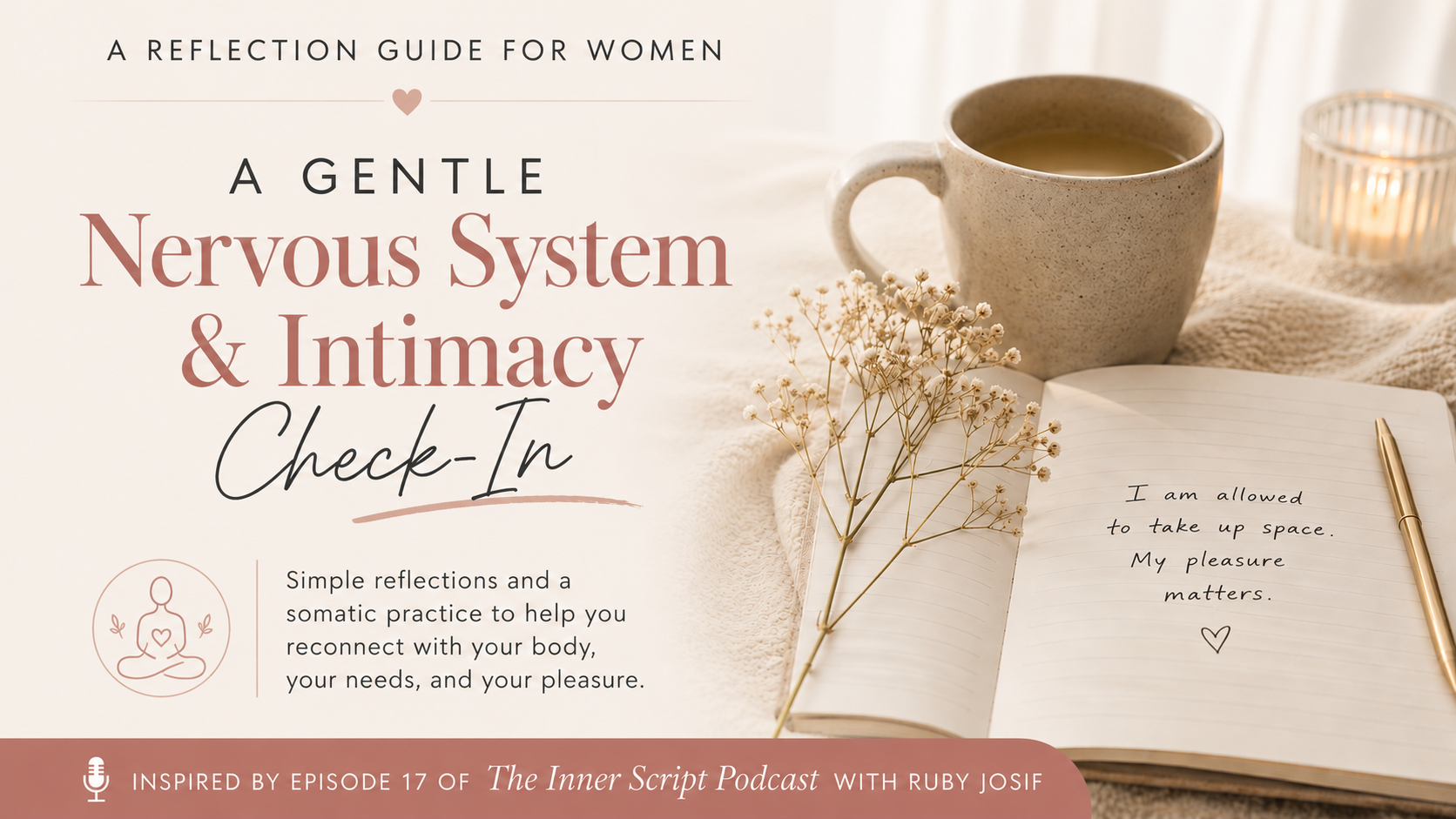
A Gentle Nervous System & Intimacy Check-In
This free reflection guide pairs simple journaling prompts with a short somatic practice to help you slow down, notice where you feel tension or disconnection, and reconnect with your body's own signals around pleasure and intimacy. Download it here: Patreon companion resource
You can also join Steph’s free Patreon community here:
The Inner Script Patreon
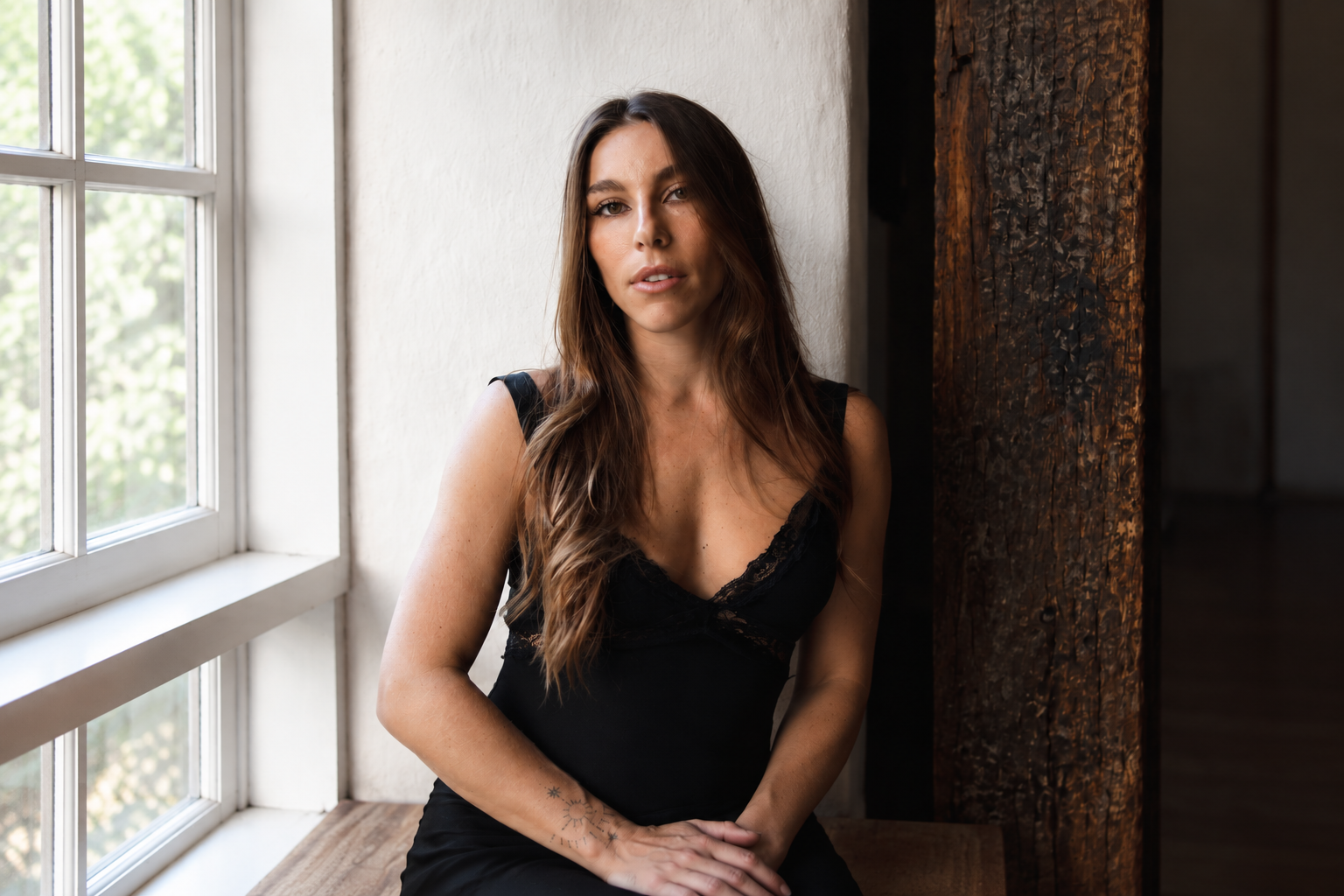
Meet Ruby Josif
Ruby Josif is a somatic sexologist with nearly a decade of experience in the sexuality space, where she has helped hundreds of women feel wildly confident in sex, intimacy, and relationships. Her diverse background spans somatic sexology, neo-tantra, and counselling, giving her a grounded, holistic, and non-judgmental lens on the many different ways women experience sex, love, and relationships. She works at the intersection of the body, the emotions, and the nervous system, helping women move beyond just understanding their patterns to actually feeling safe, present, and at home in their bodies. Website: https://www.ruby-josif.com
Instagram: https://www.instagram.com/ruby.josif.sex.coach
Ruby’s Website & Ruby’s Instagram
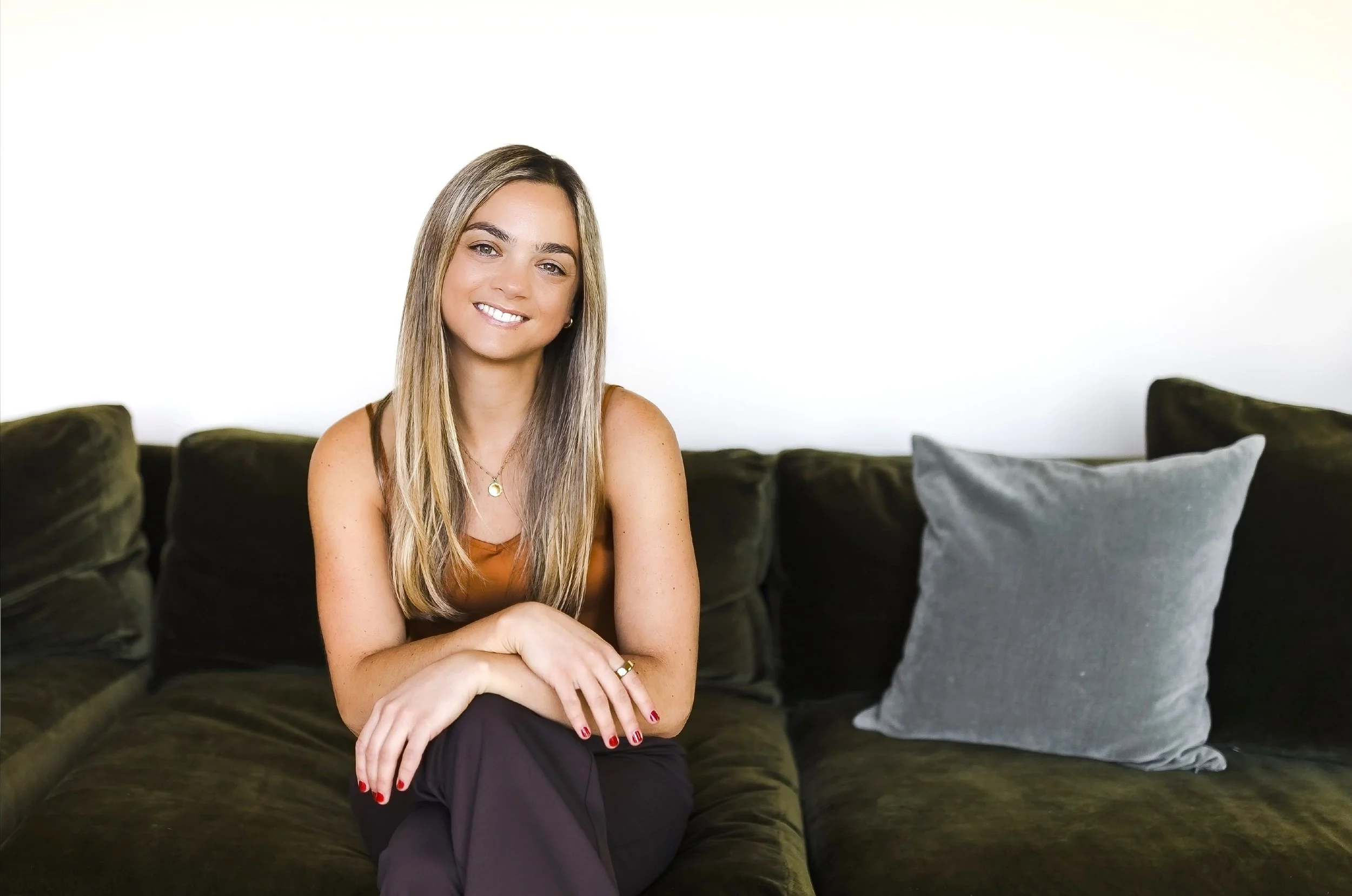
Meet Your Host
Stephanie Baubie, NP is an integrative nurse practitioner and the host of The Inner Script Podcast, where she explores the deeper stories behind health, healing, identity, and transformation. Through a blend of functional medicine, nervous system awareness, emotional insight, and honest conversation, Stephanie helps women better understand their bodies while questioning the narratives they’ve inherited about wellness, worth, and what it means to truly feel well.
On The Inner Script, Stephanie sits down with physicians, founders, thought leaders, and experts in women’s health, while also sharing solo reflections on the transitions and inner shifts that shape our lives.
Follow Steph on Instagram.
FAQs
Can chronic stress and survival mode affect your skin?
Yes. Chronic stress can influence inflammation, sleep, recovery, and daily habits, all of which may affect how your skin looks and feels. In this episode of The Inner Script, Michelle Doan shares how decades of living in fight-or-flight mode coincided with chronic inflammation and ongoing skin struggles.
Stephanie and Michelle also discuss how breakouts, redness, hives, and irritation may become more noticeable during emotionally difficult or highly stressful seasons. Skin concerns can have many causes, so persistent symptoms should always be discussed with a qualified healthcare provider.
Why won’t my cystic acne improve even though I use skincare?
Cystic acne may not respond to simply adding more skincare products. Michelle explains that she spent years visiting dermatologists and trying medications, harsh topical products, and heavy makeup before learning that some ingredients in her routine were clogging or irritating her skin.
Her experience led her to examine comedogenic ingredients, product formulations, skin sensitivity, and the relationship between cosmetics and breakouts. She emphasizes that more products are not always better, especially when the skin barrier is already inflamed or reactive.
What is the connection between stress, inflammation, and skin health?
Stress can affect the body’s inflammatory response and may also influence sleep, digestion, hormone balance, immune function, and skincare habits. In this conversation, Michelle describes the physical effects of living in survival mode, while Stephanie shares patterns she has observed among patients experiencing stress-related skin flare-ups.
The episode does not suggest that every skin condition is caused by stress. Instead, it encourages listeners to consider skin health as one part of a larger picture that may include emotional wellbeing, lifestyle, recovery, environment, and medical factors.
What skincare ingredients are best for sensitive or aging skin?
There is no single ingredient that is right for everyone, but Michelle recommends paying attention to what she calls the “three Ps”: potency, penetration, and proof.
Potency refers to whether an active ingredient is present at an effective but tolerable percentage. Penetration considers whether the formulation can deliver ingredients effectively. Proof means looking for clinical evidence, transparent information, or credible testimonials rather than relying only on marketing claims.
She also discusses niacinamide, probiotics, peptides, vitamin C, gentle exfoliation, and products that support the skin microbiome.
Can over-exfoliating make your skin look dull or irritated?
Yes. Exfoliating too frequently or using products that are too harsh for your skin may contribute to redness, dryness, sensitivity, or damage to the skin barrier.
Michelle recommends gentle exfoliation rather than using a strong exfoliating cleanser every day, particularly for people with dry, mature, or reactive skin. The goal is to support healthy skin turnover without continually stripping or irritating the skin.
Can gratitude and mindset improve your health?
Gratitude and mindset are not replacements for medical treatment, but they may help change how you experience stress, daily responsibilities, and difficult seasons.
Michelle shares how changing “I have to” into “I get to” helped her see ordinary experiences as privileges rather than burdens. She also describes finding joy through simple gratitude practices, such as appreciating coffee, a warm shower, her bed, or a quiet moment in the morning.
Over time, these practices helped her become more aware of the good in her life and less consumed by problems, pressure, and fear.
How do you move out of survival mode?
Moving out of survival mode is usually not a single decision or quick mindset shift. It may involve becoming aware of your stress patterns, changing difficult relationships, creating healthier boundaries, reducing negative media consumption, developing a supportive morning routine, and practicing more intentional self-talk.
Michelle compares mindset work to physical exercise: one practice may not create an immediate transformation, but consistent repetition can gradually change the way you respond to stress and interpret your life.
-
[00:00:00] Everything shared here is for educational purposes and personal reflection only. Not medical advice. Always work with your own healthcare provider for individual care.
[00:00:09]
[00:00:17] Stephanie: Hey, everyone. Welcome back to The Inner Script. Today's guest is Michelle Doan, founder of IMANI Vegan Cosmetics. Michelle's story is one of resilience, perspective, and redefining what beauty really means. From spending part of her childhood in a Thai refugee camp to building a successful clean beauty brand here in California, her journey has shaped a powerful outlook on life.
[00:00:42] Her simple mindset shift from have to to get to is what changed everything for her. I'm so excited for you guys to hear this conversation. Welcome, Michelle. Thank you so much for coming on
[00:00:54] Michelle: Stephanie. I'm so glad to be here. Thank you so much for having me
[00:00:58] Stephanie: Well, we're gonna get into all the things, but large part of my listenership is really going through transitions and kind of coming out on the other side of it. So I really want to start this conversation by talking about this refugee camp you were in, in Thailand before your family eventually settled in California.
[00:01:16] Like, can you tell us a little bit about what that was like?
[00:01:20] Michelle: So I was born and raised in Vietnam, and the fall of Saigon was in 1975, which is the Vietnam War. And at that time, there was a mass exodus of Vietnamese leaving the country, because it has been war-torn for a really long time. Vietnam today is an amazing place to visit, so if you haven't gone to Vietnam, that's my annual vacation that I really look forward to.
[00:01:42] But in 1979, my mom decided to leave Vietnam in seeking of a better future. And even as a nine-year-old, I remember how difficult and how challenging it was. Thinking about like, you know, I see people traveling with a couple of young kids on a plane. She left Vietnam with six kids. My youngest sister was two, my oldest brother was 16.
[00:02:06] So imagine destiny unknown, and we got on a boat. She was able to get us on a boat, and that was not an easy feat. And it was a fishing vessel. It was 30 meters long, which is about 90 feet, and it held 319 people. So literally, those images that you might see popping up, you know, Vietnamese boat refugees were sitting shoulder to shoulder, crouching over, was real, and that was our reality, and that was a journey that kind of set us on.
[00:02:36] And I just remember you can't really bring anything except for maybe like each family got a little bag, and that would be like your food and maybe water. And we didn't know how long, and literally with the clothes on our back. You couldn't bring anything else, because space was precious. And I remember being put into the fishing hull during a storm.
[00:02:57] So they put all the women and kids in the fishing hull. Just remember just being really sick. Yeah, and just the smell of fish. It was just one of those things, and maybe that's why I don't like fish these days
[00:03:08] Stephanie: I can imagine that. That's valid. How long were you on this ship for?
[00:03:13] Michelle: So the journey was about a week, and I just remember it was days and days, and we were really hungry, and we were thirsty. And we landed in, I didn't even know back then, but it was Thailand. And during the '70s, Thailand, Malaysia, Indonesia had a flood of refugees coming in. And I remember seeing land, and I remember the military police were shooting at our boat because we couldn't really land.
[00:03:39] There was just so many people. It's a huge issue for the government because all these people are landing on their shore, and they don't even know what to do with us. So we had to wait until the middle of the night where we had to swim in. It was pitch black. And of course, I'm being the fourth child. I had three older brothers, and I had a younger sister and a younger brother.
[00:03:58] Well, three of us didn't know how to swim, and my brothers were too young to put us on their backs to swim in. The story was that my mom, in a panic, trying to find any men without children that can actually put us on their back and swim in because, you know, you can really get lost in the middle of the night in the water.
[00:04:16] And we finally made it to shore, and then they shipped us to refugee camp where you kind of have to fend for yourself. And the question was like, "How do you guys survive in camp if you weren't provided for?" And my mother had the insight of sewing like little precious of gold and diamonds and that she has, and she was sewing it in my sleeves of my clothes, and she said, "Whatever you do, do not lose your clothes.
[00:04:45] That's how we survive." She took out the gold and diamond, and she bartered, and she traded for food and shelter
[00:04:50] Stephanie: Wow. You didn't get split up from your family, right?
[00:04:53] Michelle: No, thank God we were not split up. All seven of us were sent to refugee camp and was outside of Bangkok
[00:05:02] Stephanie: Okay. How long were you there for before kind of coming to California? Or maybe there was something in between
[00:05:08] Michelle: Yeah, there was a lot in between. I believe it was May when we left, and we landed in Canada first, so I would say almost a year in refugee camp. During, you know, when you're a refugee, you can apply for asylum, and so many countries came, and we almost end up in Australia like some of my family. And then there was, you can also go to France.
[00:05:29] But my mom loved America, and she applied to come to America, and her application was rejected because they didn't think that she put down herself as a seamstress, but she was really an entrepreneur. It said she could not survive as a seamstress and support six children in America. And so we were sponsored by the Catholic Church in Canada.
[00:05:51] Yeah, St. Patrick's Catholic Church, Burlington, Ontario, for a few years. We went to church every Sunday even though we were Buddhists. We were so grateful, and if it wasn't for the church, we wouldn't be here, and that taught me, like, the kindness of people. And then also there are church people, church families that volunteer.
[00:06:12] They would help us integrate into the Western life. We would, you know, go grocery shopping, and they would sign us up for school, things that we didn't know how to do and how to integrate, and we didn't speak English
[00:06:23] Stephanie: I mean, if that's not resilience, I don't know what is. What was the most difficult part, would you say, from kind of getting in this Western civilization, I guess? Blending in, as we say
[00:06:38] Michelle: It was a culture shock because the town we were in was Burlington. It felt like, I think we were the second family, or at least the second Asian Vietnamese family in Burlington. I remember, you know, the weather was definitely shocking. Thailand was hot and humid, and we came to Canada in April, and I've never felt such cold.
[00:07:01] It was so cold, and we didn't have clothes. And I remember when we got to Canada, we had to be immunized and inspected. So we were in what it looks like a dormitory, and they would just throw a bunch of coats in the middle of the dormitory, and you had to go, like, dive in, and you gotta figure out what fits you, and we were so blessed with that.
[00:07:22] And just, you know, flying into the city that we're gonna be in, and we were picked up by Tom Olds from our church, and that was, like, our first connection to the church and to the new life. And I just remember he had, like, blonde hair, blue eyes, and a big smile. And at nine years old, I looked up, and he was so tall.
[00:07:43] And, yeah, we still stay in touch. And I think the culture shock was really huge, and being around people that look so different than you. And then I remember playing in the front yard, and people would drive by, and they would stop, or they would go really slowly, and they would all turn and looked at us.
[00:08:03] And, you know, we were teased at school because we were different. You know, kids were mean, and that's okay, but some kids were nice, and that was great. And the kindness of people. People saw us in our pajamas, so we would find random bags of clothes in front of our door, and we were so excited 'cause we all went through it.
[00:08:20] Yeah, kindness of people, and that really shaped me being kind, you know?
[00:08:24] Stephanie: Well, I mean, you, you turned such a difficult period of time in- into something beautiful of finding, you know, the silver lining, I guess, in the sense of, like, people, you know, are naturally very kind. So thank you for sharing that. That just adds so much perspective to kind of your whole journey, and we're gonna get into everything.
[00:08:45] But when did you eventually get to California?
[00:08:48] Michelle: 1985. So 1980, we were in Burlington, Ontario, and then eventually my father, I think 1981, he came, and by then he brought his now wife. And so my mom basically left the home that we were in, and she left to go to California because it was a really painful time for our family, and there was a lot of stuff that I didn't understand through divorces and complicated adult emotions at a 10-year-old.
[00:09:19] And she came here, and around '83, ' 84, she got married. And then 1985, she's like, "Hey, do you wanna come and visit for two weeks?" So I came for two weeks in June of 1985 after school. I was so excited. I'm like, "Wow, I didn't even know this world existed." Sunshine, blue skies, palm trees, a beach, pool. What is that?
[00:09:43] And I was like, "Wow." And then at the end of the vacation, she said, "Do you wanna live here?" I'm like, "I could?" And that was it, and I've never gone back. And so my entire family, you know, lives in Canada.
[00:09:55] Stephanie: Wow. Do you go back to Canada every now and then?
[00:09:57] Michelle: All the time, yeah. I was actually home last month, um, so, you know, I try to come home for the holidays.
[00:10:03] Christmas is hard because it's really cold, and now I have my own family. I have three grown children, and I'm a grandma of three. I have three beautiful, precious little babies
[00:10:13]
[00:10:14] Speaker 3: Hey friend. If there's someone in your life who you think would also love this conversation, please send them this episode. Sharing it with a friend makes you look like the exceptional friend that you are. Oh, and it helps the podcast grow too. Thank you.
[00:10:30]
[00:10:30]
[00:10:31] Stephanie: So you mention a lot about resiliency and this reframe you made from have to to get to. Clearly you went through a lot as a child. When did you kind of, kind of make those mindset shifts of I get to, and when did you realize that you were resilient? 'Cause a lot of the times we don't recognize that until, I don't know, maybe we're older
[00:10:55] Michelle: So, you know, after that, going through two divorces, running a company as a single mom, right? You don't have a lot of time to reflect. But my first divorce when I was 27, when I started the Imani, because I had cystic acne, I just knew at 27, 28 that their life did not turn out the way that I had imagined, and I was deeply challenged, right?
[00:11:19] Being married to a narcissist. And so, but I didn't even know what a narcissist was until I reflected. So for me, it was constant survival. I was in survival mode for many, many decades, right? And I loved the adrenaline because I thought that was my superpower. But the adrenaline had such a physical impact that I'm paying right now.
[00:11:42] I live with chronic inflammation and all of these different things. And so when people were saying, "Oh, wow, you're like really living in fight or flight mode," I'm like, "I'm sorry, what's that?" I didn't know what that meant. And when I was 35, my kids were like, "Mom, we don't have a dad. Like, how come everyone have a dad and we don't have a dad?"
[00:12:01] And I felt really bad, and I said I would never get married again, but I got married again, so my kids can have a father, right? 'Cause they were raised by my mom, raised by me, and raised by my sister. So y- they didn't even know what it was like to have a man around. So what happened was that I remarried, and I remarried the exact same person, another narcissist in a different body.
[00:12:23] Stephanie: No, I was just gonna say it's very relatable. We keep getting the same thing until we break the pattern
[00:12:30] Michelle: two marriages didn't last very long. Actually, it only last probably two to three years max when I knew, like, I had to get out. And I was questioning God. I'm like, "God, like, do you not love me? Like, why are you challenging me?" And then I realized that maybe there's something about me that was broken.
[00:12:47] Maybe I'm subconsciously choosing the same people. And so I kinda wrote down what I don't want, and then I'm like, "Okay, maybe I sh- should write down what I want." And I want someone who's kind, who's giving, and all of these different things. And I put it in a little box, right? It took him a long time to come.
[00:13:03] And so during that time, you know, just kind of fighting to survive and get back to from have to to get to. Unfortunately, I didn't learn that until possibly five years ago. Now I'm 56, and this is why I'm doing this, because I wanna share that sometimes it's just the little things that really improve my life.
[00:13:24] And I just wanna share that because if I had learned this a decade earlier, it would've been really different. And I learned that through EO, which is Entrepreneur Organization, and my chapter's in Orange County. It's a nonprofit, and it's where entrepreneurs get together and help each other grow and help us to have certain insight, right?
[00:13:43] And we did a class on EQ, and I'm like, "Okay, let's do this class." And that's where I learn I find myself having to say, "Ugh, I have to pick up my kids from school. I have to, like, go to this meeting. I have to do that." And then he said to me, "Now you get to do it. It's a privilege and it's an honor." And I'm like, wow, like, you get to learn these lessons.
[00:14:07] You get to live your life. You don't have to go to the gym. You get to go to the gym. And how grateful are you to have legs and arms? You know, how grateful are you to have the energy? And I'm like, wow, that kind of blew my mind open. And every time that I feel like, ugh, I have to, and it felt heavy, I just flip the script.
[00:14:27] I'm like, "I get to, so get off your ass and do it."
[00:14:31] Stephanie: Love that. It's such a good reframe. So with these narcissistic relationships, when did you realize that you were in it? Did you realize it after the second one?
[00:14:42] Michelle: I didn't realize until in retrospect, I found myself every time I voice what was bothering me, the script was flipped. It was my fault. So everything was my fault, and then I didn't know what gaslighting was. And then when I learned about this word gaslighting, and I'm like, "Oh my gosh, that's what he was doing.
[00:15:01] He was gaslighting me." And he flipped the script, and then it made me felt like I had to earn his love or respect. I had to earn my peace. I had to earn the sense of belonging in the home, and that's wrong. Because the moment we are born, that was given to us, and then we allow others that we don't understand subconsciously on some level, we give our powers away.
[00:15:27] Because we are taught, you know, wanting to belong. We have this innate desire to be loved, to be accepted. Then I learned the powerful thing was that self-love. And when I hear about self-love, I'm like, "Oh my gosh, here we go again. Let's talk about self-love," right? And self-love for me is not taking myself to the spa.
[00:15:47] It's not being decadent. It's not doing all of that. That brings a little happiness, but happy, the difference between hap- being happy and being joyful, happiness is temporary and sometimes it's conditional. Joy is something that you feel inside. And for me, my self-love was I didn't forgive myself, and I learned this the hard way during COVID because Imani mostly sold makeup.
[00:16:13] We did, you know, blushes makeup, lipsticks, and all of these things. During COVID, we were all home, wore a mask when we were out, and we were on Zoom. And so the first year of COVID, our sales plummeted 60%, and it wiped out a lot of companies. Even big brands went through, like, this huge dip. And so that was the second obstacle, and I was starting to think about maybe I'm not relevant anymore.
[00:16:40] Maybe the best days are behind me, and that's like the most disempowering thoughts. And this is the first time where I was scared and I didn't know what the future brought. That's why our thoughts are so powerful. And with some help and with some mindful practices, it really helped me through those things because I was tying my worth to my company, I was tying my worth to my P&L.
[00:17:06] And I had to go back. I was so miserable, Stephanie, that I said, "Okay, this year I'm gonna go look for joy." This year, and I'm like, "Okay, we're gonna look for joy. Where do we go?" And so I have a really good girlfriend, her name is Lisa Nguyen, and she loves manifesting and gratitude. And I'm just like, "Ugh, whatever."
[00:17:25] I was rolling my eyes. I'm like, "All right." And she's like, "I have this morning practice, you know, the 10-10-10." The 10-10-10 is like journaling, gratitude, and I don't know, prayers or something. I wasn't paying attention, to be honest. And then I'm like, "Okay, I'm gonna try this gratitude." And I try this gratitude, and maybe your listeners can relate to this, and I was unimaginative.
[00:17:47] So they said, "Name three things that you're grateful for." So I'm like, "Okay, I'm grateful for my health, I'm grateful for my business, I'm grateful for my family." And the next day I'm like, "Okay, I'm grateful for my family, I'm grateful for my health," in different orders. And then I'm like, "Okay, well, we need help.
[00:18:03] We need to be more imaginative." And then YouTube University is what I call it. I'm like, "Okay, gratitude practice." I put it in and I found this thing called 21 Days Gratitude Practice. I'm like, "I like this." And it was this soothing voice, and it just talks about, "I'm grateful for my coffee, I'm grateful for my bed, I'm grateful for hot showers."
[00:18:25] And I'm like, "Oh my God, I am grateful for all those things." So every time I'm drinking my coffee I'm like, "Oh, I'm grateful for my coffee." And that's how I found my joy, Stephanie. It's like not in the big things but in the little things. And every time I'm taking a hot shower I'm like, "Wow, I'm so grateful for this."
[00:18:43] Stephanie: I love that. I always say, you know, it's really hard to feel grateful for things before you kinda get that joy. You gotta feel that good stuff first. But I think that mindset shift you had of, like, you know, I found my joy in finding gratitude in the little things. Sometimes it's the s- most simple things that can kinda shift our perspective.
[00:19:04] You mentioned that you were dealing with cystic acne for a very long time, and also some maybe byproducts of being in chronic fight or flight, and you mentioned inflammation. When did you start dealing with cystic acne? Was it during your narcissistic relationships?
[00:19:21] Michelle: I had cystic acne. I mean, it runs in our family, right? So everyone in our family have cystic acne. We have sensitive skin, we have dandruff, like we have everything. Thank God I don't have dandruff, but I had cystic acne. From 15 to 27, I broke out like nobody's business, and cystic acne is like deep skin inflammation that it's not just on the top.
[00:19:43] It's so painful, and I spent a lot of time at the dermatologist from 15 to 27. And I've gone through the birth control, I've gone through Accutane, which really messed up my digestive system, 'cause I also have a very sensitive stomach. I'm literally sensitive from head to toe. And then also all the topicals that just like, you know, damaged my skin.
[00:20:02] It was, like, too harsh. And dealing it with it for about until about 27, and in during this time, you know, I went to a fashion school. When I graduated high school, I went to fashion school 'cause I love things that are beautiful. I love to make women beautiful. I love, like, I love that beauty, right? I'm really drawn to that.
[00:20:21] But what happened is that no matter how great your hair look, no matter how fire your outfit looks, if you have cystic acne, I felt ugly. And then I was putting makeup on to mask that And the more makeup I put on, the worse it got. Imagine this is like late '80s, early '90s, right? And so 1997, like 12 years of dealing with this, like feeling super hopeless, I met a paramedic esthetician, and she literally changed my life.
[00:20:50] And I was so skeptical. She's like, "I can help you with your skin." I'm like, "No, you cannot." We started arguing. "No, you cannot. I went to dermatologists. I blah, blah, blah, blah." And she said, " If you do exactly what I tell you, your skin's gonna change." So I go to her for a couple of months... And by the way, people, like cystic acne facials are not spa experiences, okay?
[00:21:12] Cystic acne facials is to the point where she used lancet, and she would puncture my skin, and she would squeeze it, and then she would zap it, and she would do all these things. I remember having to tap out in the middle of extraction because my body went into hyperventilation. I was breaking out in a cold sweat.
[00:21:32] I also have very sensitive skin because every time she squeezed, I'm just like holding my breath, you know, and not breathing through it. But you know, for a few weeks my skin looked really great, and then I broke out again. And then I told her, I'm like, "Look, like, what's going on?" And she's like, "Well, I don't know what you put on your skin."
[00:21:48] I'm like, "Can you?" And she said, "Yes." Now imagine this is 1997. We don't have little computers, and we don't even go- go to the internet to find things. So I go to her, and I bring in all my products, you know, like an average woman uses like 15 products, exposing her body to like 120 plus chemicals, right? And I bring all my products to her, and even including my conditioner because I was getting bacne.
[00:22:10] Half the products she said the ingredients are on the box, I can't tell you. But she pull out a binder, and I'm like, "What is this binder?" And it turned out that she had two pages of the comedones list. And I'm like, "What is this?" She's like, "Oh, these are the ingredients that are gonna clog your pores, and it's ranked from zero to five.
[00:22:29] Zero doesn't break you out. Five, it's gonna break you out. Anything a three or higher in concentration is gonna break you out." And I'm like, "And people put this in cosmetics?" It's so crazy. And then I'm like, "Can I photocopy this?" You know? And so I photocopied it, you know, go to the department store 'cause I'm like, "That's where they make really great cosmetics."
[00:22:50] So I go to the department store, and imagine, like, I don't think anyone really read ingredients back in 1997. And so asking someone behind a prestige cosmetic counter if you can read ingredients, they're like, "What?" And then it was such an uncomfortable experience. I'm like, "Okay, I'm gonna go to the drugstore."
[00:23:08] So I'm in the aisles literally for hours. I couldn't find anything, so I start calling companies that had hypoallergenic on their boxes. I'm like, "Hey, it says hypoallergenic, but it still breaks me out." What I learn is being super curious and maybe frustrated and on the borderline of pissed and not accepting things for the status quo.
[00:23:28] I keep asking. I'm like, "If it says hypoallergenic, it should not break me out. Like, what is going on?" And then I end up speaking to raw material suppliers, and I spoke to someone who kind of, like, calmed me down, kind of talked me through ingredients, and then it's like, "Hey, I can send you some raw materials."
[00:23:46] I'm like, "Okay, and what do you want me to do with it?" And he's like, "Oh, I can place you in touch with a formulator in California." I'm like, "Okay." And so that taught me the power of saying yes. Sometimes, you know, we say no to so many... "Oh, I can't do this. I can't do that." I'm like, "Okay, I don't know what it is, but if you're telling me, I'm gonna try it."
[00:24:04] So I walked through that door and said yes, and I was looking for just, like, a foundation that didn't break me out because I just wanted to hide my skin. And I was in fashion, so I love eyeshadows. And then I was getting these, like, pigments in pots, and so I put a little display together because I was in merchandising.
[00:24:21] And I'm like, "Okay, who do I sell to?" So I'm like, "I'm selling beauty." So I pull out Yellow Pages, and I start calling stores, and of course, you know, they don't wanna see me 'cause they probably get bombarded. So I'm like, "Okay, you don't wanna see me? I'm gonna come and see you."
[00:24:34] Stephanie: I love the work ethic. I'm sensing some Capricorn or Virgo placements in your chart
[00:24:40] Michelle: How do you know that? I am a Capricorn
[00:24:42] Stephanie: It's a weird thing that I have. I can, like, pick up on people's astrology placements. Yeah. You're an entrepreneur, like, that is so Capricorn to begin with, and just this like, "Oh, no, then I'm gonna come to you," that's so Capricorn
[00:24:55] Michelle: Yeah, I'm like, there isn't a road? You know, there's no way through it? How about around it or over it? Like, I don't really take a no for an answer, and I've been called a hard-headed woman multiple times in my life. Now I take it as a compliment because I just have this fire that I don't give up. So I did cold calling.
[00:25:14] I went to six salons, and I opened five stores in the same day selling a $350 package. And I got back into my little apartment with my two little... I'm like, "Okay, you know what? I probably could do this for a living." Yeah, in the first year I sold $60,000. I was, like, so excited. Now I'm like, "Okay, I mean, it's not enough to support three kids and living on a shoestring budget," but I was literally operating out of my kitchen and my car.
[00:25:42] But what I love is I love people, and I naturally built relationships with people. And one of my clients, she used to own Regal Beauty. Her name is Jill Stevens, and she's like, "Hey, do you know Barbara Beauty? Like, they're a distributor." So I'm like, "Oh, no, I don't know anything about distributorship because I don't have a PhD.
[00:26:01] I have a fashion degree, people." So I'm like, "Oh, yeah, I'd love to talk to them," and then she made the intro. And then I remember meeting Pat. It was kind of funny 'cause I'm like, "Wow, he's a dude in the beauty business." And Pat said, "Hey, have you done this trade show?" I'm like, "No, I haven't, but let's go." And we did, uh, back then in '98, a show called BBSI, which is like a professional beauty, and we were named, like, one of the hottest products in this BBSI news.
[00:26:27] And I'm like, "Oh my God." Then I start opening distributorships, and I open up two distributor. One of my first distributor was in Belgium, and all of that. You just never know who you're gonna meet that's gonna change your life and- The power of saying yes. But business has changed a lot in the last 25, even the last 10 years alone.
[00:26:48] Now I learned the power of saying no because you get overcommitted. If your body's tired, say yes. If you got invited to something really cool and your body's tired and you don't have enough me time, maybe you should say no. Be careful how you spend your time because that's the only commodity that we have very limited of.
[00:27:06] And Stephanie, I guess only in my 50s that I look back and it's like, wow, the last 30 years went by really fast. When my kids were young, like my boys were young, I was like, "Well, I can't wait until they turn 18. I will still be 42, and let's go do this," you know? Then I had my daughter when I was 35. I'm like, " Oh, now the time clock is a little bit further."
[00:27:30] And then now I wish my kids would move back. I'm like, "I really miss them. I really miss them." And, and when they were younger, I was physically there. I provided for them, but my body was there, but most of the time my mind wasn't because I lived in the have to. Oh, I have to take them to Chuck E. Cheese. I don't know if you guys take your kids to Chuck E.
[00:27:48] Cheese. It's not pleasant for parents. We'd go to Chuck E. Cheese every single weekend as a treat and all of these different things, and I felt like I kinda missed out. And if I could go back, and if you have young kids, I would ask them more questions about them, about what they think about this and who their best friends are.
[00:28:07] And when they have a problem, don't solve it. Just ask how they feel and just being more present in their lives because they do grow fast.
[00:28:14] Stephanie: Yeah, and kids are also, you know, they don't have all of the social conditioning that adults have, so they add a layer of perspective, to be honest. And it's almost refreshing to have a conversation with kids and just because there's just no social conditioning. Like, they're really in touch with who they are.
[00:28:35] It's so intriguing to me
[00:28:37] Michelle: It is very intriguing, but on the other flip side of things, it just depends what kind of content they're consuming because they are on their devices, right? Even like my grandkids and things like that. And I feel like younger generation, it's a little bit more dependent on their parents. I know some of my friends have 16, 17-year-old kids that don't wanna drive because they want mom to drive them
[00:28:59] Stephanie: Really? I remember being like, "I can't wait for my license. I can't wait for my license."
[00:29:03] Michelle: I can't wait to get a job. I can't wait, like, to be independent." Now they're like, "Oh." You know, and there's a sense of entitlement. I'm giving, but I also tell my kids the value of things, and I just remember, like, taking them to Target, and my daughter, she wants to buy that. I'm like, "Well, do you know how much that is?"
[00:29:20] And she goes, "No." And I'm like, "You want to buy it, but you don't know how much it is." I'm like, "Go find out." And she would go, and she would look at the pricing. So I teach her how to be a better consumer. And I said, "I think it's gonna be on sale in two weeks," and that's how I push her off. I said, "It may go on sale, so why don't we come back in two weeks and check it, and we could save some money?"
[00:29:39] And so now she has that mentality
[00:29:41] Stephanie: I mean, I think there's just so little friction these days in terms of getting the things we want. You know, we can order something on Amazon, get it the same day, order groceries, don't have to go to the grocery store. Like, do you think that's adding to this, I guess, maybe kids or teens growing up in this day and age, they're just not used to friction?
[00:30:02] I get that's like a really bold statement, but
[00:30:04] Michelle: They're not being really being challenged, like finding things for themselves. And what I find is really sad, the cyberbullying, you can't escape that. When I was young, I went to school. If I had to face a bully, it was only during school and maybe after school. But when I come home, it was, I had peace and sanctity.
[00:30:22] But now it's like it's 24/7. They can literally bully you 24/7. That is super sad, and that is really hard, and that's where parents have to come in and protect their children from that. But I am concerned, like how hard they have to work, and I remember my daughter a few months ago, she always worked part-time, and she's a really hard worker.
[00:30:43] And then she finally got a full-time job, and she's like, "Oh, Mama, like I worked 40 hours this week. I don't have any me time." And I'm like, "Oh, you worked 40 hours this week." I'm like, "That's really great." And she's like, "You know what? I didn't realize how much I had it great, you know? I would come downstairs, and the food will be there.
[00:31:02] Now it's like I have to cook. I got two dogs." And I said, "Well, I tried to tell you. You were in such a hurry to grow up." And I said, "But, you know, you have to live with the decisions you've made."
[00:31:13] Stephanie: Yeah. You get to live with the decisions you make
[00:31:17] Michelle: You get to live. You are right. You've just corrected me. And she's like, "Yeah." And I'm like, "But here, I'm here to support you." And you know what? This is part of life, and your attitude is everything. So if you keep thinking things are hard, and that's what your brain's gonna look for. They're gonna look for the hard things.
[00:31:32] And I try to tell her, I said, "Look for the joy even if you hate your job. Look for the joy. What do you like about your job? Because there gotta be one thing."
[00:31:41] Stephanie: Totally. What does she do?
[00:31:42] Michelle: She worked for a pest control company, and you know, she was handling, like, so many calls, and she's such a high performer. So I think a lot of it is that they push all the responsibilities to her, and then she got burned out.
[00:31:55] Stephanie: Is she a Capricorn too?
[00:31:56] Michelle: Now, she was born in July. Yeah, she's a Leo, and she's full of fire. And I'm like, "Look, you know," she's only 20. She'll be 21. And I said, "I know you don't like school, but, you know," I said, "With all your skills, go get Six Sigma." And she said, "I don't know what that is." I'm, "Go, go look it up." And that's what she's doing.
[00:32:14] She hand in her notice, and they're like, "No, don't quit. We're trying to do this." And I said, "Just tell them that you're gonna focus on personal growth in school." And we have to help our children to make that decision because she's like, "I'm not gonna get that income," and etc., etc. And I said, "Well, I'm gonna help you a little bit while you're going through school, so you don't have to worry."
[00:32:34] She's married to a Marine. He's great. We're so happy to have him, and they're very happy, and I think that's really rare for a young marriage. He's 21. She's 20.
[00:32:42] Stephanie: I need to ask you about your skin care line, because if anybody's looking at the video, Michelle's skin looks amazing. It's flawless. I don't know how this is possible. So can you tell us about your products? Like, I know it- it's clean beauty, and it sounds like you dealing with your cystic acne for a very long time is what led you to create your own skin care line.
[00:33:06] But tell us a little bit more about your products
[00:33:08] Michelle: I am a total nerd. I'm not... I don't like to solve problem, like I need to solve a problem. You were talking about resilience, going through different changes, and I broke out when I was pregnant with my daughter. My skin looked horrible. And then I went into perimenopause, and now I'm in postmenopause because I'm 56.
[00:33:27] And when I was turning 50, like things started to hang and droop, and I'm like, "What is going on?" Like, I really need help. And clean beauty is great, but clean beauty when it comes to skincare, it didn't really do what I needed for it to do, and that is to make my skin look better, right? Why do we buy skincare?
[00:33:47] The reason women buy skincare are because we wanna see changes. So I came up with the three Ps. What are really important when it comes to skincare? The first P is potency. Potency is the percentage of an active ingredient in your skincare that's gonna bring real change. Anything that's like a really good active, it's not cheap, right?
[00:34:06] So someone can put... Like vitamin C is really popular. If you put 1 or 2% vitamin C in something, it may not get the results that you want. But if you put too much vitamin C in, it's definitely going to irritate your skin because you're like, "Oh, then I wanna all the vitamin C." So anything like 20% vitamin C, you have sensitive skin, it's gonna cause a huge skin irritation.
[00:34:28] So when we develop product, we think about the pH as well, and like the skin health, the microbiome layers. Microbiome are like bodyguards that protecting your skin. So for vitamin C, like 9 or 10% for someone like myself who has very sensitive skin really helps. And then we have things like a probiotic.
[00:34:47] It's called Sleep & Renew because I'm like, "Okay, I want my body to repair." That's how our body repair when we're sleeping. And so we have like 85% probiotics with apple and papaya
[00:34:57] Stephanie: Papaya is so good for digestion
[00:34:59] Michelle: Yeah. And it's also great for your skin 'cause the turnover is like a gentle exfoliator. And so potency is really important. So if you're gonna look at any skincare that you're gonna shell money out for, whether it's $30 or whether it's like $300, you wanna know what percentages and how is it gonna help your skin.
[00:35:17] The second P is penetration. How are you gonna get those nutrients into your skin? And so when K-beauty was coming out about 10 years ago, when it started kinda like popping out, I'm like, "Okay, I wanna learn everything about K-beauty and what makes it really great." And I love K-beauty except for, you know, they have these 10 steps, and then I don't really under- I'm like, "My life is not made for 10 steps," and I'm very simple.
[00:35:40] Like, I'm like two, three steps would work for me. And then they had a lot of fragrances, and fragrances has like 26 different allergens. Once again, it didn't work for me. It has petrochemicals. It has parabens. And so it's really not clean. It's functional, but it's not clean. What IMANI really is is like clean K-beauty.
[00:35:57] And so I found a company that owned 13 patents, and the patents are processed materials. What that means is that they can take an i- ingredients called ginseng for longevity and everything else. We can take the compound, and the natural compound's about 200 parts per million, and through this patent process, they can break it down to 2,000 parts or they can go 5,000 parts per million.
[00:36:20] What does that mean on a layman skincare term is that it's super bioavailable. When you put it on, it absorb really fast. It deliver nutrients to the second or the third layer of your skin. So you'll... That is really great for like large pores, hyperpigmentation, and a texture. It makes your skin like super soft.
[00:36:38] And then the third P is has it been really proven? Clinically proven is great with genuine, authentic testimonials are great. So those are like the three factors when it comes to skincare. So with us, and what I use is just a really simple... And it's not really a simple because it's a foam cleanser made with sake, and it has niacinamide in it.
[00:37:00] It's a cleanser that I use in the shower, and a lot of aesthetician use it because it literally like melt onto your skin. Yeah, and it removes like the toughest sunscreen. If you have a lot of silicone or if you wear long-wearing makeup, and then you're doing a double cleanse with an oil or something, you can do a double cleanse with our Soft Cloud.
[00:37:21] And you put it on, and it's a beautiful experience. It cleanses, and your skin is smooth, and it doesn't strip. You can use a toner if you want, but then my next step, what I like to use is I use a probiotic. It's called Sleep & Renew. And we don't have fragrances in it, so sometimes it smell like a little bit of raw material.
[00:37:39] It's like natural characteristic. And sometimes it smell like roots. Sometimes it smell like plants. And I put it on, and that helps to turn over skin cell, but it also help to strengthen my microbiome. And then I use something called HALO, which is... This is my three go-to staple products. HALO is a collagen, but we don't just put collagen in it.
[00:38:01] We put like Saccharomyces, which is a yeast, and then we use a fermentation. It, uh, goes into your second or third layer of your skin. It helps to promote collagen. But what we don't use is nano. So I say we stay away from nano because there's very little understanding about nano and how deeper it goes into your bloodstream, and I don't like crossing the brain-blood barrier
[00:38:24] Stephanie: Okay. What types of products contain nano?
[00:38:27] Michelle: I don't know. There's some skincare brands that do have, like, nanotechnology, so you kind of have to take a look at it. So if you're looking at some skincare line to just... You know, sometimes I'll look, and I would use the search button on any skincare that says nanotechnology and see if it actually appears anywhere in that.
[00:38:45] You'll know. And maybe you can look at delivery system, and maybe you can look at percentages. I believe in transparency, so kind of tell you what's in it, you know, and what it's for
[00:38:54] Stephanie: So would you recommend someone doing, like, actives if they want kind of... If their main issue is kind of dull skin? I see that a lot with some of my patients, I'm a nurse practitioner, where they just, they're like, "I just feel like my skin is dull. I can't get that glow." Is it the actives? Do you like face oil?
[00:39:14] Michelle: It just depends on what kind of face oil, and I am obsessed with this. Gentle exfoliation two, three times. Over-exfoliation is going to cause your skin to, to irritate. Because what happened, it was we had a client, and she's like, "Oh my God, my skin is so irritating." I'm like, "What kind of cleanser are you using?"
[00:39:31] And she's using a daily exfoliant, and she's over 50, and she has dry skin. And I'm like, "That's what's happening, is because you're causing your skin... You're over-exfoliating. You actually need a more gentle cleanser." And it's about balancing. And the oil is really great if it's not too oily. So what we do is we think about, A, working on the pH, B, we look at your skin biology, right?
[00:39:55] We're like, "Okay, what is a general consensus?" Because we wanna create products that create a healthy microbiome layer. If you want really good, healthy-looking skin, you need a healthy microbiome layer. And if you're using RetinA because you're working on texture, it's okay if it's a good RetinA and if you're not overusing it, 'cause you can also thin out your skin, and that's where you're not gonna get that glow.
[00:40:20] The glow is based upon a really healthy microbiome layer, and also on the skincare product, and it just depends what's in it. Oils help. You need a little bit extra, but if you have oily skin, then it wouldn't work for you. But you also need something that helps to balance the, your T-zone and your oil. So for us, the Miracle does...
[00:40:41] It's great for combination, oily skin. We have the Perfect 10. It's great for people with acne and skin inflammation and redness. That helps to hydrate and calm. Probiotics, it helps to, for the microbiome. The Halo is the same thing for microbiome, but it also gives your skin that beautiful gloss. I do it, like, day and night, yeah.
[00:41:01] And in the morning, I don't wash my face. I just splash it with water, and then I just use my Double Serum, and then I use our foundation, which has the new foundation. It's the NAD. It's called Glowbiome. Yeah, so it has NAD peptides. Yeah, 2% peptide niacinamide in it. It goes on really beautifully, and it doesn't look really thick.
[00:41:22] Because the older I get, I don't wanna look like I'm wearing makeup. I wanna look like I have really great skin
[00:41:27] Stephanie: So that, if it has like NAD and peptides, that must be good for like fine lines too, I imagine
[00:41:34] Michelle: Yeah, and they are micronized, and it's really bioactive. So imagine before my frustration was makeup wasn't healthy for your skin, so now we're turning it into where, okay, I want you wearing skincare 24/7. So all of our makeup, like especially the Youth Defense and the new NAD, the Glowbiome, and then I'll have the radiant, the Calm and Radiance content.
[00:41:58] It has like peptides, it has niacinamide, it has like organic aloe in it, things that like, you know, help to nourish. Imagine like eating a really good, healthy salad every day, and I take that concept and I put it on your face
[00:42:11] Stephanie: I love that. I need that. It's like killing two birds with one stone. You're like, "Okay, I need a little bit of makeup, but, like, give me the skincare aspect of it, too," which is lacking in makeup. And it's actually a reason I don't really like to wear a lot of makeup just because it's... I don't know. It, it definitely isn't great for our skin at times, so.
[00:42:31] What are your thoughts on Botox and filler?
[00:42:32] Michelle: I think those are great if you feel like you need them. But like, I think there's a balance. I think everyone is different. I can't speak for anyone else, but I think like whatever makes you feel good, but also the provider. I got Botox twice and for my crow's feet. Okay, I'm 56 and I have Botox twice, and I have a friend who is a doctor and who does it.
[00:42:56] And I go in and I say, "Hey, Dr. Michael, I need some Botox." He's like, "Honey, you don't need Botox." I said, "Do you want Botox?" "But you don't need Botox." And I'm like, "Well, like, you know, I have these like crow's feet." And then, you know, I had like line right here, so I got Botox twice in my life. And then I'm like, what am I gonna do?
[00:43:12] 'Cause I have these lines right here. You know? I'm like, "Do I need fillers?" And then he's like, "No, like that's the worst place to do fillers 'cause you don't do on your marionette line, you know?" Yeah, I do the hard work right now, so which is lymphatic drain, like massage. So I take all of our serum and morning and night I do like a huge massage with all of my serum 'cause it has a, like a really great viscosity and I just kind of do it right here and I just kind of like do this entire massage with my hands, not with a really hard...
[00:43:42] Stephanie: You don't use the gua sha
[00:43:44] Michelle: I don't like it. I mean, if Gua Sha works for you, it's really great, but I love like the feel of, you know, the human touch. Yeah. And then I can actually feel where I have knots. 'Cause like I have knots in my jaw and then also on here, and this is also really great 'cause like behind the ear is a trick. So I do this V shape, and that's how I try to take care of it.
[00:44:06] And if you have like crinkly neck, that's why yoga. So I do a lot of neck stretching.
[00:44:11] Stephanie: Do you do, like, red light therapy at all?
[00:44:13] Michelle: Absolutely. I bought this little red light, a little pad. I have bad knees. I have 80-year-old knees. So while in bed, I wrap my knees around it. I turn it on for 30 minutes, and I got it, like, on Amazon for, like, $40. Yeah, it should help my knees, and I'm really good at stretching. So I don't know. I've been only been using it for two months.
[00:44:32] And then it has a little heat in it, which is kinda nice. And then after I'm done with that, it's like a little pad that looks like this, like a 6 by 12, and then I just put it along my spine, and then I just kinda wrap it around my head. It looks so silly. But I do that also in the morning, and then I do my lymphatic massage while I'm listening to really empower things.
[00:44:53] I love Louise Hay. And then it's... That's how I wake up. It's like self-love, self-care, and good, positive thoughts. And I'll look for the love in my day
[00:45:02] Stephanie: Skin is, you know, it's really can show up what's going on internal too. It's funny with some of my patients, they'll come in with, like, really bad hives, like hives, breakouts all over their face, and it's... They're usually in a very angry or bitter head space, and it's weird. It's like this pattern that I see.
[00:45:23] It's like when it's, like, red and inflamed and, like, you... Like, obviously they're pissed about the hives coming on, but it's, they're in a very negative head space, and I think your skin really reflects what's going on inside
[00:45:34] Michelle: I call it my head space is my zen garden
[00:45:37] Stephanie: I love that my zen garden
[00:45:40] Michelle: Oh girl, I keep it clean because like when weeds start popping up, I'm like, "Uh-uh, you don't belong here. Let's..." And then I just watch those thoughts and, you know, The Untethered Soul teaches me the practice of, you know, just like doing, sitting in the seat of the observer, and I watch these negative thoughts.
[00:45:57] Louise Hay helps me to understand a thought is only a thought, and that you change that thought with some more positive thoughts. Not living in denial, but it's like, you know what? I'm just gonna look for the good in my day. Because if you wake up and you only focus on problems and how angry you are, and that's all your brain is trained to look for.
[00:46:18] And so mindset is major. Like m- mindset affects the quality of your life
[00:46:24] Stephanie: ' Cause we hear it all the time, like change your mindset, change your perspective, but it's not always that easy. What would be one thing you would recommend somebody to start doing in order to kinda change their mindset?
[00:46:36] Michelle: State of social media. Stop watching the news. Like, first of all, it's like, you know, you heard of sleep hygiene? So I call it, like, your mind hygiene. What you feed your brain is, you know, determine that. So it's just not one thing. So if you can't really reduce social media, then it's have a really good morning routine.
[00:46:56] If you wake up and you anticipate problems, and that's all you're gonna get. But if you wake up and you're like, "You know what? I'm gonna look for the good in my day, and I'm gonna do one thing that makes me happy," whether it's having a cup of coffee and just having a moment to yourself. Sometimes I just roll down the window, and then I look at the blue skies or whatever, the grey sky, but I'm just so grateful to be alive.
[00:47:17] It's like, wow. And then I also love listening to... Sometimes talk radio stresses me out. I try to stop listening to that. So I listen to... I love Audible, so one of my favorite book is Don't Believe Everything You Think. And so that's a really great book because first of all, it's just allow me to understand myself, how my brain works.
[00:47:38] And it's a practice
[00:47:40] Stephanie: Yeah. Like, we're not gonna get instant gratification from doing these things. Like, I think you really have to be consistent with it for, like, 30 days to really notice a shift, and they're subtle. It's very subtle, but then I think one day you wake up and you're like, "Oh, wow, I kind of feel like I have, I don't know, a rubber board up against me where things just kinda bounce off."
[00:48:00] I'm like, "Okay, whatever
[00:48:01] Michelle: It's like going to the gym. You can't go to the gym once and wanna be fit. You can't go to the gym three times a week and expect to be fit. It's doing the daily work, and it's not complicated, and it's not sitting in a room and think of nothing. It's like, for me, it's listening to, like, these kindness, kind words.
[00:48:19] And for me, Louise Hay does that. And some people doesn't like because she sounds repetitive, but for me, repetition is what rewires your brain
[00:48:26] Stephanie: Yeah. It's like that, it's neuroplasticity. You have to hear that to get that rewiring in. It's science. It's proven. Well, I think this is, like, such a good place to end on. Thank you so much for coming on. Where can people find you? I know we just mentioned, you know, limit your time on social media, but if you're on social media, where can people buy your products, all the things?
[00:48:50] Michelle: emani.com, E-M-A-N-I.com. Maybe you can drop a link on the blog, and you can actually read my story. So I created emani for women who's looking for something better for their skin and just kind of like simplify. You know, we're also on Amazon if... So yeah, Prime and you wanna get it shipped fast. So Amazon and also emani.com's the best place to find us, and emanic cosmetics on Instagram and TikTok and all that good stuff
[00:49:17] Stephanie: Thank you so much for coming on. Such a beautiful story, and I think our listeners are really gonna relate to all of this shift in perspective, which really changes your internal world. So thank you so much for listening, you guys. Feel free to send me any questions on the Interscript Pod on Instagram.
[00:49:38] Like, review, subscribe, go buy some products. I certainly am, and I will chat with you guys next week
[00:49:45] Speaker 2: If you wanna connect with like-minded women and dive deeper into these conversations, join my Patreon community. There's a free option and it's where we can talk about each episode together. The link is in the show notes and I can't wait to see you there.
Disclaimer
Everything shared in this episode is for educational purposes and personal reflection only. It is not medical advice. Always work with your own healthcare provider for individual care.
We sometimes include links to products and services we find interesting. These may or may not be affiliate links. Thanks for your support.
Podcast production by Jamie Brooke.
