Burnout and Anxiety: Boundaries, Social Media, and the Future of Mental Health (with a Psychologist + Psychiatric Nurse Practitioner) Samantha Scherzinger and Lizette Aguirre
Listen now by clicking your favorite podcast app below:
Why does burnout feel different than it used to?
In this episode of The Inner Script, Stephanie Baubie, NP sits down with two of her close friends and fellow clinicians, Samantha Scherzinger (psychiatric nurse practitioner) and Dr. Lizette Aguirre (clinical psychologist), for an honest, unfiltered conversation about burnout, boundaries, and what has genuinely shifted in mental health since COVID.
Together, they dig into why so many people feel more exhausted and less resilient than they used to, even when nothing "traumatic" is happening in their day-to-day lives. They talk about the toll of work-from-home availability creep, why toxic productivity culture keeps burnout hidden in plain sight, and the early physical warning signs, like muscle tension, headaches, and gut issues, that show up long before someone feels emotionally "done."
The conversation also moves into social media and mental health, including how constant access to health information, toxic positivity, and "here's what your doctor isn't telling you" content is quietly eroding trust in the healthcare system. And in one of the episode's most eye-opening sections, Samantha and Lizette discuss what they believe the next mental health crisis will be: the psychological impact of AI, from AI-generated influencers to parasocial relationships with chatbots to early concerns about AI psychosis.
Whether you're feeling stretched thin at work, questioning your relationship with social media, or simply wondering why rest doesn't seem to help anymore, this episode offers a grounded, clinician-level perspective on what's really going on and what actually helps.
This episode is for you if…
You feel exhausted, overstimulated, or like your nervous system has less capacity than it used to.
You're navigating workplace burnout, blurred work-from-home boundaries, or a toxic productivity culture.
You feel overwhelmed by social media health advice, misinformation, or distrust in the healthcare system.
Episode Timestamps
00:00 Introduction
00:17 Meet the Guests
03:15 Mental Health Since COVID
06:10 Resilience vs Exhaustion
10:43 Burnout and Workplace Culture
16:19 Physical Signs of Burnout
21:35 Social Media and Misinformation
23:17 Distrust in Healthcare
43:27 AI and Mental Health
48:44 Rewiring Cultural Beliefs
Resources & Mentions
Toxic Positivity: Keeping It Real in a World Obsessed With Being Happy by Whitney Goodman
Therapy platforms mentioned (as accessible but mixed quality): BetterHelp, Talkspace
Practice mentioned: Core values work (values clarification to guide aligned goals)
Concepts discussed: Toxic positivity, mind body connection, burnout, boundaries, living in the gray, overstimulation, productivity culture, work from home availability creep
AI topics mentioned: AI generated influencers, Character AI, parasocial relationships, AI psychosis, AI related lawsuits, regulation concerns
Samantha: Helyx Health (diagnostic evaluations and medication management), in network with Cigna and Aetna, also out of network.
Lizette: California Psychology Center (in network with Aetna) plus solo private practice (out of network); searchable via her website and Psychology Today.
Curious about a supplement Steph has mentioned in the episode?
If you’re looking for products Steph personally recommends in practice, you can browse her dispensary here:Stephanie’s Fullscript dispensary
Please consult your healthcare provider before starting any new supplement. Food, lifestyle, and nervous system support always come first.
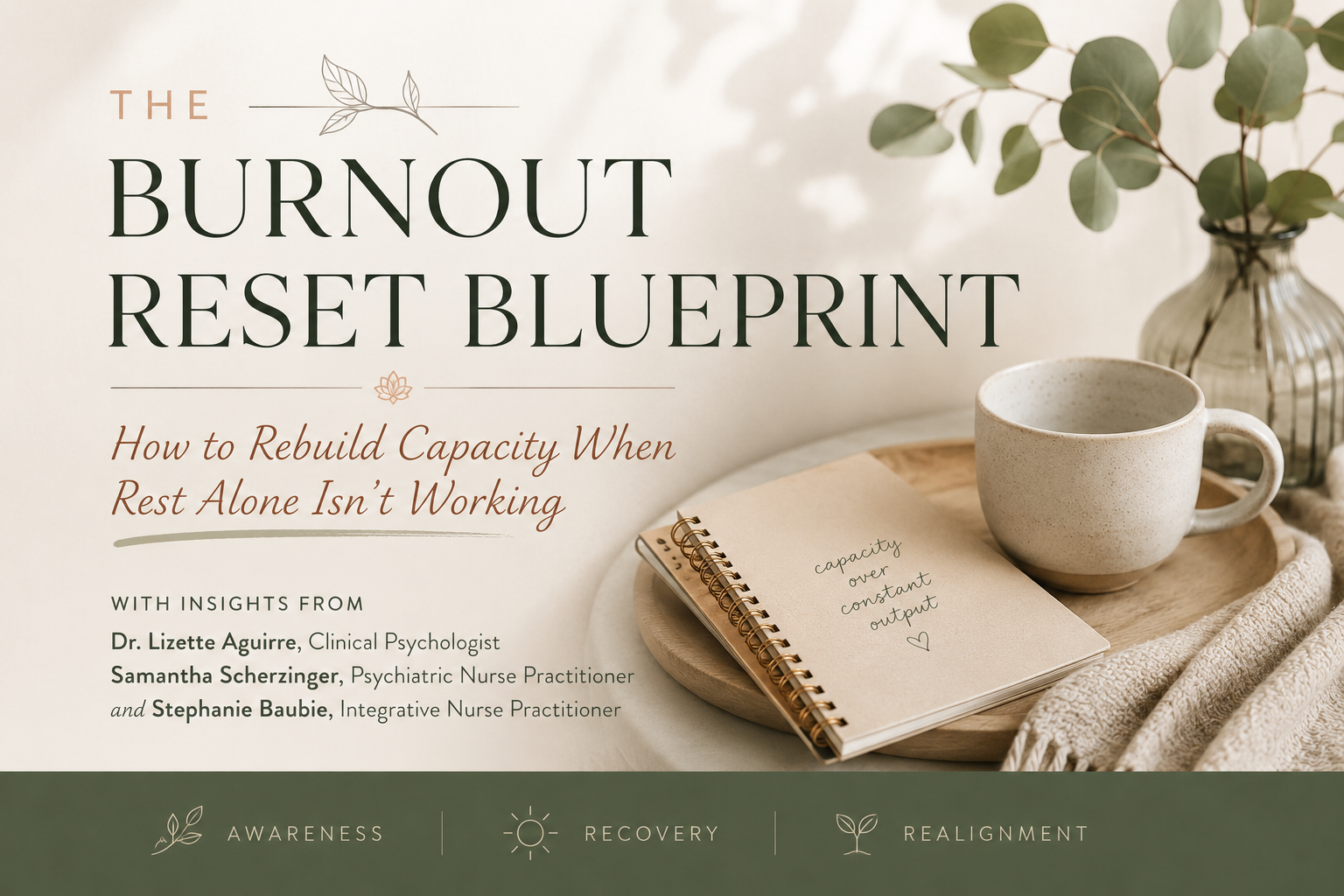
Free Companion Resource: The Burnout Reset Blueprint
If this episode hit close to home, The Burnout Reset Blueprint is a practical, downloadable guide to help you rebuild capacity when rest alone isn't working, with reflection prompts, a burnout self-audit, and small daily practices pulled directly from this conversation. Download it here: Patreon companion resource
You can also join Steph’s free Patreon community here:
The Inner Script Patreon
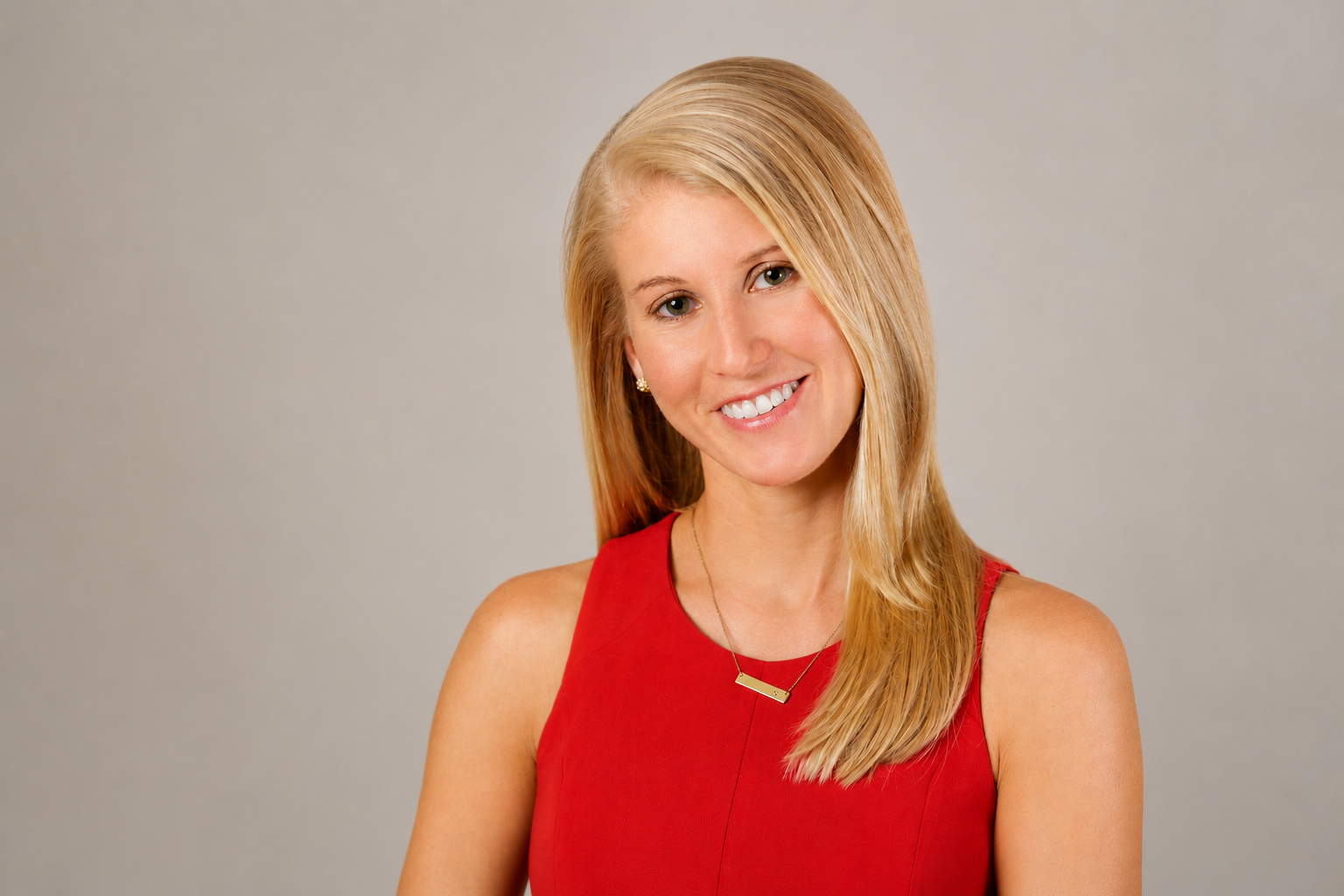
Meet Samantha Scherzinger
Samantha Scherzinger is a board-certified psychiatric-mental health nurse practitioner dedicated to helping clients navigate their mental health journeys with compassion and expertise. She graduated first in her class from Vanderbilt University's Master of Science in Nursing program, and also holds a bachelor's degree from Vanderbilt in Child Development and Sociology. Samantha brings a broad range of clinical experience, having worked in both community mental health and inpatient behavioral health settings. She currently practices at Helyx Health, where she provides diagnostic evaluations and medication management for her clients, drawing on her deep clinical background to deliver thoughtful, individualized care. Website: https://helyxhealth.org/samantha-scherzinger
Samantha at Helyx Health

Meet Lizette Aguirre
Dr. Lizette Aguirre (she/her) is a California licensed clinical psychologist with over a decade of experience supporting adults through anxiety, depression, trauma, identity exploration, and life transitions. She earned her doctorate through the PGSP-Stanford PsyD Consortium and integrates evidence-based approaches including EMDR, CBT, exposure therapies, ACT, and mindfulness. Dr. Aguirre works with high-achieving professionals, students, neurodivergent adults, LGBTQIA+ individuals, caretakers, and first-generation immigrants, offering therapy in both English and Spanish. She also serves as adjunct clinical faculty at Stanford School of Medicine and co-founded a postdoctoral training program, with a genuine passion for mentoring developing clinicians. Website: https://www.drlizaguirre.com
LinkedIn: https://www.linkedin.com/in/lizette-aguirre-584905134/
Lizette’s Website & Lizette’s LinkedIn

Meet Your Host
Stephanie Baubie, NP is an integrative nurse practitioner and the host of The Inner Script Podcast, where she explores the deeper stories behind health, healing, identity, and transformation. Through a blend of functional medicine, nervous system awareness, emotional insight, and honest conversation, Stephanie helps women better understand their bodies while questioning the narratives they’ve inherited about wellness, worth, and what it means to truly feel well.
On The Inner Script, Stephanie sits down with physicians, founders, thought leaders, and experts in women’s health, while also sharing solo reflections on the transitions and inner shifts that shape our lives.
Follow Steph on Instagram.
FAQs
What are the early physical signs of burnout?
In this episode of The Inner Script, Dr. Lizette Aguirre explains that burnout often shows up in the body before it shows up emotionally. Common physical signs include muscle tension, jaw clenching, headaches, digestive issues, poor sleep, and getting sick more frequently. Emotional signs like irritability, detachment, and cynicism tend to appear later, which means many people are already deep into burnout by the time they recognize it.
Is resilience something you either have or don't have?
No. Samantha Scherzinger and Dr. Lizette Aguirre both explain on this episode of The Inner Script that resilience is not a fixed trait, it's adaptive and shaped by the duration and intensity of stress, access to support, and opportunities for recovery. They note that chronic, prolonged stress, like the kind many people experienced during and after COVID, can slowly erode resilience over time, even in people who are naturally high functioning.
Why does working from home make burnout worse?
Dr. Lizette Aguirre discusses how remote work has blurred the line between being at work and being available for work, creating pressure to answer emails or calls outside of normal hours. Combined with a cultural obsession with productivity and output, this "always on" availability is discussed as a major driver of burnout in this episode of The Inner Script.
Can medication alone fix burnout?
No. Samantha Scherzinger, a psychiatric nurse practitioner, explains on this episode that while medications like SSRIs can be genuinely helpful and even life changing tools, they are not a replacement for boundaries, rest, or lifestyle changes. She shares that many people want "a pill for burnout," but without addressing sleep, workload, and recovery, medication alone provides limited relief.
What is toxic positivity and why is it harmful?
Dr. Lizette Aguirre describes toxic positivity as a cultural overemphasis on being happy and maintaining a positive mindset at all times, even when that isn't realistic or healthy. On this episode, she explains that unpleasant emotions like sadness, anxiety, and anger are normal and biologically necessary, and that discouraging them can set people up to feel like something is wrong with them when they naturally arise.
How is social media affecting mental health and trust in healthcare?
Samantha Scherzinger and Dr. Lizette Aguirre discuss how social media content that claims to reveal "what your doctor isn't telling you" has contributed to growing distrust in clinicians and the healthcare system. They also talk about how constant stimulation and frictionless access to information have made it harder for people to tolerate uncertainty, sit with discomfort, or trust a gradual, trial-and-error treatment process.
What do mental health professionals think AI will mean for future mental health?
In this episode, Samantha Scherzinger shares that she believes AI will play a major role in the next mental health crisis, pointing to AI-generated influencers, parasocial relationships with chatbots, growing concerns about AI psychosis, and ongoing lawsuits related to AI platforms and vulnerable users, including minors. She and Dr. Lizette Aguirre discuss why the constant availability and validation offered by AI can be especially risky for people who already struggle with connection or judgment.
-
Everything shared here is for educational purposes and personal reflection only. Not medical advice. Always work with your own healthcare provider for individual care.
Stephanie: Okay, everyone, welcome back to the Inner Script Podcast. I have two really special guests here today. They're actually two of my really good friends. They actually used to work together, and I am joined by Samantha Inger. She is a psychiatric nurse practitioner and Lizette Aguire. Lizette is a psychologist, so I'm going to hand it over to you guys and just give you guys.
The opportunity to give a brief bio of kind of what you do, what your title is, just so that the listeners can match your voice to your titles and your names.
Lizette: Hi everyone. I'm Lizette
. I'm a licensed clinical psychologist, licensed in California. I'm also adjunct clinical faculty at the Stanford School of Medicine. I work in private practice across the state of California and. I treat adults with various challenges including anxiety, trauma, identity, exploration, depression, life stress, things like that.
And I also co-founded and directed a post-doc training program in the San Francisco Bay Area, so I'm happy to be here.
Stephanie: Yay. So impressive. Damn. Okay. Headed over to you, Sam.
Samantha: Samantha Scherzinger and I'm a psychiatric nurse practitioner. I've been in practice for 12 years. I previously worked in inpatient settings and in community mental health, and now I work in private practice. So I see clients for diagnostic about. Evaluations and then create a treatment plan, which if appropriate, includes medication.
In my case though, I only recommend that, like if it is appropriate.
Stephanie: Amazing. Okay. So it's been really fun for me to get to know you guys and have a really good friendship with both of you because it's kind of the first time I've had two friends that are also in the healthcare space. So it's been really fun to. You know, just be close with people who kind of get it. And particularly with biggest reason why I wanted you guys to come on and do an episode for this is because, you know, I work in primary care, but we are seeing so much more mental health conditions, especially since COVID and I know we're like six years out, COID, but.
Still am seeing like the residue of it. I know we've obviously had conversations about this outside of this podcast episode, so I just thought it would be really fun to have like a transparent conversation, not really holding anything back of like our frustrations with the healthcare system. Sometimes treating patients.
Barriers. Yeah. So I just want kind of one of our casual conversations, maybe recorded some, some filtering obviously. But yeah, I just kinda wanna see where it goes. I mean, I'm just gonna jump right into it. So a big question for me is, you know, what have you noticed the most in terms of mental health since COVID and have your treatment approaches needed adjusting because you guys have both.
Had like pretty good experience pre and post. So yeah, whoever wants to go first.
Samantha: I think for me, I certainly saw kind of trends during the pandemic as things would follow, kind of like sort of three to six months. Timelines of like, I'd be seeing a lot of the same thing from clients for three to six months and then it would shift. I wouldn't say that, I think feel like since 2021 or so, like I feel like I haven't continued to see kind of those different trends and I actually relate more of what I see now, less to the pandemic and more just to like this age of.
Internet that we find ourselves in. I think the accessibility, while there's a lot of benefits to that, I think there's also a lot of challenges that have come. I think the accessibility of just how much information is available to us in our social media feeds, I think that is very overwhelming for people.
Understandably, we didn't grow up with seeing that, and I think it's also hard for people to put limits. On that. I think we want a lot of stimulation all the time. We don't want to be bored, and I don't think that stimulation is actually serving people that well in the end. And then I also think the like ability for everything to be kind of so accessible and frictionless that like we could place an order.
From Amazon right now and get it, you know, tonight. Just all of that. I think it's made it really hard for people to tolerate instances where there are friction and that's, you know, like taking that next step is really difficult for people.
Stephanie: Yeah, that's such an interesting perspective, the friction aspect of it. What about you, Liz?
Lizette: I echo a lot of what, what Samantha said. I saw the most severe, which is pretty obvious, but I saw the most severe effects during the acute stage of COVID, so around 20 20, 20 21. I'm not gonna say that the effects are entirely gone at this point, but they've certainly been, I would say, stabilizing or leveling out.
Of course. It's more nuanced than that. So some people are still struggling with increased anxiety or depression, and some people have found a sense of normalcy. I do agree with what Samantha just said about the age of online and information being accessible at one's fingertips. I also wanna mention that a lot of what I've seen in my practice, especially over the last year, I would say, would be around anxiety due to just uncertainty about the future.
And uncertainty about what is happening around the world in this day and age. So in like the, the political and geopolitical climate, there's been a lot of anxiety around physical safety, economic stability, job security has been a big. Big topic with a lot of my clients over the last few months or several months I should say.
And so that's been something that I think, you know, I, I, I don't know how to exactly specifically link it to COVID, but I would be very unsurprised if it wasn't something that kind of was an effect from that, uh, time
Stephanie: Completely. No. And that makes so much sense. And I think, you know, with my perspective with COVID with. I think I've probably shared with you guys, it's not even like the effects of COVID. I, I just feel like it really affected people's ability to bounce back and like overall resilience to stress in including myself.
Like I'm, I'm looping myself in this as well, but I think it just created so much fear and, you know, people working from home and just. Schedules being totally shifted and changed. So I think for me it's like the effects of what I've seen is people just have kind of a little bit less resiliency when it comes to maybe change or friction as Samantha was.
Kind of saying before, but also like just so much fear and distrust of the healthcare system. That's been a huge challenge and barrier for me when it comes to treating mental health conditions, anxiety, depression. So that's probably the biggest thing I've noticed. I mean, what do you guys think? Like do you think resilience has changed and it's okay for you guys to be like, no, I don't agree with that.
Or do you think that people are just more exhausted? Like what would kind of your perspective of that be?
Lizette: I don't know if it's that black and white, to be honest. Resilience is not a fixed trait. It's not something that you have or don't have. Resilience really just refers to the ability to adapt or recover in the face of stress, and all of that is affected by duration and intensity of the stress. So whether the stressor is acute or chronic, access to resources, so social support, financial stability, healthcare access, opportunity for recovery.
And we gotta remember that COVID wasn't a single. Stressor. It was prolonged, it was unpredictable, it was collective. And so we saw that even with people with high resilience, even though they did do fair, uh, better during COVID, they did so only up to a certain point. So chronic stress can erode, um, our capacity over time, even in the most resilient of people.
So just to kind of answer that question, I don't think people are less resilient. I think they're just more exhausted. Resilience can buffer stress, but it is an infinite and so chronic years of uncertainty, which I. Like I mentioned before, I think we're kind of still seeing the after effects of COVID.
We're still seeing our lives changing in real time. I, I don't know if we've reached a new baseline, and so I think we're still dealing with that and I think that's been eroding our, our resilience.
Stephanie: No, that's a good point. It's not so black and white, so that's definitely helpful to clarify that. Do you have anything to add to that, Samantha?
Samantha: I think the like said about the, the black and white I think is interesting. I think people have a lot of difficulty in like living in the gray right now. Like I tell people that all the time, like, this isn't black and white, like life. Hers in the gray and we have to learn how to like. Work with that.
It's again, the, like the friction of the gray. And I do think it is hard for people to persist in that. And that's probably, yeah, a combination of stress, the like uncertainty. But then, yeah, I also still think the accessibility, I also, you know, like Lizette said, I think resiliency is not a fixed trait. I think it can, it can change.
And I think actually going through hard. Times is like what allows you to build resiliency. Um, it's interesting. I've been, you know, in the same, working with a lot of the same clients for, you know, kind of seven, eight years. So I saw them, you know, pre pandemic during, since, and I think some of the people who were actually, you know, maybe had more of the disruptions, I've actually seen them cope better.
Like, you know, think of like high school students, you know, I saw them during that time obviously be affected. And then I've seen them really like thrive, um, since then, whereas some other people who were. You know, largely, I would say minimally effective. You know, I've had had a harder time.
Stephanie: No, that's a really good point. I actually like how you guys phrase that a lot. It helps me to kind of like show up for patients sometimes too, like, so that's a really helpful perspective. One thing I've really seen in my approach with patients is people are really. Getting burnt out. There's just been a lot of burnout, kind of toxic workplace environments.
I've filled out a lot of short-term disability paperwork, and I've really only practiced as a nurse practitioner in primary care, like since COVID. So I can't say it's like necessarily from that, but like what would, what do you guys think about that? I know we've talked about this in the past about, you know, burnout, kind of toxic workplace environments.
Has this kind of been a steady thing? Thing Or is I guess, what do you guys think?
Lizette: I have certainly seen burnout since the start of my career. I am going back and thinking about cases. Is that specifically cases that I started seeing during CVID and, and forward? I I don't wanna say that there's been an increase. I don't know. That's a, that's a hard question to answer. I certainly think that the advent of working from home, becoming so available to our employers, because we're working from home, we may feel this pressure to respond to emails outside of work hours or answer phones outside of work hours versus before when it.
Working from home wasn't really a thing. We could physically leave the office and go home. And not be available. And that would be okay. Couple that with, I would say American culture has this obsession with productivity, with output, with work, and we kind of have like the perfect storm, right? Yeah. And so, you know, we see working 60 hours a week, we wear that like a badge of honor and that's quite toxic.
So I would say that there have been many different factors that have kind of influenced burnout. And some of these fortunately are very much under our control.
Stephanie: So what would you give like advice for somebody who. You know, is maybe burnt out. And you mentioned control under our control, like what are some things you would tell somebody who's in that situation?
Lizette: I would ask them to slow down sometimes. It's so easy to get caught up in work, to get caught up in our everyday minutia that we forget about why we're doing what we're doing. A lot of what I do in my practice. Revolves around, uh, identifying core values and exploration of self, which really kind of helps my clients set goals that feel, feel aligned with their values.
And all of that can be lost in our day-to-day kind of rat race. And so slow down. Ask yourself why you're doing what you're doing. Make sure that the goals that you are trying to reach really do align with what you want out of life.
Stephanie: It's amazing. You're like seeing the whole person. You really are not, not many like clinicians do. So yeah, that's such good advice. Yeah. Were you saying something else before I interrupted?
Lizette: Well, I was just gonna say, I don't wanna like the way that I'm describing it, I'm making it sound easier said than done. Right. We do live in a society that does value. Output and productivity. I mean, I have a friend, Ika, you know her, she lives in London. She's British, and she like is constantly sending me messages and asking me about, you know, she's very kind of curious about.
Why there isn't a lot of work-life balance in America. And she recently sent me an article about burnout in America and kind of asked me some questions and let her know. Unfortunately, like a lot of this is true, right? We really, really value a lot of our identity revolves around our job. And while it works for some people, it doesn't work for everybody.
And so it does take a lot of like unlearning. And in this culture specifically, in order to be able to give yourself permission to have work life balance,
Stephanie: Yeah, I guess, do we all just move to Europe then and have siestas.
Lizette: would love that.
Stephanie: I dunno, I'm so much regulated when I'm overseas. They're doing something right over there. I'm telling you, I am like so regulated over there. So if you want a quick antidepressant, just, you know, hop on a plane, I guess. What about you, Samantha?
Anything you kind of wanna add to that?
Samantha: Yeah, I mean, I think, I guess, uh, going off the topic of, uh, Europe, I, um, I did study abroad in Copenhagen, Denmark. And Denmark is kind of known as like the happiest country in the world. So I took a positive psychology class. And so we talked a lot about like, what is different about Denmark, and I think it was just the, the security that people felt that they didn't feel like they were one really like.
One bill away, you know, from losing everything. Um, you both know my, my food allergies and I was kind of always told like, we can't go to the hospital. Like, we can't afford for you to go to the hospital. Like if you have an allergic reaction. And I said that, you know, to like one of my, you know, like professors there and they were like, well, if you go here, it's gonna be.
Free. And I was like, well, but not me. I was like, I'm not, I'm not a Danish citizen. They were like, yes, it, it still will be free. And like, yeah, I think just the, the security you know of that, which yeah, we, we, you know, live with a lot more insecurity and that's what pushes people to hustle. And there could at times be benefits to like using, you know, for motivation, but like, not when I think when it's also coupled with like such risk.
So from a standpoint of like, what do I recommend? I think it's pushing back as much as you. Can because knowing that like truly like overexerting yourself, burning yourself out, you're just gonna be rewarded with more work in the end. Like, you're not gonna get something, you know, really, you know, positive from that.
It's just gonna be the expectation that like, oh, you are always available. Lizette has no boundaries, like she'll do whatever. You know, it's only gonna get more, but that's easier said than done. And I thought this was a kind of just more of a like a tech mindset, because that's kind of always been, it's a lot of startups in the Bay Area right now that are working 9, 9, 6.
That's the hours is nine hours, sometimes up to 12 at six days a week. They work Saturdays too. But I, um, when I was back home in, um, in Ohio over the holidays, I heard the same thing from everyone there. Even my mom who works for this old life insurance company, privately held, they're tracking people's badges.
They're watching the cameras to see, are you leaving 20 minutes before five o'clock? Yeah.
Stephanie: Insane. So what would you, I guess, do you feel like in your experience, like when your patients come in and you're sensing burnout, do they sense it a lot of the time? Like are. They realizing it, like what's a, what are some signs? Someone is burnt out, kind of needs to change something about their life, but may not realize it yet.
Lizette: I would say a lot of burnout. My experience has been that. Manifest physically before it does emotionally. So muscle tension, headaches, GI issues, trouble with sleep, frequent illness, things like that. Um, are some of the early signs. And then later on we tend to see more of the emotional component, which is, can be irritability, emotional detachment.
Right. This kind of like lack of caring. And I'm sorry, Steph, what was your question? Your initial question.
Stephanie: It was about like, do you see the pattern that somebody is burnt out before like your patient or your client notices it?
Lizette: Sometimes I would say that I go there when they haven't even realized, right? It's not always that, but a lot of the times I find that it is, like I said, we're kind of in this culture where working 60 hour weeks or more is normal, right? And that is not normal. And I think that can make anybody burnout even the most resilient of people.
Yeah, usually when I do bring it up, then they start to think about it and they're like, oh yeah, let me look at this. And then some people come because they're burned out, right? And they're looking for relief, or they're looking for strategies to kind of like push through, which unfortunately, and unfortunately I would say, you know, it's not about pushing through, it's really about giving yourself recovery and rest.
Stephanie: Do you find people have, I guess, some hesitation with believe. That burnout can kind of show up physically just because in my experience I have seen that with like the, you know, mind body connection and everything and some people just have a really hard time truly believing that physical symptoms can manifest.
I don't even wanna say like mentally 'cause it's just so connected, but do you see that like some, I guess people just kind of having issues believing it.
Lizette: I see that a lot and I, it's. Just because, well, it's because of the nature of what I do. Usually when people show up to therapy, they're already open to talking about the link, but I can imagine in primary care staff where you work, it's probably a lot more prevalent. I don't know about you, Samantha.
Samantha: I would say the same when people are coming to us, like they're, they're choosing all of that, like already on a side maybe, maybe they're still, you know, kind of not in the contemplative stage of change or they're just gathering information, but they, they have some more awareness when they're coming in.
And I think that I hear all the time from people that they're burnout. What I also hear very often is that they just want to work through it. They'll be like, I wish there was a pill for burnout. Maybe some recognition that there isn't, but that's what they want. They don't want to rest, and I have received many requests when someone comes in and they're really stressed out at work and they're only sleeping four or five hours a night, and what they want is a stimulant.
That is not going to solve your problem at all.
Lizette: Absolutely give me some tools to be able to get through it and continue to be productive. I, yeah, see that all the time.
Stephanie: So then how would you like help your patients kind of reframe this, like what do you tell them to do when they want the stimulant, but they're like trying to push through the burnout? Like what is something else? Else you can. Is it kind of what we were talking about before? Just kind of like, okay, you need to slow down, maybe take some time off work.
Samantha: I think it's, yeah, the back of like trying to like, okay, like put boundaries, you know, and where you can, and just feel like explaining to them that like, I think sometimes they'll be coming and being like, I should be able to do this. No, you can't. Like, you cannot be, you're, you know, productive if you're only sleeping four to five hours after you've worked eight hours in a day.
There's a drop off in your productivity between hours eight to 10, and then there's a bigger drop off between 10 to 12. Like people's expectations of themselves and what is normal or, or should be feasible is not. So I think, you know, yeah, providing that information that like you feel stressed out and you're not sleeping and this is breaking down because like your body is putting up stop sign.
You know, like this is your body working as it's supposed to. Like it's telling you that like this is not a good situation for
Stephanie: That's awesome. I like need you guys. In the room with me when I'm having this conversation. 'cause it's so much like helpful to have like mental health professionals. 'cause I'm not a mental health professional. So I think when people come in really wanting to solve and it's their anxiety or burnout is really kind of the driving force of their physical symptoms, it just can be difficult for them to get to see that.
So I'm like, I need my, I need my crew back here to like help me. I do kind of wanna loop it back to social media, and I know obviously we have so much access to the internet. You know, for me in particular, there's so much things about people come in about like TikTok and they saw this fad or this and that.
So there's obviously the access and the like stimulation of constantly having. Like dopamine hits and things available to you, but also so much information too. So how has social media interfered with your experiences as a clinician in mental health?
Samantha: I think there's obviously a lot of ways in which it's interfered. I mean, yeah, just like the attention piece, it's, it's worsened everyone's attention. Like that is pretty clear. But I think, you know, back to the. Living in the gray. I think you know, a lot of the videos that you see, it's just like, here's what your doctor's hiding from you or something.
It's this idea of like, you just take this one supplement and this is gonna solve all your problems, or you just do this one thing and like this is it. And so people, yeah, I think that's have this idea that there is this, this answer and what, like with things are in the gray, I tell everyone like, okay, you know, here's, here's our hypothesis.
Like you're telling me this based on that I'm recommending this. And then we're gonna see what actually is your. Experience, think they want like a guaranteed outcome. And I'm like, I'd be lying to you if I said this was a guarantee. Everything is a trial and error, and that's the same for me too. I'm like, I don't have the guarantees for myself either.
Lizette: And also what works for this influencer won't necessarily work for you. You're different person with a different background, different biology.
Stephanie: No. Totally, and I think, again, I don't know if you guys would see this as much as me just. Kind of being in the primary care aspect, but you know, you guys kind of mentioned this is what your doctor is hiding from you. Or I get, there's a lot of healthcare provider and clinician shaming of like, oh, if your doctor doesn't do this, they pretty much suck.
Or like blah, blah, blah. And it's, for me, there's kind of. Created distrust of clinicians, providers, the healthcare system. I know I, I kind of mentioned this in the beginning, but, and then that on top of it has created a lot of fear and pushback for me at least when trying to treat patients. So I guess, is that something you guys deal with as well?
Lizette: I don't see quite as many patients in a week as you do Steph and, and as you Sam. So I have my caseload of 17 to 21. Clients that I see weekly. But I will say one of the things as a therapist that I do run into a lot is just challenges with insurance. And I know you and I have spoken about this offline, but issues around insurance coverage or insurance only covering certain diagnoses but not others, which kind of puts the clinician or me in an awkward position because I'm not gonna diagnose someone with something that.
Don't have, just so that their insurance can cover it. So I run into a lot of just issues around billing and unfortunately, whether we like it or not, clinicians are the face of the healthcare system. Even though we may have like 5% control over what happens and what we're allowed to do and what we're not allowed to do.
So a lot of the times, yeah, our hands are kind of tied and we may face backlash from the patient, which. It's not the patient's fault. They're just, they're navigating a really complex and sometimes unfair system.
Stephanie: Anything to.
Samantha: I find that I am well for one. I think the, like as far as the like mistrust, I certainly understand people, yeah. Coming in with some mistrust. They are choosing to come to a mental health provider and I really enjoy trying to build trust with. Clients, and I think people generally do like, tell me that they feel heard.
I often find that I am because maybe of some of that mistrust or just the lack of, I mean, yeah, the, the complexities of the system, the difficulty navigating it that like I am people's connection to the healthcare system. Like I'd say probably at least I'm 50% might be a high number, but like at least a third of my clients like don't have a primary care.
Provider or like practice. And so they are coming to me for everything and I'm explaining like the limitations and trying to also explain to them how to work with the system, how to get a primary care doctor, like how, you know, explaining their deductible to them, their copays or explaining if they come in and they say like, oh yeah, my doctor ordered that ultrasound.
And then. The hospital called me and they said I couldn't get it. You know? Oh, I guess my doctor changed, changed their mind. They said they didn't, you know, didn't want it. I say, that's not your doctor. That's the insurance the doctor put in the order. Yeah. To, I think explaining the difference between yes, us as providers and insurance, and then our also limitations with insurance.
Stephanie: And especially with mental health, it's so difficult to find a really good mental health professional who takes insurance. People come to me all the time wanting a psychologist referral. Or psychiatrist referral. And for mental health in particular, it's so difficult to find that. So I mean, it's confusing for me to navigate.
So I can't even imagine people doing this on their own.
Lizette: Stephanie, I'm really glad you brought the. Uh, because I, I think something that a lot of folks don't know is that the reason why, at least I can speak for therapists, but the reason why a lot of therapists are not in network is because insurance companies do not pay therapists a living wage. And so it's not.
Feasible for therapists to take on insurance. Some insurances are better than others, so we typically see, for example, Cigna tends to be a really great insurance with great reimbursement rates for providers, but others just pay pennies on the dollar, and it's not that therapists. At least I can speak for myself.
I have a private practice. I am out of network, but I also work at a group practice that is a network with Aetna. So I do see Aetna clients, but it's really, really hard as a solo provider to get a good reimbursement rate when you're negotiating with an insurance company. If I didn't work at the group practice, um, 'cause insurances tend to give higher reimbursement rates to group practices.
If I didn't work there, I probably wouldn't take any insurance at all. I wouldn't be able to make a living.
Stephanie: No, and that's fair and I think that's so helpful for people to know. Sometimes it's unfortunately, like investing in a really good therapist is crucial. Crucial. Just like there's unfortunately. A not so great primary care providers out there. The same can be true for your field too. So I think it's so important to, you know, find somebody like you.
We need more, we need more Lizette. Anything to share, Sam?
Samantha: Yeah, and I think, you know, it is, I understand like I, I want people to be able to get like good care that they can afford, but that there are competing forces. With that. Think about again, accessibility, like better help and Talkspace. Obviously those are accessible, they can be more affordable for people, but the quality isn't that great in terms of like what people actually get from it.
Like it's typically not as a good of a return on your investment. And then also think about the providers who are working there. They're getting paid so little, they were probably barely getting what is like California minimum wage.
Lizette: And if they're not getting paid a lot per client, then their caseload increases so that they can earn enough monies to subsist. And so you typically, for, for therapists who are underpaid, they usually have caseload very. Very high caseloads, which means that the standard of care one-on-one is gonna be not as great as a therapist who has a lower caseload.
Stephanie: What would be like a standard caseload for somebody who is like taking insurance or in one of those practices you guys were mentioning, like what would be a standard caseload if you're able to answer that.
Lizette: With a lower reimbursement rate. I don't know I've ever worked, um, under those conditions. My average caseload, I don't see more than, than 20 or 21 clients a week. That is my max. And even that may be pushing it a little bit. So someone who's taking insurance at a lower reimbursement rate, I would say they're probably seeing maybe double that or, yeah, I'm just trying to think.
And please, let's remember that this is very much like dependent on geographic. Location. So if you're living in the Bay Area, which is very expensive, you're gonna have to earn more in order to survive. And so I would say if someone's getting paid half of what I'm making, they would have to work, have double a caseload in order to live in the city.
Stephanie: That makes sense.
Samantha: For me, I don't see clients weekly, you know, so it's different. I'm seeing them kind of anywhere from like every two weeks to six months. My caseload right now is about 300 and it's kind of hovered around that, like give or take for, for several years. I previously have worked in practices where I had a caseload that was where like 900, a thousand.
Um, but that was in a different. You know, setting that was in community mental health and actually had two different experiences. One where I had, yeah, about 900 patients, but in where there was a lot of support, like all patients had case managers, there was like wraparound care and I did not feel overwhelmed by that, like caseload.
And then I worked in a practice where I needed, where there was not that level of support. It was unsustainable. And it was one of those practices where like if I saw 33 patients in a day and it was. Miserable and no one got good care. And, and it was a, a miserable experience for me. I was just asked like, okay, great, well tomorrow you can see 35.
Like, there was, there was no limit to like the expectation.
Stephanie: Yeah. Wild. Even in my situation, which again, it's primary care, so I see 64 patients a week right now, which is going to change since I'm leaving that role. That was not sustainable for me. Anyways, my point is I think it's important for people to really understand where we're coming from. As clinicians, all we're trying to do is like help do no harm, support people, and a lot of the times our hands are tied when it comes to, for me, like I'm speaking for myself, mental capacity and ability to.
Take the kind of that emotional container for people and, um, billing issues. We really provide care and don't have a lot to do with billing or insurance. So that's something I definitely wish more people would understand and it's not their fault. No, none of us were taught about insurance companies and how the healthcare system works, so that's just something I'm really glad we touched on because it is definitely a big part of this.
Speaker 3: Hey friend, it would mean so much if you left a quick rating or review on Apple Podcasts or Spotify. It helps more women find these conversations and it truly energizes me and keeps this podcast going.
Stephanie: Okay. So shifting gears a little bit, kind of like a random question I have in your sessions, what would be like a red flag phrase you would hear regularly?
Lizette: I thought a lot about this question 'cause I really like it and I would say shoulds and shouldn't, I shouldn't feel this way or I should be feeling this way. A lot of the shoulds and shouldn'ts that I hear revolve around emotions and they're, I would say emotions are often misunderstood in our society.
We don't encourage introspection. And a lot of what I hear from folks is that emotions are, there's a lot of confusion around why we even have emotions. They're seen as more of like a nuisance rather than necessary and valuable for our survival. And something that I see in American society as well is, uh, I don't know if you've heard of the term toxic positivity.
It's a very popular psychological term that recently emerged, but it's basically for those. Who don't know what toxic positivity is. Basically describes our society's over generalization and overemphasis on being happy all the time and having a positive mindset all the time, which we know is not possible.
We all have unpleasant emotions. That's normal, that's healthy, that's biological. We all feel sad sometimes. We all feel anxious, sometimes we all feel angry sometimes. And toxic positivity really discourages these quote unquote negative emotions. Right, which basically sets us up for failure if we do happen to feel unhappy.
And so a lot of what I do in my sessions is this kind of, and, and let me just be clear. Not everyone feels like this, but it's something that I commonly see in my practice. There's a lot of unlearning that is to be done around unpleasant emotions, around emotions in general. There's a lot of just. Um, kind of teaching around why we have emotions and why unpleasant emotions are actually healthy and necessary and they're not gonna go away.
And pushing them down and ignoring them is not gonna make them go away. And so really a lot of folks come into therapy wanting a solution around how not to feel these negative emotions, when really what we need to do is give my clients permission or give our clients permission to feel the negative emotions.
That's the only way to get to the other side and eventually feel better.
Stephanie: I love how you said that, you know how I am with emotions and all of that, so I'm so glad you said that. Has that been something you've seen pretty consistently, or is it like worsened in recent years?
Lizette: I've seen it pretty consistently. I'm trying to think if there's like a trend, if I tend to see it more in certain populations than others. I will say I see it more in males. I see it more in like older generations. As well. Um, there's like a book that I recommend to folks. Um, it's called Toxic Positivity.
Keeping It Real in a World Obsessed With Being Happy. It's by, um, a licensed marriage and family therapist called Whitney Goodman. She is a, a therapist influencer, so I first heard about. Her online and she wrote this great book that I recommended to a lot of my clients. And all of them have had really positive feedback about the book.
And she also hosts a podcast called Calling Home. And that podcast, I think is centered around healing and family relationships. By the way, I have no affiliation with Whitney Goodman, um, not being paid or anything to promote her work, but I just, I love her materials. I love her. The message that she sends out that it's okay to feel angry sometimes.
It's okay to feel anxious. It's okay to feel sad. That's normal. There's nothing wrong with you if you feel those emotions.
Stephanie: It's so interesting that we label emotions as like negative and positive even. And I, listen, I'm saying that as somebody who used to do that, but you know, it's things we need to feel and I don't know, like. For me, when people come in and I say something and it, you can tell it's striking a chord with them and they're, they want to cry and it's just uncontrollable and they start doing it, they start crying and I'm like, look, like you have to like release this.
Let it out. Crying is there for a reason, like there's literally water coming out of our eyeballs because that is a way for us to release. This built up tension. Who doesn't feel better after a good cry? I just, so that's like, so important and I think we all just maybe need to cry a little bit more.
Anything Sam?
Samantha: I mean, I think that like speaks to the, like the friction that people are so uncomfortable with is like, oh, I feel this discomfort. I have to like, I have to back away from this entirely. Which, yeah, sometimes your emotion is a guide that says to you like, oh, this isn't a good situation for me to be in.
And other times it's like. You just have to learn how to like, persist with, you know that okay, there's like some good and bad here and like, are you gonna throw it all away because you know, you have this, this one. Yeah. Like negative emotional states. I think for me, uh, back to the, the red flag, anytime that someone, they are saying that all of their past experiences with providers were negative, that all of these providers were bad, bad providers exist if all of them were bad.
But that's just. Statistically kind of an impossibility. It's in the same way that if someone says all of their exes were crazy, you know, it's like, well, what, what was your role at dynamic? And even if someone isn't talking negatively about past providers, but I just see on like, say their intake that they've, you know, kind of stopped and started treatment a lot of times, like that's all like these very short kind of courses.
I did it for like two to three months and then dropped out for me. That's just making me think like, well, that's. It's gonna be really hard for me to make progress with someone in that amount of time. And are they actually giving themselves the opportunity to like really see improvement?
Stephanie: No, for sure. Yeah, like there can definitely be some, you know, lack of accountability. I would say for me, my red flag, it's not really like, I wouldn't say it's, it's a phrase, but you know, I'll ask like a question like, oh, like any updates to your medical history, and I'll get, you should tell me that, or I'll ask if.
Somebody's dealing, like with very vague symptoms or just a lot of things going on. You know, here's a, the reality is there's chat, GBT, there's Google, which all of us use, so I know people Google their symptoms. So in order for me to know where somebody's coming from, I'll be like, well, is there something in particular you think is going on right now?
And they'll be like, no. Like that's why, that's why I came to see you. I understand that that might not take with some people, I totally do, but it's more of just. I'm trying to get into somebody's like Headspace when I ask that question for me. There can be a lot of, you know, that going on where people kind of feel a little bit of, you know, that I'm going to fix them, but it's really like a partnership.
At the end of the day. I really feel like a. Clinician provider relationship is a partnership and I'm always just trying to guide people to be their own healer. And I'm here to diagnose, make recommendations, but always meet people where they're at too. And I think that's can be a, a big misconception when it comes to seeing any clinician, any provider, is, you know, we give the tools.
It's up to you to really put those tools into action and create your foundation. So that's a big one for me.
Lizette: I mean, I'm so glad that you mentioned this. There really is this kind of fix me. I'm here, fix me mentality that I also see in my practice, and what a lot of folks don't understand is that we're not magicians. We can't snap our fingers and fix our patients. I mean, we wish it would be that easy, but it's not treating curing illness, whether it's physical, whether it's.
It's mental. It does require effort on the part of the patient and often does involve making life changes outside of the therapy room or outside of the exam room. And change isn't easy, right? If it were easy, you wouldn't need to go to the doctor. But the good news is that change is certainly possible and our role is to provide the tools to provide the skills to help you get to that finish line.
We can't do it for you. You know that saying you can bring a horse to water, but you can't force it to drink. That definitely applies to our profession.
Stephanie: I love that. What I tell people too is kind of going back to this partnership aspect of it. I always try to go into a patient encounter where I'm going to be the best listener possible because they're always telling you what's wrong and it's up to us to listen. But that's like 50% of it. It really has to be the other person.
Who's willing to listen to you too? I think it's just kind of going back to this partnership mindset of, you know, I'm going to listen. Need to listen. I don't wanna say need. I would love for you to listen to my recommendations and look like I'm here to collaborate at the end of the day. But it's such a partnership and it's a two-way street, which I think a lot of people don't fully understand.
For this to work, it has to be 50 50 or else somebody is going to be taking on more. And having a negative experience. So, Samantha, anything.
Samantha: I tell everybody, I'm like, say we're making decisions together. Like I do want people to like, you know, feel like we are a team, but that, yeah, I, I also, you know, I'm the first to say like, okay, here's, here's what you can expect from medication. Here's the, the limitations. It's not going to make you feel 100% better, but it should.
This is a tool and it should hopefully make you feel better enough. Use other tools, but that, you know, yeah, I'm pretty clear that like, yeah, they're just gonna see a limited benefit if they're just taking the medication. And if you're depressed and you're taking this medication to improve your depression, but still doing all of the same activities that you did when you were depressed, you're probably not gonna feel.
There's just gonna be a limited benefit. And if, if that's all the benefit someone wants, if that's their goal, that's fine. But I think the challenge can be sometimes where people are kind of like pushing up against me of, like, that I need to do more. And I'm like, I can't make this. I, I can't do that.
Stephanie: What's so interesting about this whole conversation, 'cause we're like almost an hour in, I didn't even mean for this to happen, but we haven't even talked about like medications. Really a lot of this comes from like reframing mindsets and you know, looking inward and. All of that definitely is such a big skill.
I don't know, it's just so interesting that, you know, with talking about mental health, like a lot of the times we jump to medication or whatever, but it's like we've barely even touched on it. So I don't know. It's just something I've noticed.
Samantha: I think I am, you know, in my experience isn't the only one, but I see a lot of people who have, who've already been doing a lot of work and who feel like I'm trying everything and they're just getting a pretty limited benefit from it, or because of like, not. Not being able to change negative thinking patterns or their, like, motivation being so low, their anxiety being so high that they really can't engage, you know, with the, the tools like they're, yeah, they're going to therapy with Lizette and they can't utilize the things, you know, outside of it.
And so those for me are great, you know, cases to say, okay, like this doesn't take away the need for those other things. It should make them more effective for you.
Stephanie: Love that. No, and I'm really glad you said that because I prescribe medications all of the time. I just think there's such a good balance to talking about both of these things. 'cause I do have people coming in where they just. S, you know, want an SSRI, and I'm like, okay, if that's where you're at, I will prescribe this.
But we do have to do X, Y, and Z on top of it. And yeah, I mean, SSRIs are their SRIs every medication. They're amazing things. Again, that is just another tool in your toolbox is basically what I say. So it's okay to do that. And they have. Been transformative in my patient's lives and sometimes you do need a little SSRI in order to access those other like reframes and everything.
So I think I'm really glad you touched on that. So closing on this, we're like almost there. This just flew by, but I like two more questions I wanna ask. What do you think the next mental health crisis will
Samantha: This is something I've really like, you know, thinking a lot about. So I was excited to answer this question and that is, I mean, I think obviously, especially like being in the Bay Area, we're already seeing, you know, a lot of like upheaval. From AI in the workplace, I think there's gonna be so much impact from ai.
Back to the accessibility space. Like there's obviously a great thing from being able to use generative AI for in certain areas. I think there's also been studies that have shown people who are using it in excess kind of daily use. Um, and, and, you know, and all throughout the day have like, I mean they've, there's been cognitive negative cognitive effects.
I think thinking about kids in school, I have some clients who are professors who have said like, they just feel like they're basically just getting all essays that are written, you know, by ai. There is that then effect on, you know, and then I think, I mean to the extremes of like. I'm already seeing more like AI generated videos in my feed.
Full AI influencers, they're, they are not real people. They're ai and I think, you know, that effect from people on, you know, already struggling with kind of what they're seeing, not seeing that in their feed as well. And these are, you know, still extreme cases, but there are. Lawsuits right now with both character AI companies and generative AI companies on those companies and how their forms kind of, you know, coached minors about suicide methods.
And you could say, sure, yes, you could just Google that and you could, you could get that information, but not in something that seems like a parasocial relationship. Whereas kids who do not have the ability to have the judgment at 13. To really understand this is not a, a trusted partner on the other side, it's a computer algorithm and then to really the extreme of like AI psychosis.
Stephanie: Oh my God. AI psychosis.
Samantha: Yes, there are, there are some articles out there about people who are, you know, kind of really gotten, kind of so sucked into the world that they are in inhabiting with their generative ai that Yeah, they are, yeah, they are, they are living in a kind of an alternate reality.
Lizette: Have you guys seen articles about people marrying their AI character?
Stephanie: I've heard this. I thought it was like a joke.
Samantha: I listen to a whole podcast about this and it. Yeah, and when you really think about, I mean, yeah, back to like friction, if you have a character, ai, it is always available. It always thinks you are right. There is no pushback from them whatsoever.
Lizette: Provides that kind of sense of connection even though it's not with a real person.
Samantha: The videos I've seen of like the AI influencers, I mean itch, shocking how realistic they are.
Stephanie: Who are the AI influencers?
Samantha: I think mostly what I've seen are ads or seen like stories from people talking about it. But you'll, you'll be seeing this person, you know, kind of like giving an ad for this product. And then in the ad they say like, well, but I'm not real.
I'm ai. And it's shocking to see, you know, and they're obviously all very beautiful, perfect looking women at this point. I don't know that there is what the requirement on labeling. That. 'cause I think with a lot of the videos you can, you can tell, you can look at this and be like, oh, okay, something's off.
This isn't real. I think, I think it's gonna be harder and harder to do that.
Stephanie: I mean, that's really terrifying to be quite honest. Like I don't even know what to say.
Samantha: Yeah. 'cause we already talked about, I mean, the videos that clients are seeing, you know, and they now, I mean they can really be seen videos that are totally divorced from like any sort of consequence.
Lizette: AI is just moving at a rapid pace and let. Just cannot keep up. I'm hoping that legislation will catch up at a certain point. Of course, usually legislation ends up catching up when something happens. Right. You mentioned the lawsuits, Samantha, so.
Samantha: Yeah, I mean at this point, we don't have to keep this in, but there is, there's actually legislation on the opposite side. There's legislation that has been signed that says you cannot regulate AI and it seeks to invalidate state laws.
Stephanie: What would be the purpose of that?
Lizette: The administration may wanna green light these companies like business, bring in like business to America if, if this legislation exists, companies that are, you know, AI companies are gonna wanna do business here 'cause there's gonna be little to no regulation is my theory.
Samantha: And, and the Silicon Valley ethos is move fast and break things. You know, they're not, they really don't think about consequence, you know, they don't see that as their role, like their role is just to, to build and, you know, for those products to generate revenue.
Stephanie: I'm like so far removed from that like thought process where I'm like, what's the purpose of that? Duh. It's to make money, but I'm just like, there's so many bad things that can happen with that. Obviously AI is a great tool that we all use in certain situations, but there's gotta be some kind of safeguards in place of like people's reality it sounds like, could get severely skewed.
So that's like terrifying.
Lizette: I wonder if there will be a new disorder in the DSM for AI related. Us,
Stephanie: Anyways. Last question. What is one belief of mental health or even like your role in mental health, you'd love to kind of rewire culturally, socially, all the things.
Lizette: we already spoke about this, but I think the idea that productivity equals worth. Is something that I would love for folks to unlearn or rewire, and I think it has the potential for making a huge, you know, once we kind of learn that and feel that to our core, it has the potential to really change our lives for the better, right?
Like I said, there's an overemphasis in our culture, specifically American culture. I don't wanna speak. You know, globally, but there's an overemphasis in our culture to work to the bone, right? And that's often seen as a badge of honor. You know, if you're ambitious, if you're putting in all the hours, it's usually seen as a good thing.
But that is not sustainable long term, and it has a terrible impact on our physical, our mental health. And so really slowing down, valuing rest. Self-reflecting on like what you want can really, really, um, have a positive impact on your health. Um, and I think we'd all be more connected, healthier if this kind of mindset shifted.
Samantha: I think along the same lines with that I. Yeah. Such this strong like individualistic nature in this country and this belief that like you have to do it on your own or doing it on your own is better. Like again, you're not gonna get an award. For that. And, you know, part of our work is giving people tools so that they can do things on their own, but you don't always know the tools or, I mean, you need support in using those and that it's not weak, you know, to need that.
It's like strength to know when you need help. And the example I'll give to people is like, I'm not gonna a pipe burst in my apartment right now. I'm not going to fix it like I'm going to, I'm gonna need, you know, support for that. I'm not cutting my own hair. I'm like, I am not Just doing something on your own is, doesn't make it better.
Stephanie: That's such a good analogy. I love that. Not cutting my hair. We all need a little help, you know. All of us, a lot of help. So I love both of those, like reframes those answers. That's amazing. But yeah, I mean, I could literally talk to you guys for hours and hours, but we're like coming up on time here. So before we get going, where can people find you if they're interested in, you know, booking an appointment?
So share, uh, where they can find you.
Samantha: I'm in practice at Helix Health. Um, and so we, it is a private practice. It's not a solo practice of mine. There are other clinicians there as well, and I see clients for diagnostic evaluations and medication management. Um, and we're in network with Cigna and Ed. And then as well as out of network, we'll accept those clients out of network as well.
Lizette: And I have both a solo private practice and I also work at a group practice called the California Psychology Center. I do see clients in network with Aetna through the California Psychology Center, and then in my. Solo private practice. I see clients out of network. I have my own website and I have a Psychology Today profile, so if you just search for my name, I should be pretty easy to find.
Stephanie: Perfect. And then just to clarify, if somebody wants to be like a client or patient of yours, do they have to be residing in California?
Lizette: They do, yes. So for psychologists and mental health clinicians we're licensed by stage.
Stephanie: Thank you. Just needed to clarify that, Alright everyone, that is it for the inner script. Podcast. If you have any questions, comments on this episode, please feel free to send me a DM at the inters Script pod on Instagram.
Uh, would love to hear from you guys and yeah, we will chat next week. Have a good one.
Speaker 2: If you wanna connect with like-minded women and dive deeper into these conversations, join my Patreon community. There's a free option and it's where we can talk about each episode together. The link is in the show notes and I can't wait to see you there.
Disclaimer
Everything shared in this episode is for educational purposes and personal reflection only. It is not medical advice. Always work with your own healthcare provider for individual care.
We sometimes include links to products and services we find interesting. These may or may not be affiliate links. Thanks for your support.
Podcast production by Jamie Brooke.
